
As Amazon Associates, we earn from qualifying purchases. This means we may receive a small commission at no extra cost to you if you click through and make a purchase.
Selecting the right multi-material 3D printer requires balancing mechanical speed, automated material handling, and overall workbench reliability. The ELEGOO Centauri Carbon 2 enters this space as a complete package built around automated multi-filament feeding and an enclosed CoreXY kinematic chassis. If you are wondering whether this machine is the right buy, the straightforward answer is that it targets hobbyists and makers who want multi-shade capability without the frustration of manual filament changes. Configured as the elegoo centauri carbon 2 combo, it delivers high acceleration alongside a dedicated four-spool management unit, making it an attractive upgrade for anyone outgrowing a standard bed-slinger.
In this detailed elegoo carbon 2 review, we cut through the promotional claims to evaluate what everyday makers can expect in a home workshop. We examine how the automated calibration functions, assess how the rigid aluminum frame manages rapid directional shifts, and explore the day-to-day practicalities of multi-color filament feeding. Whether you are expanding your workspace or comparing this machine against larger format alternatives like the elegoo neptune 4 max 3d printer, this review details the physical specifications, motion performance, and overall utility to guide your purchase decision.
What You Get With the ELEGOO Centauri Carbon 2
ELEGOO Centauri Carbon 2
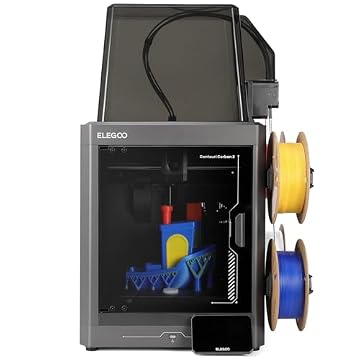


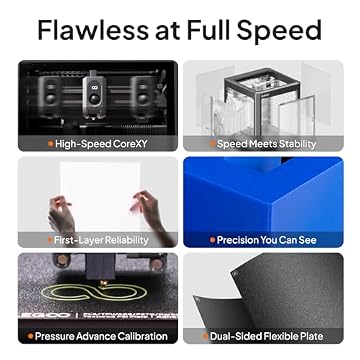
Photographs published on the Amazon listing.
The printer arrives as an integrated desktop fabrication station engineered for multi-material output. The manufacturer includes the primary enclosed CoreXY mechanical unit alongside the specialized four-spool feeder module designed for automated material swaps.
- ELEGOO Centauri Carbon 2 CoreXY 3D printer unit
- CANVAS automated 4-color filament management system
- Integrated smart filament detection and tangle monitoring sensors
- Rigid aluminum frame structure with metal enclosure panels
- Active vibration compensation sensors integrated into the toolhead
- Automated bed calibration and auto-leveling assembly
- Power cords and data communication cables for system integration
- Basic assembly hardware, though the listing does not specify exact bundled tools
Key Specifications
Attribute
Detail
- Brand
- ELEGOO
- Model Number
- US-EL-3DF-CC2C
- Motion Architecture
- CoreXY motion system
- Maximum Print Speed
- Up to 500 mm/s
- Peak Acceleration
- 20,000 mm/s²
- Multicolor Capacity
- 4 colors via CANVAS system
- Frame Material
- Metal with rigid aluminum frame
- Product Dimensions
- 18.9"D x 19.7"W x 29.3"H
- Item Weight
- 19.35 kg
- Chassis Color
- Gray
Copied from the Amazon listing. These figures were not measured here.
Multicolor Performance and the CANVAS Filament System
The defining element of this setup is the elegoo centauri carbon 2 canvas system, which coordinates four distinct filament lines during a single build. In multi-filament 3D printing, reliability often stumbles on mechanical feeding errors and unexpected spool runouts. ELEGOO addresses these potential failures by equipping the CANVAS module with smart filament detection, auto-refill capabilities, and active tangle monitoring. If a spool snags or runs out of material mid-job, the system detects the issue immediately and pauses or switches rolls, protecting long multi-hour prints from failing when left unattended.
Executing smooth elegoo carbon 2 multi color printing requires precise coordination between the external feeder and the toolhead cutter. Each color change involves retracting the previous strand, cutting the tip, purging residual plastic in the hotend, and feeding the new color. While this routine creates purge waste and extends overall cycle times, the automated workflow removes the tedious manual labor of pausing and swapping rolls by hand. If you want to compare multi-material management across similar platforms, our review of the elegoo centauri 2 combo examines how automated feeders influence project duration.
Beyond aesthetic models with contrasting colors, the CANVAS unit enables functional multi-material output, such as printing specialized breakaway or dissolvable support interfaces under complex geometry. The manufacturer highlights temperature control capable of printing materials ranging from basic PLA to engineering-grade filaments. However, shoppers should note that the listing does not specify compatibility with ultra-flexible materials like TPU inside the automated multi-spool feeder, meaning flexible spools are typically best routed independently.
CoreXY Motion Mechanics and Print Speed
Speed is one of the most prominent highlights in the elegoo carbon 2 specs. Built on an advanced elegoo carbon 2 corexy platform, the printer decouples the build platform from rapid horizontal motion. Rather than slinging a heavy bed forward and backward, dual stationary stepper motors manipulate the lightweight print head across the X and Y axes simultaneously. This reduction in moving mass allows the system to reach an advertised elegoo carbon 2 print speed of up to 500 mm/s and acceleration rates up to 20,000 mm/s².
High acceleration usually introduces strong inertial forces that produce ringing, ghosting, and blurred exterior perimeters. ELEGOO mitigates these artifacts through active vibration compensation paired with a rigid aluminum frame. Integrated sensors detect mechanical harmonics during rapid directional transitions and apply compensatory motor adjustments in real time. This dynamic stabilization allows finished parts to retain crisp edges, smooth surface walls, and sharp dimensional details despite the aggressive operating pace.
Sustaining 500 mm/s speeds in practical printing requires adequate thermal output to melt filament as fast as the toolhead moves. While the specifications highlight temperature control for advanced polymers, the listing does not specify the exact hotend wattage or maximum achievable nozzle temperature in Celsius. In daily use, achieving top velocities will depend on the volumetric flow rate of your chosen filament and nozzle diameter, making proper slicer tuning essential for high-speed success.
Workspace Footprint and Physical Build Quality
With physical dimensions of 18.9 inches deep, 19.7 inches wide, and 29.3 inches tall, this printer demands substantial desk real estate. The height is particularly notable because it includes the clearance necessary for mounting and accessing the CANVAS multi-spool system. Weighing 19.35 kg (roughly 42.6 pounds), the printer is substantial and heavy, meaning it requires a sturdy, dedicated workbench that will not shift or oscillate under the kinetic forces of 20,000 mm/s² acceleration.
The all-metal structure and rigid aluminum frame serve as an enclosed chassis finished in clean gray styling. Enclosing the print area is crucial for maintaining consistent ambient chamber temperatures, which prevents high-temperature materials from warping or splitting between layers. If you run multiple workshop tools or prototype microcontrollers like the elegoo mega 2560 in the same space, having a fully enclosed machine keeps moving belts, high-temperature components, and mechanical noise contained.
One detail worth considering is that the listing does not specify the precise internal build volume dimensions (X, Y, and Z build plate capacity). However, given the exterior casing dimensions of nearly 20 inches in width and depth, the chassis offers a generous working envelope consistent with modern enclosed CoreXY systems. Buyers should measure their shelving height carefully before purchase to ensure ample clearance for spool loading.
Everyday Usability and Automated Calibration
For beginners and busy makers alike, bed leveling and Z-offset calibration have historically been tedious hurdles. ELEGOO designs this machine for minimal manual intervention, positioning the elegoo carbon 2 for beginners as an accessible platform despite its advanced feature set. Fully automated calibration routines check bed levelness and sensor offsets before jobs begin, allowing users to load a file, confirm the print on the interface, and let the hardware establish its own baseline without manual turnwheels.
Smart monitoring hardware safeguards the printing process once execution begins. The automated tangle detection halts printing if a filament strand knots on the spool flange, while runout sensors monitor feed consistency. These protective measures prevent toolhead clogs, damaged drive gears, and wasted spools, providing peace of mind during overnight multi-material jobs that run for dozens of hours.
The printer connects into ELEGOO’s software ecosystem, which coordinates toolpath generation, color assignments, and system communication from a single interface. While the initial setup requires carefully mounting the CANVAS module, feeding PTFE tubing, and running initial self-diagnostics, day-to-day operation is largely automated. The lack of manual bed tramming and automatic recovery routines significantly lower the operational barrier for newer users.
ELEGOO Centauri Carbon 2 Pros and Cons
Pros
- Automated 4-color printing with CANVAS system
- CoreXY speeds up to 500 mm/s
- Rigid aluminum frame with metal enclosure
- Smart filament runout and tangle detection
- Active vibration compensation for cleaner walls
Cons
- Heavy chassis weighing 19.35 kg
- Tall footprint requiring 29.3 inches of clearance
- Listing does not specify build volume dimensions
Check ELEGOO Centauri Carbon 2 on Amazon
Is the ELEGOO Centauri Carbon 2 Worth It
Deciding whether this printer justifies a place in your shop comes down to how much you value automated multi-color production and rapid turnaround times. If you regularly build multi-tone display pieces, prototypes with distinct functional accents, or complex geometries requiring dedicated interface supports, the integrated CANVAS feeder delivers immense convenience. The hardware eliminates the complex aftermarket upgrades historically needed to achieve automated multi-material printing.
So, is elegoo carbon 2 worth it for makers who only print single-color, utility-grade models? If your projects are confined to basic PLA brackets or single-color functional parts, the extra bulk, vertical clearance, and mechanical complexity of a four-spool feeder may exceed your requirements. A compact, single-spool machine will occupy less room and require fewer mechanical checks. However, if you want room to expand into multi-color fabrication and engineering plastics without replacing equipment down the road, this machine represents a comprehensive, forward-looking investment.
For design professionals, educators, and serious hobbyists, the combination of CoreXY speeds up to 500 mm/s, active vibration dampening, and automated filament handling makes it an exceptionally capable manufacturing station. It handles the tedious setup steps automatically, letting you concentrate on designing and producing clean, accurate parts.
Other Options to Consider
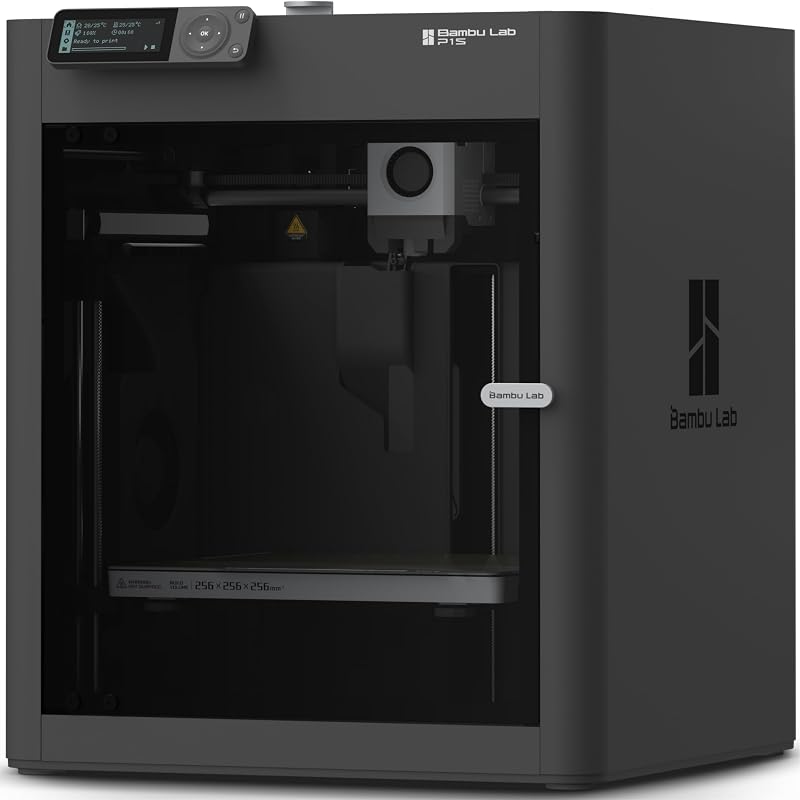
MakerWorld Model Library (packaged as the Bambu Lab P1S Combo with AMS) is the most direct rival for shoppers who prioritize an established multi-color printing ecosystem with extensive cloud support and ready-to-print community models, making it appealing for users who prefer a mature software library over brand-new hardware workflows.

FLASHFORGE Adventurer 5M 3D Printer caters to makers who want extreme single-material printing speeds up to 600 mm/s and rapid maintenance, featuring a 280°C direct extruder, a 3-second detachable nozzle, and a 220x220x220mm build volume that suits budget-focused creators who do not need a multi-color feeder module.
Beginner-Friendly Ecosystem with MakerWorld Model (the standalone Bambu Lab P1S) is an excellent choice for hobbyists who want an enclosed CoreXY high-speed printer for engineering filaments but prefer to skip the added footprint and expense of an external multi-color spool system.
FAQ
How many filament colors can the ELEGOO Centauri Carbon 2 print simultaneously?
The printer utilizes the external CANVAS system to support up to four colors or materials during a single print job, switching filaments automatically at designated layer transitions.
What is the top printing speed of the ELEGOO Centauri Carbon 2?
The printer achieves speeds up to 500 mm/s with acceleration rates reaching 20,000 mm/s², driven by its CoreXY kinematic system and rigid aluminum frame.
Does the machine feature automatic bed leveling?
Yes, the printer includes fully automated calibration and monitoring that levels the bed and sets offsets before printing begins, removing the need for manual adjustment wheels.
What happens if a filament spool tangles or runs out mid-print?
The CANVAS system features smart filament detection, auto-refill, and tangle monitoring that automatically pauses the print or switches spools to prevent failed builds and extruder jams.
What are the physical dimensions and weight of the printer?
The unit measures 18.9 inches deep, 19.7 inches wide, and 29.3 inches high, with a total weight of 19.35 kg (approximately 42.6 pounds), requiring a sturdy, dedicated workspace.


