
As Amazon Associates, we earn from qualifying purchases. This means we may receive a small commission at no extra cost to you if you click through and make a purchase.
If you need an expansive desktop fabrication area without overcomplicating your workspace, the Longer LK5 Pro delivers a substantial 300 by 300 by 400 millimeter envelope designed for hobbyists tackling large-scale parts. This FDM machine targets makers who have outgrown standard 220-millimeter desktop beds and want single-piece cosplay armor, architectural models, mechanical housings, or tall prototypes without slicing objects into interlocking segments. While it provides an oversized workspace, shoppers should expect a traditional Cartesian bed-slinger format that requires ample desk clearance and thoughtful tuning to maximize print quality across tall vertical travels.
This review provides a detailed breakdown of the machine’s hardware capabilities, operational stability, and everyday performance. We examine the structural stability provided by its diagonal support struts, the acoustic dampening of its TMC2209 stepper drivers, assembly expectations for newcomers, thermal bed adhesion characteristics, and whether this large-format unit fits your workshop needs better than modern enclosed CoreXY alternatives.
What You Get With the Longer LK5 Pro
Longer LK5 Pro


Photographs published on the Amazon listing.
The Longer LK5 Pro arrives largely pre-built to minimize initial setup friction, packing essential structural bracing and specialized thermal components directly in the shipping box.
- Pre-assembled aluminum frame with 90 to 95 percent factory pre-assembly
- Reinforced dual diagonal inclined rods forming a rigid triangular gantry support
- Silicon carbide lattice glass build platform for uniform heat distribution and print adhesion
- Upgraded 32-bit silent motherboard equipped with ultra-quiet TMC2209 stepper motor drivers
- Teflon filament feeding tube paired with upgraded dual cooling fans
- Mechanical filament runout detection sensor
- Power loss recovery module for automatic resume printing
- Open-source firmware architecture supporting custom G-code modifications
- Laptop-compatible connectivity and 24-hour customer support access
Key Specifications
Attribute
Detail
- Build Volume
- 11.8 x 11.8 x 15.7 inches (300 x 300 x 400 mm)
- Product Dimensions
- 20 x 20 x 15 inches
- Item Weight
- 28.2 pounds
- Structural Material
- Aluminum frame with triangular support rods
- Print Surface
- Silicon carbide lattice glass platform
- Motherboard
- Upgraded 32-bit open-source board
- Motor Drivers
- Ultra-quiet TMC2209 drivers
- Maximum Print Speed
- Up to 180 mm/s
- Model Number
- LK5 Pro-B1
- Safety Features
- Filament depletion sensor and auto-resume printing
Copied from the Amazon listing. These figures were not measured here.
Frame Stability and Large-Scale Print Accuracy
One of the primary engineering challenges with any large-format 3D printer is mechanical vibration along the vertical axis. The longer lk5 pro print size reaches 400 millimeters in height, which naturally amplifies any motion artifacts or gantry sway during rapid direction changes. To counter this, the printer integrates two reinforced inclined metal rods extending from the top horizontal gantry down to the front base extrusions. This forms a rigid triangular truss that reinforces the vertical aluminum beams, preventing the gantry flex that typically causes layer misalignment on tall models.
In addition to physical bracing, the listing highlights X and Y-axis automatic calibration technology designed to minimize vibrations throughout rapid toolhead translations. By keeping mechanical resonance under control, the printer maintains uniform layer stacking even as the toolhead approaches its maximum build height. This stability is critical for hobbyists producing monolithic parts such as helmets, vases, or functional ducting, where mid-print structural shifts could otherwise ruin hundreds of grams of extruded plastic.
While the mechanical support rods successfully reduce frame oscillation, users must remember that this is a moving-bed Cartesian design. Moving a massive 300-millimeter heated build plate back and forth introduces momentum that lighter toolhead architectures avoid. For projects that push the machine toward its upper 180 millimeter-per-second speed limit, dialing in acceleration and jerk values within your slicing software remains essential to prevent subtle ghosting on smooth external perimeters.
Print Surface Adhesion and Cooling Hardware
The longer lk5 pro lattice glass bed is a central feature of the machine’s thermal management system. Built using a silicon carbide composition, this textured glass surface features a microporous coating that expands when heated to create strong mechanical adhesion with bottom layers. This helps prevent warping on wide-footprint objects, which is a frequent concern when utilizing the expansive 300 by 300 millimeter build area. As the heated bed drops to room temperature post-print, the microscopic pores contract, releasing the finished model without requiring aggressive scraping.
Feeding filament reliably to the hotend is handled via a dedicated Teflon guide tube, which keeps friction low as spool material transitions from the mount into the extruder assembly. Maintaining an unrestricted filament path is necessary on large-volume machines where print jobs can run continuously for 48 hours or longer. The extrusion assembly is augmented by upgraded dual cooling fans, which blast ambient air directly below the nozzle block to solidify freshly deposited lines swiftly and retain sharp overhang details.
Because the machine features an open-frame layout without an enclosure, ambient room drafts can influence print cooling and thermal stability on the build plate. The silicon carbide glass helps distribute heat evenly across its wide surface, but makers working in chilly garages or near open windows should monitor their environment to prevent perimeter edge lifting. For users planning longer lk5 pro upgrades down the road, pairing this glass plate with manual level adjustments and careful initial Z-offset tuning creates a dependable foundation for broad first layers.
Motherboard Performance and Noise Management
Operating a sizable 3D printer indoors can quickly become a nuisance if motor acoustics are unmanaged, but the longer lk5 pro tmc2209 stepper driver integration keeps operation remarkably quiet. The TMC2209 silent motor drivers utilize advanced current control to eliminate the high-pitched electrical whine typical of standard stepper chips. As a result, the primary noise during active fabrication comes from the cooling fans rather than mechanical motor chatter, making the machine practical to run in home offices or shared living spaces.
Governing the system is an upgraded 32-bit open-source motherboard that offers improved processing headroom for complex trajectory calculations. Because the firmware is fully open source, technically inclined users can customize their printing workflows, modify G-code routines, or flash tailored firmware builds to suit specialized hardware setups. This open structure allows makers to expand their machine’s capabilities over time without running up against locked vendor firmware walls.
Reliability sensors on the Longer LK5 Pro 3D printer safeguard long-duration projects against common fabrication pitfalls. The physical filament depletion sensor detects when a spool runs dry, instantly pausing the machine so you can swap in fresh material without abandoning the job. Meanwhile, the integrated power loss recovery system stores coordinate data during sudden outages, allowing the nozzle to resume exactly where it left off. When running extensive prints that consume significant energy alongside dedicated shop circuits, integrating a reliable backup system like an ecoflow smart panel can add an extra layer of defense for your workspace electronics.
Setup Requirements and Workshop Footprint
Straightforward assembly is a major selling point for newcomers, and the longer lk5 pro assembly process reflects this with 90 to 95 percent factory pre-assembly. The primary base comes assembled with the heated bed and internal electronics already wired inside the lower chassis. Beginners need only bolt the vertical gantry to the lower frame, secure the diagonal triangular support rods, mount the spool bracket, and plug in clearly labeled stepper and sensor wiring connectors. Laptop compatibility allows users to transfer sliced G-code files straightforwardly via tethered connection or supported storage media.
Despite being marketed as a Longer LK5 Pro for beginners, shoppers must plan ahead for its physical workspace footprint. The machine lists external dimensions of 20 by 20 by 15 inches with a total weight of 28.2 pounds, but its actual working clearance demands significantly more depth. Because the 300-millimeter bed travels backward and forward along the Y-axis, your workbench needs several inches of clearance in front and behind the chassis to allow free movement without cables catching against back walls.
Because the Longer LK5 Pro build volume naturally invites multi-day print runs that run through the night or while you are away, physical oversight requires planning. Setting up dedicated workshop security, such as maintaining managed room access with a level lock pro 2 on your workshop door, keeps work areas controlled. Furthermore, positioning a remote monitoring camera like the reolink argus track overlooking the open bed provides visual verification of first-layer bonding and long-term print progress from any smartphone.
Longer LK5 Pro Pros and Cons
Pros
- Expansive 300x300x400mm build volume
- Triangular support struts minimize gantry vibration
- Silicon carbide lattice glass bed improves adhesion
- Ultra-quiet TMC2209 stepper motor drivers
- Filament runout and power recovery safety sensors
Cons
- Substantial physical footprint requires deep bench space
- Moving-bed Cartesian format limits ultra-high printing speeds
- Open frame lacks thermal enclosure for technical materials
Check Longer LK5 Pro on Amazon
Is the Longer LK5 Pro Worth It
Evaluating whether this large-format machine belongs on your bench comes down to your project ambitions and workspace realities. If your creative goals require printing life-sized cosplay helmets, wide mechanical brackets, architectural scale models, or multi-piece assemblies in a single uninterrupted operation, the machine provides immense utility. The combination of diagonal gantry bracing, silent TMC2209 motor drivers, a silicon carbide glass bed, and an open-source 32-bit board offers a capable platform that bypasses the restrictive size limits of standard desktop printers.
However, if you primarily intend to print miniature tabletop figurines, small household brackets, or rapid multi-color trinkets, the unit represents more physical bulk than necessary. The moving bed requires substantial table depth, manual leveling requires patience during initial calibration, and the open-frame format is not optimized for high-temperature engineering plastics like ABS or nylon without an enclosure. For hobbyists who simply want reliable, expansive build volume without proprietary software limitations, the machine represents a practical, capable investment.
Other Options to Consider
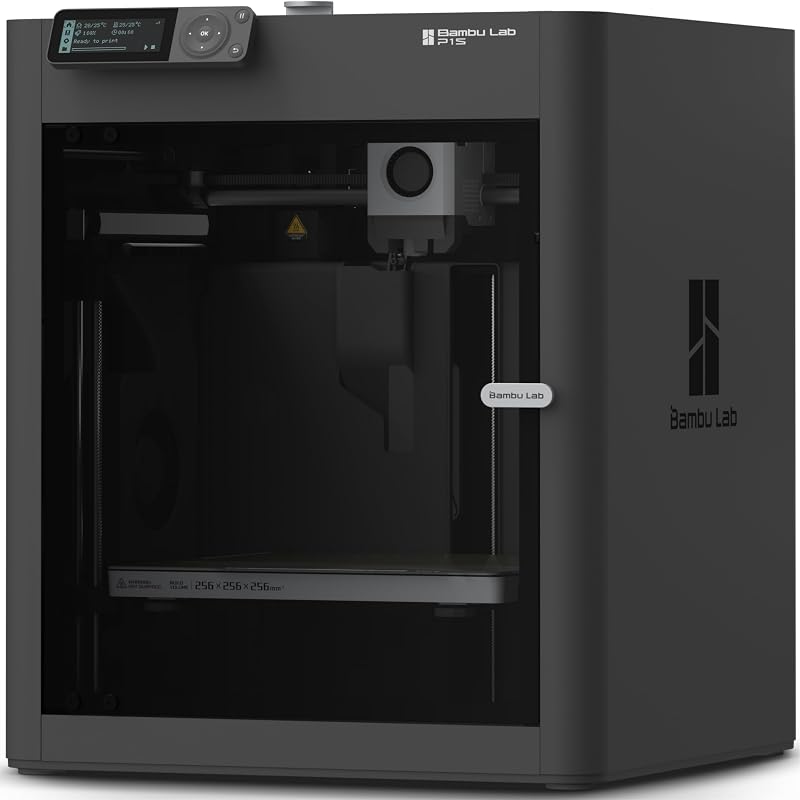
MakerWorld Model Library caters to makers who prioritize automated multi-color material feeding and high-speed enclosed printing through the Bambu Lab P1S Combo platform rather than an oversized single-nozzle bed-slinger. It provides integrated AMS multi-filament management, auto bed leveling, and CoreXY motion, making it a stronger choice for colorful decorative designs despite offering a smaller overall printing envelope than the LK5 Pro.

FLASHFORGE Adventurer 5M 3D Printer is aimed at shoppers seeking maximum print speed and effortless maintenance over expansive print size. Featuring a 220 by 220 by 220 millimeter print capacity, fully automatic bed leveling, a high-speed CoreXY structure reaching up to 600 millimeters per second, and a quick-swap 280-degree Celsius nozzle, it delivers faster throughput on everyday parts while occupying substantially less bench space.
Beginner-Friendly Ecosystem with MakerWorld Model provides a streamlined, plug-and-play experience built around the enclosed Bambu Lab P1S CoreXY system. It serves users who want a factory-tuned machine with cloud model integration and reliable thermal containment for temperature-sensitive filaments right out of the box, trading away the open-frame, extra-tall build volume of the LK5 Pro in favor of push-button convenience.
FAQ
What is the maximum build volume of the Longer LK5 Pro?
The printer offers a maximum build envelope of 11.8 by 11.8 by 15.7 inches, which translates to 300 by 300 by 400 millimeters, giving users significant vertical and horizontal space for large single-piece models.
Does the Longer LK5 Pro use silent motor drivers?
Yes, the printer is equipped with an upgraded 32-bit motherboard featuring TMC2209 ultra-quiet stepper motor drivers, which significantly reduce motor operating noise during motion.
How pre-assembled is the machine when delivered?
The manufacturer listing notes that the unit arrives between 90 and 95 percent pre-assembled, requiring users to mount the vertical gantry, secure the diagonal support struts, connect labeled wiring harnesses, and install the spool holder.
What material is used for the build plate?
The printer comes equipped with a silicon carbide lattice glass platform designed to promote uniform thermal distribution, strong model adhesion during heating, and easy part release once cooled.
Can the printer recover if power is disconnected during a job?
Yes, the onboard 32-bit controller features an auto-resume printing function that stores progress during an unexpected power interruption and allows the toolhead to continue from the last recorded layer once power returns.


