As Amazon Associates, we earn from qualifying purchases. This means we may receive a small commission at no extra cost to you if you click through and make a purchase.
Finding the right smart controller often comes down to balancing ease of use with privacy and long-term reliability. The Home Assistant Green offers an accessible entry point into dedicated local home automation without requiring you to source single-board computers or manually flash operating systems. If you want centralized control over varied smart devices while ensuring your routines do not depend on external servers, this unit is designed precisely for that role. It is built as a complete appliance that bridges the gap between complex DIY automation and everyday household usability.
Many traditional smart home ecosystems, including mainstream cloud voice platforms like google nest hubs, route routine commands through distant company data centers. By contrast, this hardware is engineered to run locally inside your living room, keeping device commands and personal metrics contained within your own physical network. This review evaluates the hardware specifications, setup requirements, real-world expandability, and system trade-offs to help you decide whether this dedicated hub matches your household automation goals.
What You Get With the Home Assistant Green
Home Assistant Green
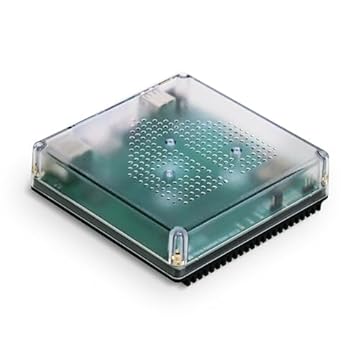


Photographs published on the Amazon listing.
The device arrives as a complete, self-contained hardware bundle designed to get your smart home server operational right out of the packaging without requiring extra components or assembly tools.
- Home Assistant Green hub: A compact, fanless enclosure housing a quad-core processor, 32GB of onboard storage, and 4GB of RAM.
- Pre-installed operating system: Comes with official Home Assistant OS already flashed and ready to boot.
- Universal power supply: Includes power adapters designed to provide steady, low-wattage electrical delivery.
- Gigabit Ethernet cable: A high-speed network cable to establish a direct, stable wired link to your home router.
- Documentation and extras: A Quick Start Guide, official Home Assistant sticker, and warranty and safety information.
- Dual USB ports: Two external USB interfaces for attaching peripheral adapters and radio dongles.
Key Specifications
Feature
Specification
- Brand / Manufacturer
- Nabu Casa
- Model Name
- Home Assistant Green
- Operating System
- Home Assistant OS
- Processor
- 1 (Quad-core)
- Installed RAM
- 4 GB LPDDR4X
- Storage Capacity
- 32 GB
- Total USB Ports
- 2
- Connectivity Technology
- Ethernet, USB
- Wireless Compatibility
- Bluetooth
- Dimensions and Weight
- 4.41"L x 4.41"W x 1.26"H; 12 ounces
Copied from the Amazon listing. These figures were not measured here.
Plug-and-Play Setup and Beginner Experience
One of the primary historical barriers to adopting local smart home platforms has been the complexity of initial installation. Traditionally, running this platform meant purchasing a single-board computer, hunting for a compatible power supply, formatting microSD cards, and troubleshooting Linux terminal commands. The Home Assistant Green setup completely bypasses those technical roadblocks. Because the operating system is pre-configured on internal storage, getting the hub up and running requires only two physical connections: plugging in the included Gigabit Ethernet cable to your router and inserting the power lead.
Once connected, the hub boots automatically and announces itself on your local network. Users simply open a standard web browser on a phone, tablet, or desktop computer, navigate to the onboarding address, and follow guided screen prompts to name their household and create an administrator account. The platform automatically scans your local network for connected devices, identifying compatible smart lights, media players, smart plugs, and network gear without requiring manual command-line configuration. This level of guided discovery makes the Home Assistant Green for beginners practical, turning what used to be a weekend software project into an approachable process.
Transitioning from consumer voice ecosystems like an apple home pod mini to a dedicated automation hub can feel intimidating, but the interface handles basic scheduling, grouping, and sensor triggers through clear graphical menus. While advanced customizations and complex multi-condition automations remain available for deeper tinkering, a beginner can set up functional automations, such as turning off lights when leaving home or activating pathways after dark, within minutes of completing the initial setup wizard.
Hardware Capabilities and Power Efficiency
Evaluating the Home Assistant Green hardware specs reveals a system balanced specifically for sustained home management. At the heart of the enclosure is a quad-core processor paired with 4 GB of LPDDR4X RAM. In home automation, low latency and multitasking responsiveness are critical. Having 4 GB of modern system memory allows the hub to juggle dozens of concurrent integrations, track real-time sensor updates, and compile historical diagnostic logs without choking or running out of memory during routine operational spikes.
Storage is handled by 32 GB of internal flash memory, which provides adequate room for the operating system, regular platform updates, user-created automation rules, and several months of sensor telemetry data. Unlike standard single-board computer setups that rely on removable microSD cards—which are prone to corruption from frequent write cycles—the integrated memory inside this unit offers improved physical reliability. The entire enclosure measures just 4.41 inches long by 4.41 inches wide and 1.26 inches tall, weighing 12 ounces, allowing it to rest quietly on an entertainment console or network shelf without taking up meaningful space.
Thermal and electrical design is another distinct asset. The unit features a fanless, silent architecture, meaning there are no moving mechanical parts to gather dust, whine under load, or fail over years of continuous service. Furthermore, the listing emphasizes power-efficient performance, consuming only a couple of watts during standard operation. Because a central home controller must remain powered twenty-four hours a day, three hundred sixty-five days a year, this minimal energy footprint keeps ongoing electrical consumption negligible.
Local Control and Data Privacy Protections
A central selling point highlighted in any Nabu Casa Home Assistant Green review is its strict dedication to local control. Conventional smart hubs routinely process your automations on external corporate servers. If your internet connection drops, or if an equipment vendor decides to sunset cloud support or charge monthly subscription fees, your automations often stop functioning. With Home Assistant Green local control, the brains of your home live directly on your local hardware. Automation rules, state checks, and schedule routines execute locally across your home network, ensuring lightning-fast execution and uncompromised uptime even during broader broadband outages.
Privacy protections are equally fundamental to the architecture. The manufacturer notes that your home data remains stored inside your physical dwelling. Instead of uploading room occupancy patterns, security camera triggers, and daily household habits to the cloud, the Green retains this telemetry on its onboard 32GB drive. You retain complete ownership over your activity logs, with full administrative authority to view, share, or export your operational metrics whenever and wherever you choose.
This local-first architecture eliminates unwanted data harvesting and minimizes security exposure. Users who prefer to integrate optional remote access outside the house can do so securely, but the baseline operation of your home lighting, climate, and security logic never demands an active internet connection to communicate between local smart devices. This ensures that routine actions, such as a motion sensor turning on a hallway sconce, happen instantaneously without the delay introduced by bouncing commands off remote web servers.
Expanding Protocols via USB Adapters
While the hardware includes native Ethernet connectivity and Bluetooth wireless capability, it does not include internal radios for specialized smart home mesh protocols out of the box. Instead, the architecture relies on Home Assistant Green USB expansion to accommodate diverse wireless standards. The unit provides two full-sized external USB ports, allowing homeowners to tailor their physical radio connections according to the exact devices they own.
For those managing Home Assistant Green Zigbee Z-Wave ecosystems, expansion is accomplished by inserting dedicated external USB dongles into the available ports. This modular design presents a deliberate engineering trade-off. Rather than locking users into a fixed internal radio configuration that might become obsolete as communication standards evolve, the platform allows you to plug in dedicated controllers for Zigbee, Z-Wave, or Thread as needed. If a new wireless generation emerges, you simply update the attached USB peripheral without needing to replace the central hub itself.
Managing peripherals through USB also helps alleviate wireless interference. By utilizing short USB extension cables, radio transmitters can be physically separated from the hub’s main board, minimizing electronic noise and improving signal reception across larger homes. While buying separate dongles represents an extra planning step compared to all-in-one consumer bridges, it affords enthusiasts and growing households complete freedom to choose the exact radio firmware and communication standards that match their hardware inventory.
Home Assistant Green Pros and Cons
Pros
- Pre-installed Home Assistant OS
- Local data storage and execution
- Silent fanless low-power design
- Two USB expansion ports
- Fast 4GB LPDDR4X RAM
Cons
- No built-in Zigbee or Z-Wave radios
- Requires wired Ethernet network connection
- No built-in display or speakers
Check Home Assistant Green on Amazon
Is the Home Assistant Green Worth It
Deciding if the Home Assistant Green is worth it depends largely on where you are in your smart home journey and how much you value data independence. For homeowners who currently feel trapped by fragmented smartphone apps, walled-garden ecosystems, or cloud subscriptions that threaten to deprecate older gear, this hub offers an ideal rescue path. It strips away the complex, multi-hour installation rituals that previously kept beginners away from open-source automation, providing an affordable appliance that works directly out of the box.
This unit is exceptionally well suited for privacy-minded homeowners, users seeking rock-solid local reliability, and smart home hobbyists who want a dedicated low-power server rather than running background software on a power-hungry desktop computer. With 4 GB of RAM, 32 GB of reliable storage, and a silent, fanless chassis, the Home Assistant Green smart home hub specs are tuned to manage hundreds of connected local devices smoothly.
However, if you are looking for an all-in-one bridge that includes integrated Zigbee and Z-Wave radios without purchasing add-on accessories, or if you prefer an interactive touch display with built-in voice microphones, this hub will require peripheral add-ons to meet those expectations. For users whose primary goal is an uncompromised, privacy-first local automation brain, this official hardware represents one of the cleanest and most reliable solutions on the market.
Other Options to Consider
Amazon Echo Hub suits users who want an interactive wall-mounted smart display featuring an 8-inch screen, customizable touch widgets, and integrated Alexa voice control, making it a better fit for visual room controls than a headless server like the Green.

Aeotec Smart Home Hub2 is designed for homeowners wanting built-in Zigbee and Matter gateway support operating directly within a smartthings home hub architecture over Wi-Fi without needing external USB sticks, though it lacks Z-Wave radios.
Thread Border Router appeals to those who require a multi-protocol gateway equipped with Zigbee, Bluetooth, Wi-Fi, PoE, and an IR transmitter built directly into the housing, offering out-of-the-box cross-platform bridge capabilities for Apple HomeKit, Alexa, and Matter networks.

FAQ
Does the Home Assistant Green come with built-in Wi-Fi?
The listing specifies connectivity technology via Ethernet and USB, alongside Bluetooth wireless capability. The hub is designed to connect directly to your home network router or switch using the included Gigabit Ethernet cable for maximum connection stability.
Can the Home Assistant Green control Zigbee and Z-Wave devices directly?
The unit does not have integrated Zigbee or Z-Wave radios inside the chassis. To control these devices, you must plug compatible Zigbee or Z-Wave USB adapter sticks into one of the hub’s two available USB ports.
Do I need to pay a monthly subscription fee to use this hub?
No, the core operating system and local automation capabilities run entirely on your local hardware without required subscription fees. Your automations, data logs, and device integrations remain fully operational on your home network.
How much power does the unit consume during normal operation?
According to the product specifications, the hub is built to be highly power-efficient, using only a couple of watts during standard operation. Its fanless architecture ensures silent, continuous functionality with very low electrical consumption.
What operating system comes installed on the device?
The hub comes with official Home Assistant OS already installed on its 32GB internal storage, eliminating the need to download system images, format memory cards, or execute manual command-line installations.