As Amazon Associates, we earn from qualifying purchases. This means we may receive a small commission at no extra cost to you if you click through and make a purchase.
Automating major household circuits directly at the breaker panel often leaves smart home builders caught between industrial contactors and delicate in-wall relays that crowd standard junction boxes. The Shelly Pro 1 provides an organized and practical answer by combining a single-phase switching channel, potential-free dry contact architecture, and dual network connectivity into a dedicated form factor built specifically for standard electrical enclosures. If your goal is to manage high-demand lighting, heavy motorized valves, or specialized heating equipment without installing an external proprietary hub, this smart relay offers a clean path to centralized panel automation.
In this detailed shelly pro 1 review, we examine how the module performs in real electrical cabinets, how its hardware handles varied electrical voltages, and what you need to consider before fitting one into your distribution box. We evaluate the core shelly pro 1 specs, break down the installation and wiring requirements, examine the advantages of wired Ethernet over standard wireless setups, and outline who will benefit most from this device in an everyday automation project.
What You Get With the Shelly Pro 1
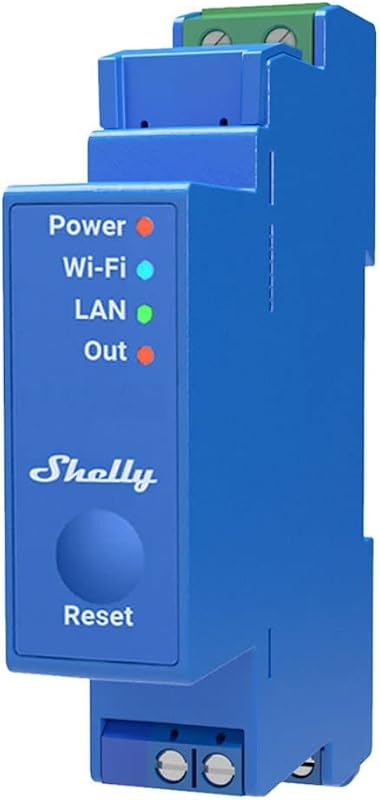
The Shelly Pro 1 arrives as a dedicated single-channel modular device designed for residential and commercial automation. Backed by Shelly with a 5-year device warranty and an official 5-year spare part availability duration, it provides a dependable hardware package right out of the box without requiring accessory adapters or extra bridge hardware.
- One-channel, single-phase smart switch relay rated for loads up to 16A and 3840W
- Dry contact (potential-free) output allowing versatile switching across line-voltage and isolated circuits
- Dual network connectivity supporting both 2.4 GHz Wi-Fi and hardwired RJ45 Ethernet LAN
- Integrated Bluetooth gateway functionality for swift device commissioning and local communication
- Heavy-duty screw connector terminals for solid and stranded electrical wiring
- Direct compatibility with Amazon Alexa and Google Home smart platforms
- Internal hardware protection against overpower, overvoltage, and excessive operating temperature
- Shelly Smart Control app integration with smart timers, custom schedules, and automated scene execution
Key Specifications
Specification
Detail
- Brand Name
- Shelly
- Mounting Type
- DIN Rail Mount
- Relay Phase and Channels
- Single-phase, 1-channel
- Contact Type
- Normally Open dry contacts (potential-free)
- Maximum Current Rating
- 16 A
- Maximum Wattage Capacity
- 3840 watts
- Operating Voltage Range
- 110V to 240V AC
- Network Connectivity
- Wi-Fi, Ethernet LAN, Bluetooth Gateway
- Connector Type
- Screw terminals
- Safety and Compliance
- CE, RoHS certified; 5 years warranty
Copied from the Amazon listing. These figures were not measured here.
DIN Rail Mounting and Breaker Box Installation
Standard consumer units and commercial subpanels rely on metal mounting tracks to keep electrical switches and circuit breakers firmly secured. The shelly pro 1 din rail design allows the switch to snap directly onto these standard rails alongside existing breakers, eliminating the disorganized clutter of loose micro-modules tucked behind faceplates. If you are already utilizing energy monitors such as the shelly pro 3em in your electrical cabinet, the Pro 1 matches that standardized profile to maintain a cohesive, professional appearance throughout the entire distribution panel.
Working with the shelly pro 1 wiring requires a methodical approach because the device operates inside high-voltage service panels. The relay accepts alternating current from 110V to 240V AC to power its internal logic, and it relies on screw terminals to clamp conductors securely in place. Proper shelly pro 1 installation demands that power to the panel be completely shut off at the main breaker before handling connections. Clean wire stripping and correct torque on the screw connectors prevent loose contacts and ensure reliable conductivity over long periods of continuous operation.
Space management inside the distribution enclosure is another important operational consideration. Because this smart relay is built for DIN rail enclosures, it provides smart automation without demanding additional external cables, extra raceways, or peripheral junction enclosures. However, you must consider panel heat dissipation. The technical specifications specify an upper operating temperature rating of 104.99 °F, meaning tightly packed subpanels in hot environments must maintain sufficient ventilation so internal safeguards are not triggered prematurely.
Network Reliability with Ethernet LAN and Wi-Fi
Metal electrical panels are notorious for acting as shields that block wireless communication, often causing standard smart relays to drop offline intermittently. The shelly pro 1 wifi lan architecture resolves this challenge by pairing wireless networking with a dedicated physical Ethernet port. Running a network patch cable directly from your local network switch into the breaker panel guarantees a rock-solid data connection that completely bypasses radio frequency interference caused by heavy sheet metal doors or nearby high-current wiring.
For installations where routing an Ethernet cable to the breaker panel is difficult, the built-in Wi-Fi radio allows the relay to connect wirelessly without requiring any separate bridge or proprietary hub. The device communicates directly over standard home Wi-Fi networks, which keeps equipment costs down and simplifies installation. The inclusion of a Bluetooth gateway further streamlines the initial network discovery process, letting the Shelly Smart Control app locate and configure the switch within moments of power-up.
Having local network reliability is critical for centralized electrical switches that control foundational building services. Because the device processes automated tasks locally, your programmed schedules and smart timers will continue to run even if your wide-area internet connection drops out. This dual-networking approach ensures that whether you prefer wired stability or cable-free wireless configuration, the switch maintains consistent responsiveness to user inputs and automated triggers.
Dry Contact Flexibility for Low and Line Voltage Loads
A standout feature detailed in the shelly pro 1 specs is its potential-free output, commonly known as a dry contact. In conventional smart switches, closing the internal relay directs the incoming line voltage straight to the output terminal, restricting the switch to controlling devices that share the exact same operating voltage. The shelly pro 1 dry contact isolates the switching terminal from the relay’s internal power supply, allowing the normally open contact to switch an entirely separate electrical circuit without crossing power sources.
This potential-free design makes the shelly pro 1 smart switch exceptionally adaptable across residential and light commercial infrastructure. The manufacturer listing notes that it is suitable for controlling motorized valves in water distribution boxes, circulating pumps, and heating or cooling loops that require separate electrical circuits. While multi-channel units like the shelly 2pm gen4 are often selected for dual line-voltage motor controls, the Pro 1 remains the preferred single-channel pick whenever complete electrical isolation or dry contact switching is required.
Under continuous operation, the internal relay supports a current rating of up to 16A and a peak capacity of 3840 watts at 240V AC. This capacity is sufficient to handle large banks of architectural lighting, pool circulation hardware, or dedicated space heaters. Operating in an automatic mode, the switch transitions reliably between open and closed contact states based on incoming automation commands, providing robust physical switching for loads that would quickly overwhelm standard residential smart plugs.
Safety Safeguards and Smart App Control
Installing automated hardware inside a central breaker panel requires uncompromising safety protocols. The Shelly Pro series addresses this by integrating active protection against overpower, overvoltage, and excessive operating temperature directly into the hardware. If connected equipment pulls more current than specified, or if an electrical spike hits the panel, the switch automatically intervenes to cut power and protect both the internal board and downstream appliances. This protection is supplemented by formal CE and RoHS compliance certifications.
Software control is managed primarily through the Shelly Smart Control app, which enables remote monitoring and sends real-time notifications when automated events occur. Users can set custom schedules based on precise times, configure smart countdown timers to automatically turn off irrigation or heating loops, and manage device settings without technical friction. For homes utilizing voice control, the relay connects directly with Amazon Alexa and Google Home without requiring intermediary translation hubs.
The app also serves as the control center for advanced shelly pro 1 home automation routines. Multiple Shelly devices can be bound into customized automation scenes, allowing the Pro 1 to act in response to remote sensor inputs. For example, a temperature or moisture sensor elsewhere in your facility can signal the Pro 1 to instantly open or close a motorized water valve, executing safety shutoffs and complex utility schedules automatically in the background.

Shelly Pro 1 Pros and Cons
Pros
- Direct DIN rail breaker box mounting
- Physical Ethernet LAN and Wi-Fi connectivity
- Potential-free dry contact output
- Handles up to 16A and 3840W
- Overpower and overvoltage safety protection
- Five-year manufacturer device warranty
Cons
- Requires professional breaker panel installation
- Single channel limits multi-circuit switching
- Upper temperature rating capped at 104.99 °F
Is the Shelly Pro 1 Worth It
Deciding whether the Shelly Pro 1 is worth it depends on where and how you plan to deploy your smart home controls. If you are seeking a clean, code-compliant, and durable method to automate an electrical circuit from within a central service panel or distribution board, this relay justifies its spot on the rail. The combination of DIN rail mounting and wired Ethernet eliminates the messy wiring, dangling modules, and dropped wireless signals that frequently plague breaker panel automation projects.
The dry contact capability adds tremendous functional value for anyone managing specialized building infrastructure. Being able to safely control 16A loads, motorized plumbing manifolds, or heating contactors from a single device simplifies panel architecture significantly. Combined with five years of warranty coverage and an official five-year spare parts commitment from the manufacturer, it represents a stable, long-term infrastructure investment rather than a disposable smart home gadget.
However, if you simply want to control a single standing lamp, an in-wall receptacle, or an individual light fixture inside a shallow wall box, the Pro 1 is unnecessarily robust. In-wall pucks and smart wall switches are far more practical for dispersed, room-level installations where no DIN rail exists. But for dedicated breaker panel automation, heavy-duty appliance switching, and isolated contact control, the Shelly Pro 1 delivers outstanding performance and reliability.
Other Options to Consider
Home Automation suits shoppers who want a compact puck-style dry contact switch that supports Apple HomeKit, Matter, and Zigbee for garage door opening and tight wall junction box automation rather than breaker panel mounting.
Make existing lights and appliances is a practical alternative for users seeking a 16A Zigbee switch with Home Assistant and Alexa support to retrofit existing in-wall switches without running Ethernet cabling.

SONOFF Zigbee 3.0 Smart Relay works best for homeowners looking for a multi-pack of mini in-wall modules to automate multiple basic light switches throughout the house where a neutral wire and Zigbee hub are already present.
FAQ
Does the Shelly Pro 1 require an external smart home hub?
No, the Shelly Pro 1 operates entirely without a proprietary hub. It connects directly to your local network via its built-in Wi-Fi radio or physical Ethernet LAN port, allowing direct control through the Shelly Smart Control app as well as voice platforms like Amazon Alexa and Google Home.
What is the purpose of dry contacts on the Shelly Pro 1?
Dry contacts, or potential-free contacts, mean the switching circuit is electrically isolated from the internal power supply that runs the relay. This allows the switch to control different voltage sources, separate phases, or low-voltage systems like motorized valves and heating controls without introducing line voltage into those circuits.
Can the Shelly Pro 1 be installed in any electrical panel?
The unit is designed to fit standard DIN rails found inside modern distribution panels, breaker boxes, and consumer units. Because installation involves working around live electrical feeds, it should always be carried out following local electrical codes with the main panel power completely disconnected.
What is the maximum load rating for the Shelly Pro 1?
The Shelly Pro 1 has a maximum switching current rating of 16A and supports loads up to 3840 watts across an alternating current operating voltage range of 110V to 240V AC.
What internal protections are built into the Shelly Pro series?
The Shelly Pro 1 is equipped with internal hardware safeguards against overpower conditions, overvoltage surges, and excessive internal temperatures, ensuring that the switch disengages if safe operating parameters are exceeded.