As Amazon Associates, we earn from qualifying purchases. This means we may receive a small commission at no extra cost to you if you click through and make a purchase.
If you own a standard Creality Ender 3 S1, the stock toolhead restricts your filament selection due to internal heat limitations that degrade ordinary assemblies. Swapping your factory setup for the KOYOFEI Ender 3 S1 Hotend Kit directly solves this thermal bottleneck by delivering an all-metal heating block assembly engineered to reach operating temperatures up to 300°C. For makers who want to move past standard PLA and PETG into high-temperature engineering filaments, installing an ender 3 s1 hotend upgrade gives your existing 3D printer the high-heat capabilities of advanced Pro machines without requiring a full toolhead replacement.
Selecting an extrusion upgrade requires balancing thermal conductivity, mechanical fitment, and throat tube material engineering. While earlier bedslingers like the creality ender 3 3d printer relied on long Bowden pathways, the direct-drive Sprite system allows for focused, modular thermal swaps. In this review, we examine the structural build of this heating block kit, analyze its bimetallic thermal design against heat creep, detail the mechanical installation process, and outline what you can expect during daily printing workflows.
What You Get With the KOYOFEI Ender 3 S1 Hotend Kit
KOYOFEI Ender 3 S1 Hotend Kit


Photographs published on the Amazon listing.
The KOYOFEI package provides a direct replacement heating assembly paired with essential consumable hardware designed to keep your direct-drive toolhead operational over extended production runs. Rather than sourcing individual throat tubes, heater blocks, and protective covers from separate suppliers, this kit groups the core thermal elements and routine wear parts together in one package.
- One high-temperature heating block kit engineered for operating temperatures up to 300°C
- One bimetallic throat tube built with chrome copper and TC4 titanium alloy
- Five 0.4 mm brass nozzles suitable for standard filament extrusion
- Three high-temperature resistant silicone socks designed for heat retention and block protection
- Mounting geometry matched specifically for the Sprite extruder hotend platform
- Broad hardware compatibility supporting the Ender-3 S1, Ender-3 S1 Pro, CR-10 Smart Pro, Sermoon V1, and Sermoon V1 Pro
- Material support covering PLA, TPU, PETG, and ABS filaments
Key Specifications
Reviewing the koyofei ender 3 s1 specs reveals the physical dimensions, materials, and printer compatibility details provided in the manufacturer data.
Specification Category
Listing Detail
- Manufacturer
- KOYOFEI
- Brand
- KOYOFEI
- Maximum Rated Temperature
- 300°C
- Throat Tube Material
- Chrome copper neck tube with TC4 titanium alloy
- Included Nozzles
- 5 x 0.4 mm brass nozzles
- Silicone Covers
- 3 high-temperature resistant silicone socks
- Compatible Printer Models
- Ender-3 S1, Ender-3 S1 Pro, CR-10 Smart Pro, Sermoon V1, Sermoon V1 Pro
- Compatible Filaments
- PLA, TPU, PETG, ABS
- Package Dimensions
- 7.13 x 2.91 x 0.91 inches
- Item Weight
- 1.41 ounces
Copied from the Amazon listing. These figures were not measured here.
Thermal Performance and Heatbreak Architecture
The main objective behind installing this ender 3 s1 high temp block is unlocking stable extrusion at temperatures up to 300°C. Standard desktop hotends often feature an internal PTFE guide tube seated directly against the nozzle. When heated beyond 240°C, PTFE begins to deteriorate, emit hazardous fumes, and deform into a sticky obstruction. By substituting plastic liners for an all-metal internal bore, this heating block eliminates internal breakdown, giving makers the thermal headroom necessary for structural engineering polymers.
Conducting high thermal energy without causing jams higher up in the print head requires deliberate material engineering. This assembly implements an ender 3 s1 titanium heatbreak that pairs TC4 titanium alloy with chrome copper. Titanium has inherently low thermal conductivity, which creates an abrupt thermal boundary that stops heat from traveling upward into the filament feed gears. At the same time, the chrome copper section conducts heat rapidly into the heatsink, cooling the upper filament column before it can soften prematurely and cause heat creep clogs.
For makers managing print settings with hardware controllers like a creality sonic pad, consistent thermal transfer becomes essential at elevated extrusion speeds. Faster volumetric extrusion rates demand that the heating block melt filament continuously as it passes through the chamber. The chrome copper block construction transfers heat into incoming filament more efficiently than standard aluminum, keeping extrusion temperatures stable even during demanding high-speed print passes.
Sprite Extruder Integration and Mechanical Installation
Ensuring an aftermarket component fits properly into your machine is essential when replacing an ender 3 s1 sprite extruder hotend. The Sprite direct-drive system integrates the stepper motor, dual drive gears, cooling fan, and hotend into a tightly packaged footprint. This KOYOFEI replacement block matches the original mounting holes, throat tube outer diameter, and overall block dimensions, ensuring it fits cleanly beneath the cooling assembly without requiring custom brackets or modified fan shrouds.
Performing this ender 3 s1 300c upgrade requires disassembling the lower half of your direct-drive toolhead. You will need to remove the part cooling duct, unscrew the lower heatsink retention bolts, and carefully loosen the heatbreak set screw. It is important to note that the listing does not specify inclusion of a heater cartridge or temperature thermistor sensor. You must carefully slide your original heating element and glass bead or cartridge thermistor out of your old block and install them into the new assembly.
During reassembly, seating the titanium throat tube and nozzle correctly is critical to prevent leaks. The nozzle must be tightened flush against the bottom face of the titanium throat tube rather than bottoming out against the exterior heating block wall. Completing a final hot-tightening sequence once the block reaches printing temperature guarantees that thermal expansion does not create micro-gaps, ensuring a leak-free seal before you load your first spool.
Material Versatility and High Temperature Filament Behavior
Upgrading your toolhead is particularly valuable when configuring your ender 3 s1 for abs printing. Acrylonitrile Butadiene Styrene requires consistent nozzle temperatures between 230°C and 250°C to achieve proper layer adhesion and impact resistance. While standard PTFE-lined hotends run dangerously close to their thermal failure ceiling at these temperatures, an all-metal 300°C assembly handles these thermal requirements effortlessly, ensuring reliable extrusion across multi-hour mechanical print jobs.
In addition to ABS, this thermal upgrade supports common everyday filaments such as standard PLA, flexible TPU, and chemical-resistant PETG. The direct-drive configuration of the S1 platform excels with flexible materials because the short distance between drive gears and nozzle prevents elastic filament from buckling. The polished internal walls of the TC4 throat tube allow PLA and PETG to slide smoothly through the melt zone, provided retraction distances are kept short to avoid pulling molten material into the cold break.
While the heating block and bimetallic throat tube comfortably tolerate 300°C, material choices must also account for nozzle wear. The five included 0.4 mm nozzles are made from standard brass, which provides excellent thermal conductivity for pure polymers. However, brass is a soft metal that wears down rapidly if exposed to abrasive composite filaments such as carbon fiber, glow-in-the-dark blends, or metal-filled polymers. Printing abrasives will require replacing the brass nozzles with hardened steel or wear-resistant alternatives.
Long-Term Durability and Routine Maintenance
Every hotend experiences substantial thermal stress through repeated heating and cooling cycles. Maintaining an all-metal Sprite assembly differs noticeably from maintaining older Creality printers like the creality ender 3 v2, where deteriorating PTFE Bowden tubes frequently had to be cut and replaced. With an all-metal assembly, routine maintenance focuses primarily on monitoring nozzle orifice wear and preserving thermal insulation around the heater block.
The inclusion of three high-temperature silicone socks provides practical long-term value for routine printer upkeep. A silicone sock serves two crucial purposes: it shields the aluminum heater block from turbulent cooling fan airflow to maintain stable temperatures, and it prevents stray melted plastic from sticking to the heater block exterior. Over months of high-temperature printing, silicone covers can degrade or tear from accidental tool contact. Having two spare covers included ensures you can replace worn socks immediately without pausing production.
Having five spare 0.4 mm brass nozzles further simplifies ongoing machine maintenance. A 0.4 mm nozzle provides an ideal balance of fine surface detail and reasonable print times, but normal extrusion friction eventually alters the orifice diameter. Having multiple matching nozzles on hand allows you to swap out worn tips at the first sign of extrusion inconsistency, restoring clean layer lines and reliable dimensional accuracy to your prints.
KOYOFEI Ender 3 S1 Hotend Kit Pros and Cons
Pros
- Maximum printing temperature up to 300°C
- Titanium alloy throat tube limits heat creep
- Chrome copper construction speeds heat dissipation
- Includes five 0.4 mm brass nozzles
- Includes three high-temperature silicone socks
- Direct fit for Sprite direct-drive extruders
Cons
- Brass nozzles wear down with abrasive filaments
- Heating cartridge and thermistor not specified in listing
- Requires manual disassembly of the toolhead assembly
Check KOYOFEI Ender 3 S1 Hotend Kit on Amazon
Is the KOYOFEI Ender 3 S1 Hotend Kit Worth It
Deciding whether is koyofei ender 3 s1 worth it depends on your current printer hardware and the specific filament materials your projects require. For owners of the base Ender 3 S1 who feel constrained by standard temperature ceilings, this 300°C all-metal assembly is a practical upgrade. It unlocks the ability to print ABS, ASA, and advanced technical filaments without requiring you to purchase an entire Sprite Pro extruder unit or buy an expensive new 3D printer.
This replacement kit is also an excellent option for owners of the Ender-3 S1 Pro or CR-10 Smart Pro who need to replace a damaged, cross-threaded, or heavily jammed factory heater block. Because the assembly adheres to the original manufacturer dimensions while bundling five nozzles and three silicone covers, it serves as a sensible repair bundle that restores full printing capability while supplying extra spare parts for future maintenance.
Conversely, if you only use your 3D printer for decorative models, tabletop miniatures, or simple household items using standard PLA filament, this upgrade may offer limited practical value. All-metal hotends require more disciplined retraction settings to prevent cold-zone jams with PLA. Hobbyists who never intend to print beyond 210°C will see little day-to-day benefit from the extra thermal headroom, making a standard replacement hotend more suitable for purely casual printing.
Other Options to Consider
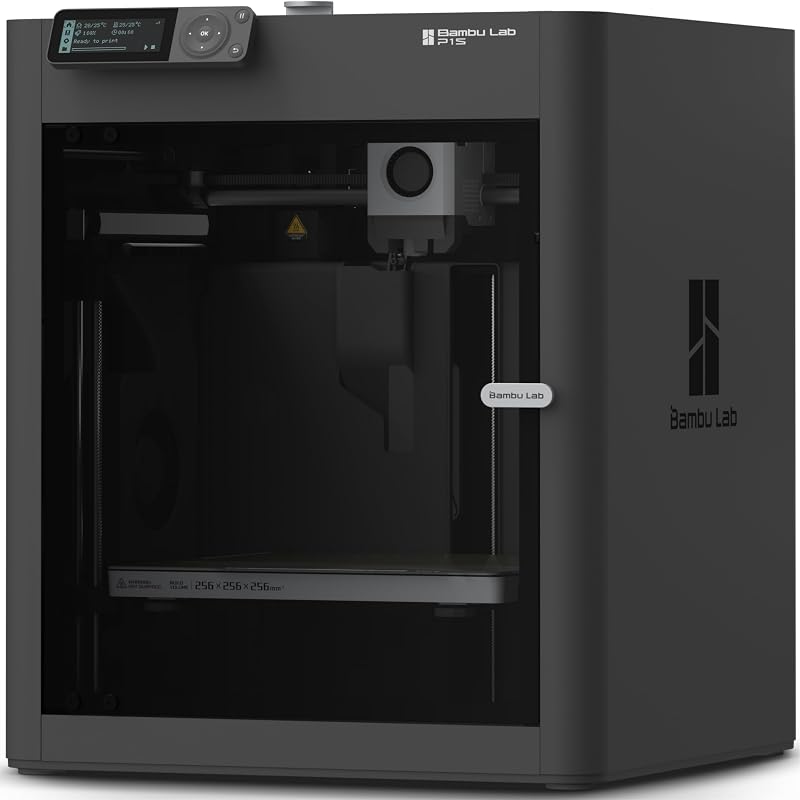
If you prefer an all-in-one multi-color manufacturing system rather than modifying individual extruder components on your existing printer, look at the MakerWorld Model Library Bambu Lab P1S Combo with AMS, which offers CoreXY high-speed printing, auto bed leveling, and multi-color material handling straight out of the box.

Makers searching for a high-speed enclosed alternative with minimal assembly requirements should consider the FLASHFORGE Adventurer 5M 3D Printer, which features a 280°C direct extruder with a 3S detachable nozzle, full auto leveling, a CoreXY all-metal frame, and print speeds up to 600mm/s within a 220x220x220mm print volume.
Users looking for an accessible enclosed CoreXY printer designed for high precision without manual component upgrades should evaluate the Beginner-Friendly Ecosystem with MakerWorld Model Bambu Lab P1S 3D Printer, which delivers a ready-to-use enclosed FDM printing experience for makers prioritizing reliable operation.
FAQ
Does the KOYOFEI hotend kit fit the standard Ender 3 S1 without modifications?
Yes, this heating block kit is designed specifically to fit the Ender-3 S1 Sprite direct-drive extruder assembly. It matches the original factory mounting holes and throat tube diameter, allowing it to install cleanly into the stock heatsink without requiring printed adapters or bracket adjustments.
Can this hotend upgrade reliably print ABS filament?
Yes, this kit is specifically intended to handle ABS filament by replacing heat-sensitive internal PTFE tubing with an all-metal bimetallic throat tube. With a maximum rated temperature of 300°C, it easily maintains the 230°C to 250°C temperatures necessary for printing strong, durable ABS parts.
What materials are used to construct the bimetallic throat tube?
The throat tube uses a hybrid design combining a chrome copper neck tube with TC4 titanium alloy. The titanium section restricts heat from traveling upward into the cold block, while the chrome copper portion accelerates heat dissipation into the printer heatsink to prevent filament clogs.
Does this package include a replacement heater cartridge and thermistor?
The listing does not specify the inclusion of an electrical heating cartridge or a thermistor sensor. The package contains the high-temperature heating block kit, five 0.4 mm brass nozzles, and three silicone socks, requiring you to transfer your existing wiring and sensors during installation.
Can the included brass nozzles handle abrasive composite filaments?
The five included 0.4 mm nozzles are made of standard brass, which is ideal for non-abrasive filaments like PLA, PETG, TPU, and ABS. If you plan to print abrasive materials such as carbon fiber, glow-in-the-dark, or wood-filled filaments, you should swap the brass nozzles for hardened steel nozzles to prevent premature wear.