
As Amazon Associates, we earn from qualifying purchases. This means we may receive a small commission at no extra cost to you if you click through and make a purchase.
If your smart security cameras regularly drop offline or suffer from degraded connectivity near the edges of your yard, the Blink Sync Module XR is built directly to resolve that frustration. Standard smart home hubs rely strictly on typical Wi-Fi transmission distances, which often fail when attempting to broadcast through exterior brick, stone, or across expansive lawns. Homeowners investing in the blink outdoor 4 xr sync module want a reliable way to monitor far-reaching property lines, detached sheds, long driveways, or perimeter fence gates without installing complicated mesh relays or weatherproofing third-party range extenders. This hub addresses those dead zones by providing dedicated long-range communication modes tailored specifically to Blink Outdoor 4 cameras.
Knowing whether this hub makes sense for your home requires understanding how its extended coverage operates alongside its storage architecture. While previous iterations required separate USB flash drives and standard Wi-Fi distances, this device introduces dual-tier transmission distances and compact onboard card expansion. In this guide, we take a close look at the unit’s hardware capabilities, explore how its wireless modes perform across varied distances, contrast it with the older blink outdoor camera sync module 2, and outline real-world installation requirements. By the end, you will know exactly whether this device is the right backbone for your property’s wireless security system.
What You Get With the Blink Sync Module XR
Blink Sync Module XR
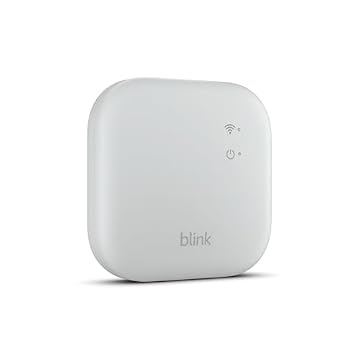


Photographs published on the Amazon listing.
Unboxing the system reveals a streamlined, compact hub alongside the essential accessories needed to power the unit from any standard wall outlet. The hardware package is designed for clean indoor integration, keeping cabling minimal while supplying the base station necessary to run up to ten compatible cameras across your home network.
- Blink Sync Module XR system hub unit in white finish
- One USB-C power cable for modern, reversible plug connectivity
- One AC power adapter compatible with 100-240VAC electrical systems
- XR coverage mode delivering extended wireless range up to 250 feet for Outdoor 4 cameras
- XR+ coverage mode delivering extreme wireless range up to 400 feet for Outdoor 4 cameras (video resolution may vary)
- Local video clip storage support via integrated MicroSD card slot handling capacities up to 256 GB (card sold separately)
- Cloud storage option via an optional Blink Subscription Plan (sold separately)
- System-wide coordination for up to 10 Blink devices managed through the single Blink mobile app
- Integration with Alexa-enabled hardware for hands-free voice control, live view invocation, and system arming
- Manufacturer documentation covering the included 1-year limited warranty and service terms
Key Specifications
Specification
Detail
- Product Dimensions
- 3.19 in x 3.19 in x 0.8 in (81 mm x 81 mm x 20.32 mm)
- Unit Weight
- 0.19 lb (0.085 kg)
- Power Rating
- Plug-in power, 100-240VAC, 50/60Hz
- Power Connection
- USB-C cable with included wall adapter
- Wireless Connectivity
- 2.4 GHz Wi-Fi (802.11b/g/n)
- Operating Temperature
- 32°F to 104°F (0°C to 40°C), indoor use only
- Local Storage Capacity
- MicroSD card slot supporting up to 256 GB (card sold separately)
- Device Capacity
- Manages up to 10 Blink devices per hub
- Smartphone OS Requirements
- iOS 17, Android 10, or Fire OS 8
- Included Warranty
- 1-year limited warranty and service
Copied from the Amazon listing. These figures were not measured here.
Wireless Reach and the Real Blink Sync Module XR Range
The standout feature of this hardware is the extended wireless coverage that separates it from conventional smart home hubs. When evaluating the blink sync module xr range, the manufacturer defines two distinct operating tiers: standard XR mode and extreme XR+ mode. In standard XR mode, the hub communicates with Outdoor 4 cameras positioned up to 250 feet away from the unit. This provides substantial breathing room for typical suburban backyards, allowing you to position cameras along perimeter fences, backyard sheds, or exterior pool structures without relying on auxiliary network repeaters.
For properties that demand even greater reach, XR+ mode pushes the transmission distance up to 400 feet from your home. This capability makes a noticeable difference for sprawling acreage, detached workshops, private front gates, and extended driveways. However, reaching that 400-foot threshold introduces practical trade-offs. The official product documentation explicitly notes that video resolution may vary when operating in XR+ mode. Under challenging signal conditions or maximum physical distances, the camera may automatically throttle resolution below standard 1080p HD to maintain a stable, uninterrupted stream and preserve battery efficiency.
It is equally important to understand hardware limitations regarding compatibility. The blink outdoor 4 extended range capability operates exclusively with Blink Outdoor 4 cameras. If you integrate older Blink models into the system, those older cameras connect to the hub and share system arming commands, but they operate under standard wireless distances rather than the boosted XR spectrum. If your primary objective is covering a remote structure on your property, pairing this hub with the blink outdoor 4 xr newest model is required to take full advantage of both the 250-foot and 400-foot broadcast profiles.
Local Storage Management and MicroSD Card Options
Clip storage remains one of the primary concerns for smart camera owners, and the blink sync module xr local storage system provides an alternative to mandatory monthly cloud fees. The hub includes an onboard card reader that accepts a blink sync module xr micro sd card up to 256 GB in capacity. It is critical to note that the MicroSD card is sold separately, so shoppers must supply their own compatible storage card to activate local video recording right away. Once an appropriate card is inserted, motion events from paired cameras record directly to the hub inside your home.
Local recording provides peace of mind for privacy-conscious homeowners because your recorded footage remains on physical media inside your living space rather than exclusively on remote servers. Clips saved to the local card can be viewed and reviewed through the Blink mobile app without removing the card from the hub, provided your smartphone meets the operating system requirements. This architecture ensures you do not lose access to important surveillance recordings simply because your home internet temporarily loses its outward connection.
For users who prefer off-site redundancy, the hub also supports cloud recording when paired with a Blink Subscription Plan, which is sold separately. With a cloud plan, you gain access to cloud video storage, extended clip histories, and rapid sharing options directly from the mobile app. Choosing between local storage and a recurring subscription comes down to user preference. You can rely entirely on the local card to avoid fees, or you can use cloud storage for remote backup. The hub provides the flexibility to manage your surveillance archive however you see fit.
Comparing Blink Sync Module XR vs Sync Module 2
Evaluating the blink sync module xr vs sync module 2 highlights several critical architectural changes that Amazon implemented for this generation of hardware. The physical connection standards represent the first obvious update. While the legacy Sync Module 2 relied on a legacy USB Type-A port to accept standard thumb drives, the Sync Module XR moves to an integrated MicroSD card slot that accommodates cards up to 256 GB. Furthermore, the power input has been upgraded to a modern USB-C connection, matching contemporary electronics and offering a more durable, reversible cable connection.
The most decisive upgrade, however, lies in transmission range and protocol support. The Sync Module 2 functioned strictly as a local coordinator, relying entirely on standard short-range Wi-Fi connections that struggled to reach beyond 100 feet in dense residential environments. In contrast, the Sync Module XR introduces dedicated long-range transmission radios, achieving up to 250 feet in XR mode and 400 feet in XR+ mode when paired with Outdoor 4 cameras. Homeowners who experienced frequent camera dropouts or lag with the blink module core or Sync Module 2 will find the extended broadcast power to be the single most impactful reason to upgrade.
Despite these improvements, the two modules share several fundamental operating limits. Both models cap network management at ten total devices per hub, meaning the XR does not expand your overall camera count. Furthermore, both hubs require indoor placement within a climate-controlled environment, as neither unit features weatherproof housing. If your existing Sync Module 2 already maintains stable connections to all your cameras across a modest suburban footprint, the XR offers fewer functional benefits unless you specifically need the MicroSD form factor or intend to mount Outdoor 4 cameras at the far edges of your yard.
Setup Process and System Compatibility
Getting your system operational requires navigating a straightforward blink sync module xr setup routine inside the mobile application. The hub must be positioned indoors near an electrical wall outlet using the included USB-C cable and power brick. Because the device is engineered with an operating temperature window between 32°F and 104°F (0°C to 40°C), it cannot be mounted in unconditioned attics, outdoor junction boxes, or open garages that experience freezing temperatures or extreme summer heat. Placing the module centrally on an interior wall or shelf facing toward your outdoor camera placements yields the most consistent radio transmission.
Network connectivity relies strictly on a 2.4 GHz Wi-Fi network running the 802.11b/g/n standard. The listing confirms that the device does not connect to 5 GHz wireless bands, so owners of modern dual-band or mesh Wi-Fi routers must ensure their 2.4 GHz band is active and discoverable during the initial pairing handshake. Additionally, smartphone operating system compatibility is strictly enforced: the blink sync module xr specs require mobile devices running iOS 17, Android 10, or Fire OS 8 at a minimum. Older tablets or legacy smartphones running outdated operating systems will be unable to run the control app or finish configuring the hub.
Once connected to your network, managing your ecosystem is integrated smoothly with existing smart home hardware. The hub manages up to ten devices simultaneously, allowing you to arm and disarm your property in customized groups or monitor multiple zones from a single screen. Smart home voice control is fully supported through Alexa-enabled smart speakers and smart displays. Users can check camera live streams, trigger system arming, and manage basic security alerts using simple voice commands, maintaining complete hands-free oversight across the entire camera network.
Blink Sync Module XR Pros and Cons
Pros
- Extended wireless range up to 400 feet
- Local MicroSD storage support up to 256 GB
- Manages up to 10 Blink devices simultaneously
- Modern USB-C power connection with adapter included
- Seamless voice integration with Alexa devices
Cons
- MicroSD card sold separately
- Extended range limited to Outdoor 4 cameras
- Rated strictly for indoor operating environments
- Video resolution may vary in XR+ mode
Check Blink Sync Module XR on Amazon
Is the Blink Sync Module XR Worth It
Determining whether the investment makes sense depends entirely on your property dimensions and existing camera hardware. If you are asking is blink sync module xr worth it for a standard suburban home where all cameras sit within 50 to 75 feet of your router, your existing hub likely provides adequate signal stability. The extended range capabilities provide little measurable benefit if your cameras are already achieving full signal strength through your exterior walls.
On the other hand, for homeowners managing larger lots, sprawling ranches, corner properties, or separate outbuildings like detached workshops and barns, the XR solves a genuine physical limitation. The ability to broadcast up to 250 feet in standard XR mode and up to 400 feet in XR+ mode eliminates the need to run outdoor ethernet cables or install weatherproof Wi-Fi access points. For anyone struggling with frequent camera disconnects on their Outdoor 4 perimeter cameras, this hub provides an elegant, manufacturer-backed solution that stabilizes the entire network.
Finally, users looking to cut recurring subscription costs will appreciate the clean transition to MicroSD local storage. Supporting cards up to 256 GB gives you substantial capacity for motion clips without ongoing fees, making the hub an economical long-term anchor for privacy-focused households. Provided you already own or plan to purchase Outdoor 4 cameras, the Sync Module XR offers targeted utility that justifies replacing legacy base stations.
Other Options to Consider
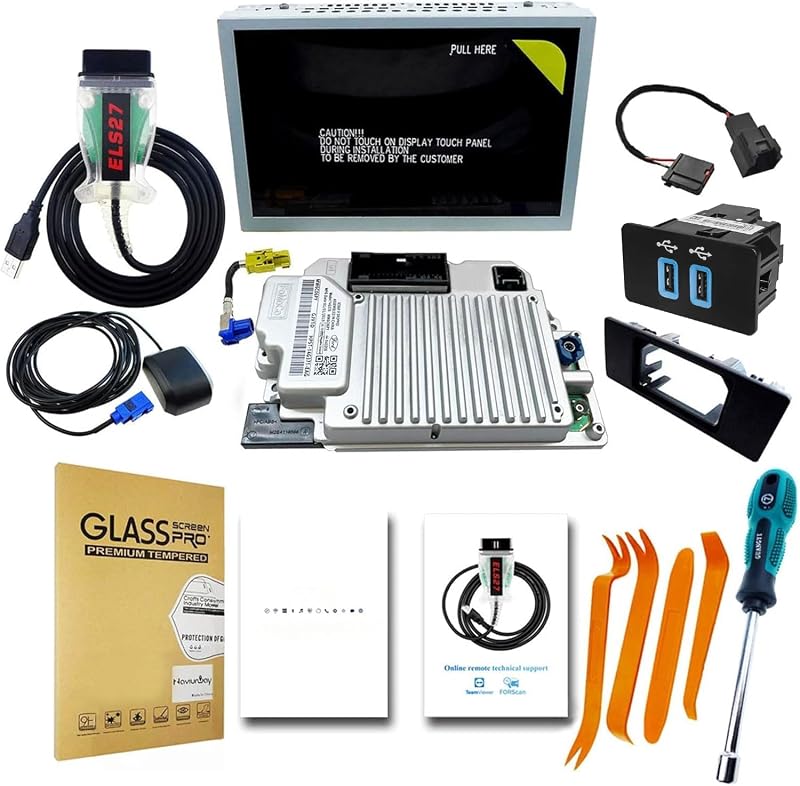
2024 SYNC 2 to SYNC: This product is an 8-inch automotive touchscreen navigation and APIM module upgrade kit engineered exclusively for Ford and Lincoln vehicle infotainment systems. It appears in retail searches due to naming similarities around sync hardware, but it serves vehicle owners modernizing car dashboard software rather than shoppers seeking home security components.
Blink Add-On Sync Module 2: This base station suits homeowners with standard-sized properties who do not require extended 250-foot or 400-foot transmission ranges to reach exterior boundaries. It manages up to ten Blink cameras across standard Wi-Fi distances and utilizes standard USB flash drives for local storage backup instead of MicroSD media.
FAQ
What is the maximum wireless range of the Blink Sync Module XR?
The hub provides extended coverage up to 250 feet in XR mode and up to 400 feet in XR+ mode when paired with Blink Outdoor 4 cameras. Keep in mind that video resolution may vary when cameras operate at the maximum 400-foot distance in XR+ mode.
Does the Blink Sync Module XR include a MicroSD card?
No, the MicroSD card is sold separately. The hub features a built-in slot that accepts cards up to 256 GB for local video clip backup, but you must supply the memory card yourself.
Can older Blink cameras use the extended range features?
No, the extended wireless reach in XR and XR+ modes is engineered specifically for Blink Outdoor 4 cameras. While up to ten Blink devices can connect to the hub for general management, legacy cameras will operate using standard wireless range.
What are the smartphone operating system requirements for the Blink app?
According to the official specifications, the Blink app requires mobile devices running at least iOS 17, Android 10, or Fire OS 8 to complete setup and manage the hub.
Can the Blink Sync Module XR be installed outside?
No, the hub is rated for indoor use only with an operating temperature range of 32°F to 104°F (0°C to 40°C). It must be placed indoors near an electrical outlet and protected from moisture and outdoor weather conditions.


