
As Amazon Associates, we earn from qualifying purchases. This means we may receive a small commission at no extra cost to you if you click through and make a purchase.
Choosing an entry-level automated floor cleaner often means balancing navigation technology against raw debris pickup, which is why the iRobot Roomba 105 stands out in the current marketplace. Designed specifically as a dedicated dry vacuum, this model targets households that want systematic cleaning passes without paying for unnecessary bells and whistles. If you have been researching the roomba 105 vacuum to see whether it provides enough power for daily maintenance on mixed flooring, the straightforward answer is that it delivers methodical row-by-row navigation and substantially boosted airflow compared to legacy entry models. It suits everyday shoppers who want dependable debris removal without babysitting a wandering robot.
In this comprehensive evaluation, we examine how the irobot roomba 105 vac performs across living rooms, bedrooms, and high-traffic hallways. We break down the ClearView LiDAR navigation array, explain the real-world utility of its upgraded power-lifting suction, and evaluate how easily the companion app integrates into a busy family routine. You will also discover the maintenance requirements for the bagless dustbin, how the unit handles transitional carpets, and how it compares against competing automated cleaners. Read on to determine if this standalone robotic cleaner provides the right balance of automation and simplicity for your floor care routine.
What You Get With the iRobot Roomba 105
iRobot Roomba 105


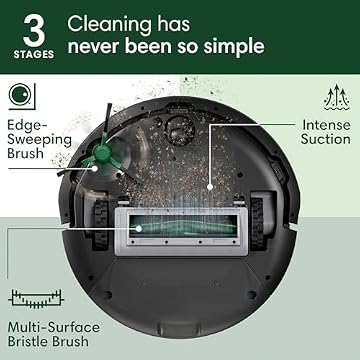

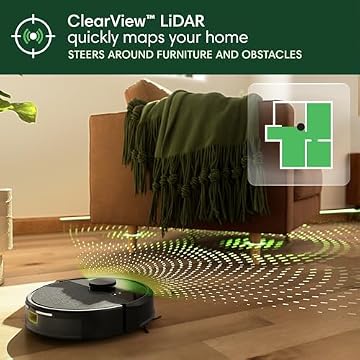
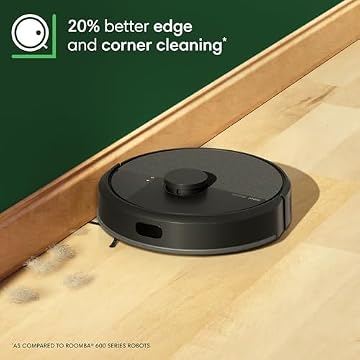
Photographs published on the Amazon listing.
The iRobot Roomba 105 comes packaged as a focused cleaning machine designed to get to work quickly out of the box. Its mechanical architecture centers on a synchronized three-stage cleaning system engineered to lift settled dust and direct peripheral debris toward the primary vacuum channel.
- iRobot Roomba 105 Vac robotic cleaning unit in modern black styling
- Low-profile self-charging home base with integrated charging contacts
- Dedicated power cable for the home docking station
- Integrated 3-Stage Cleaning system featuring a high-traction Multi-Surface main brush
- Specialized Edge-Sweeping brush engineered for baseboards and room corners
- High-efficiency onboard air filter designed to trap airborne particles
- Onboard bagless dirt collection bin equipped with an integrated dirt detection sensor
- ClearView LiDAR navigation turret for 360-degree spatial tracking
- Access to the Roomba Home App for automated scheduling and custom zone control
Key Specifications
Evaluating the core roomba 105 specs helps prospective buyers understand how the unit is built and what operating parameters govern its performance across different household surfaces.
Feature
Specification Details
- Brand
- iRobot
- Model Name
- Roomba 105 Vac
- Navigation Hardware
- ClearView LiDAR Navigation with anti-fall cliff sensors
- Cleaning System
- 3-Stage Cleaning with Multi-Surface brush and Edge-Sweeping brush
- Suction Performance
- 70X more power-lifting suction compared to Roomba 600 series
- Surface Recommendation
- Carpet & Hard Floor
- Dust Collection
- Bagless internal dustbin
- Wireless Connectivity
- 2.4 GHz Wi-Fi network required for setup and operation
- Voice Assistant Integration
- Compatible with Amazon Alexa, Siri, and Google Assistant
- Operating Modes
- Standard Cleaning, Eco Mode, and 5-Minute Targeted Spot Cleaning
Copied from the Amazon listing. These figures were not measured here.
ClearView LiDAR Mapping and Path Precision
The standout hardware upgrade on this vacuum is the ClearView LiDAR navigation module positioned on top of the chassis. Older entry-tier robot vacuums relied heavily on bump sensors, bouncing randomly between walls until their battery levels depleted. In contrast, roomba 105 lidar navigation actively scans the perimeter of your rooms, recording room dimensions, structural walls, and major furniture legs to construct an accurate digital floor plan. Because it reads the layout in real time, the vacuum navigates in straight, overlapping rows rather than erratic diagonals.
This systematic route planning drastically improves coverage efficiency across large open spaces and narrow corridors alike. During an active run, the roomba 105 mapping system constantly tracks its own location relative to the dock, which prevents the machine from repeatedly recleaning identical sections while leaving corners untouched. Specialized downward-facing cliff sensors continuously check floor elevation, ensuring the vacuum will not tumble down open staircases or drop off high mezzanine ledges. For shoppers comparing navigation styles, our irobot roomba 205 dustcompactor robot vacuum review explores how alternative compaction and routing systems approach similar household layouts.
Physical navigation around common furniture legs is smooth because the LiDAR system detects solid boundaries before heavy impact occurs. The unit slows its approach when nearing walls, letting the protruding edge-sweeping brush flick baseboard dust into the intake pathway without scuffing white millwork. If you move dining chairs or leave boxes on the floor, the internal mapping engine adjusts around the new obstacles while maintaining its row-by-row structure. This calculated approach saves both time and internal battery life, allowing the vacuum to finish rooms quickly.
Suction Power and Carpet Cleaning Capabilities
Suction strength remains a critical metric for any floor care appliance, and the roomba 105 suction power represents a marked generational leap. The manufacturer rates this model with 70X more power-lifting suction when compared directly against the baseline Roomba 600 series platform. That added air velocity works in tandem with the mechanical agitation of the multi-surface brush roll, pulling embedded grit, dry food crumbs, and tracked-in garden soil out of low-pile rugs and dense weave runners.
When transitioning from smooth tile or hardwood onto area rugs, the unit maintains steady airflow to handle challenging textures. For households managing shedding animals, the roomba 105 for pet hair takes advantage of the multi-surface brush design, which funnels loose fur directly toward the bagless collection chamber. While high-pile shag carpets can present mechanical drag for any automated roller, standard medium and low-pile rugs receive thorough agitation. Owners seeking insights on how multi-floor vacuuming functions across combo machines can read our analysis of the roomba combo vacuum and mop to see how suction balances against wet mopping pads.
In areas prone to concentrated soil, such as entry vestibules or around kitchen islands, the machine features an integrated dirt detection sensor. When the sensor registers an unusually heavy volume of debris passing through the intake, the unit focuses its attention on that specific zone. Furthermore, users can manually engage a dedicated spot cleaning mode via physical buttons or mobile commands, prompting the vacuum to repeatedly clean a localized area for up to five minutes until the surface is clear.
Roomba Home App Controls and Smart Connectivity
Software integration serves as the command center for the vacuum, driven by the clean interface of the Roomba Home App. Initial network pairing requires a standard 2.4 GHz Wi-Fi frequency, after which your control smartphone can return to a standard 5 GHz band while continuing to send instructions seamlessly. Once the initial mapping mission finishes, the app displays a full layout of your living space, allowing you to name individual rooms, designate preferred pathways, and set up daily automated schedules based on your family routine.
The mobile application gives owners granular control over cleaning intensity. You can select between varying suction power settings, including an Eco Mode designed for quieter, energy-conscious runs when floors only need light dusting. You can also customize the number of cleaning passes the robot performs in high-traffic zones versus guest rooms. Virtual keep-out zones can be drawn directly on the digital map, creating invisible barriers around delicate pet feeding dishes, play mats, or tangled electronics cords that might otherwise interfere with cleaning passes.
Beyond manual touchscreen controls, the vacuum accommodates modern smart home setups through native support for Amazon Alexa, Siri, and Google Assistant. Linking your preferred voice platform allows you to issue quick spoken directives to start a cleaning run or send the robot back to its base. The app also monitors internal component status, providing real-time estimates for total cleaning durations and tracking remaining filter life so you know precisely when to tap out dust or replace the air filter.
Recharging Dynamics and Everyday Bin Maintenance
Autonomous operation is only useful if a robot vacuum can sustain itself through extensive cleaning sessions, and the Roomba 105 manages this via a self-charging routine with smart resume logic. When internal power levels drop below the threshold needed to complete an active floor plan, the vacuum pauses its cleaning sequence, powers down its suction turbine, and guides itself back to the charging dock. Once the onboard battery replenishes, the robot automatically returns to the exact coordinates where it stopped, finishing the remainder of the scheduled floor plan without restarting from scratch.
Day-to-day maintenance revolves primarily around the internal bagless dustbin. Because this specific configuration uses a standard charging base rather than an automated evacuation tower, users must manually unlatch and empty the onboard container into a household trash can. The bagless architecture eliminates recurring expenditures on disposable dock bags, though it requires prompt emptying after heavy runs, particularly in homes with shedding animals. The listing does not specify the exact internal dustbin volume in milliliters, making visual checks after every multi-room clean a sensible habit.
Routine care extends to the intake components beneath the vacuum body. The multi-surface main brush snaps out of its retaining housing without specialized tools, making it easy to unthread accumulated hair wraps or string from the end caps. Similarly, inspecting the single edge-sweeping brush and wiping the ClearView LiDAR lens and cliff sensors with a clean, dry cloth keeps the optical guidance system operating at peak precision. Maintaining these basic touchpoints ensures consistent airflow and uninterrupted navigation year after year.
iRobot Roomba 105 Pros and Cons
Pros
- ClearView LiDAR navigation maps rooms quickly
- 70X more suction than Roomba 600 series
- Automatic recharge and resume cleaning capability
- Roomba Home app supports custom keep-out zones
- Works with Alexa Siri and Google Assistant
Cons
- Requires 2.4 GHz Wi-Fi network for setup
- Standard dock lacks an automatic self-emptying bin
- Dedicated mopping hardware is not included
Check iRobot Roomba 105 on Amazon
Is the iRobot Roomba 105 Worth It
Deciding if the roomba 105 carpet cleaning and hard floor performance matches your household needs depends largely on what you expect from automated cleaning. If you want an uncomplicated, dedicated dry vacuum that replaces random bump navigation with precise LiDAR mapping, this model represents strong value. It delivers substantial suction improvements over entry-level precursors, handles mixed surface transitions capably, and provides reliable app features like keep-out zones without forcing you into expensive multi-functional hardware you might never use.
Busy households with active children and pets will appreciate the systematic cleaning rows and the convenience of voice-assisted room targeting. For buyers who find wet-dry combination appliances overly complicated or prone to damp maintenance issues, sticking to a dedicated vacuum like this simplifies daily chores. If you find yourself weighing a dedicated dry robot against automated mopping hardware, checking our review of the roomba plus 405 combo provides useful perspective on how combination platforms handle concurrent floor washing.
On the other hand, if your priority is complete hands-off autonomy spanning months at a time, you must remember that this model lacks a self-emptying base station. You will be responsible for manually dumping the onboard dust container after cleaning cycles. However, if emptying a compact bin takes you mere seconds and you prioritize strong mechanical pickup, reliable LiDAR boundary mapping, and trusted app scheduling, the iRobot Roomba 105 proves to be a dependable, highly functional workhorse for everyday floor care.
Other Options to Consider
Matrix Clean suits homeowners who want extended hands-free convenience, offering a 60-day bagless self-empty base alongside 360-degree LiDAR home mapping, a self-cleaning brushroll, and Alexa compatibility.

Up to 60 Days Hands-Free is an appealing alternative for buyers seeking concurrent vacuuming and mopping, providing an 8000Pa suction rating, self-emptying base, multi-level smart maps, and app-driven controls for homes with pets.
90-Day Hands-Free Cleaning 160-Minute Long is tailored for large-scale living environments, featuring 11500Pa suction power, a 160-minute runtime, multi-floor mapping, voice assistant support, and a 90-day self-emptying dock capacity.

FAQ
Does the iRobot Roomba 105 require a 2.4 GHz Wi-Fi network?
Yes, the robot requires a dedicated 2.4 GHz Wi-Fi network connection for initial setup and regular operation. Once the vacuum is successfully paired to your home network, your smartphone can operate on a standard 5 GHz network while continuing to control the robot through the mobile app.
How does the iRobot Roomba 105 prevent falling down stairs?
The underside of the chassis is equipped with specialized anti-fall cliff detection sensors. These optical sensors constantly monitor floor depth beneath the vacuum, automatically halting forward momentum and redirecting the robot when an open drop-off or staircase edge is encountered.
Can you set keep-out zones with the iRobot Roomba 105?
Yes, the companion Roomba Home App allows users to draw virtual keep-out zones directly over the generated ClearView LiDAR floor plan. The vacuum actively avoids these designated virtual boundaries during cleaning passes, protecting fragile items, pet bowls, or power strip clusters.
What happens when the iRobot Roomba 105 runs low on battery during a run?
When the internal battery depletes before a cleaning cycle is finished, the robot automatically returns to its charging dock. Once sufficiently recharged, it resumes operation precisely at the spot where cleaning stopped, ensuring full coverage without having to start the entire floor plan over again.
How does the spot cleaning mode work on this vacuum?
Spot cleaning can be engaged to tackle localized spills or concentrated patches of dry debris. When activated, the vacuum repeatedly maneuvers over the designated high-soil area for up to five minutes, using intense suction and brush agitation to clear the targeted mess thoroughly.


