As Amazon Associates, we earn from qualifying purchases. This means we may receive a small commission at no extra cost to you if you click through and make a purchase.
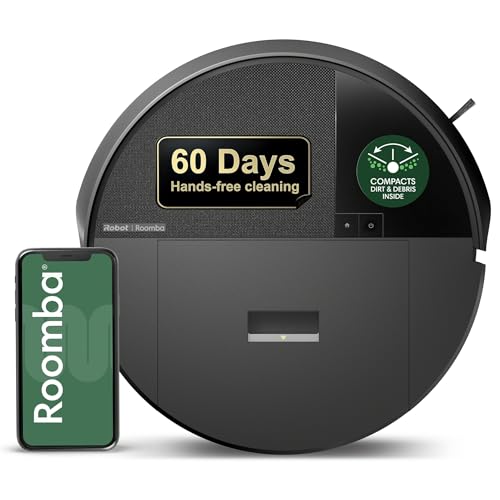
Finding floor space for an automated cleaning setup can be frustrating when living in an apartment or smaller home. Standard self-emptying robot vacuums rely on towering docking stations that consume several square feet of open wall space and require clearance on all sides. The Roomba 205 DustCompactor addresses this exact problem by taking the self-emptying concept and moving it directly inside the vacuum chassis. Instead of using a noisy external evacuation motor to suck debris into a separate tower, its internal mechanical compactor crushes dirt and pet hair into a dense puck inside the robot, enabling up to 60 days of hands-free operation without an oversized base station.
In this comprehensive roomba 205 review, we explore whether onboard mechanical compaction can truly replace a traditional dock without creating messy maintenance headaches. We analyze the roomba 205 specs, evaluate how its internal ClearView LiDAR navigation performs in cluttered rooms, break down the four suction settings across carpets and hard floors, and inspect battery endurance during multi-room cleaning runs. We also weigh the practical pros and cons to help you determine if this bagless roomba robot vacuum is the right cleaning upgrade for your home layout.
What You Get With the Roomba 205 DustCompactor
Roomba 205 DustCompactor

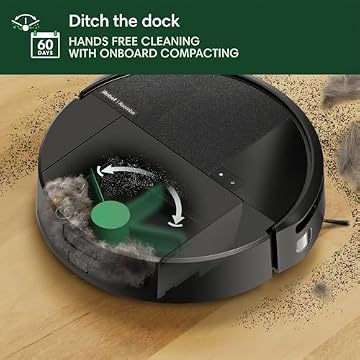


Photographs published on the Amazon listing.
The irobot roomba 205 dustcompactor robot vacuum arrives with the essential hardware needed to begin automated cleaning right out of the box, focusing on a minimalist footprint rather than bulky accessories. Here is what the listing includes and the primary features built into the machine:
- Roomba 205 Vac Dustcompactor robotic vacuum unit
- Compact charging docking station with low-profile footprint
- Built-in mechanical DustCompactor system that continuously compresses dirt inside the robot
- 3-Stage Cleaning system featuring 70X more power-lifting suction compared to 600 series vacuums
- Multi-surface rubber brush roll engineered to lift kitchen debris and dirt
- Edge-sweeping corner brush to sweep debris out of tight borders and wall edges
- Internal ClearView LiDAR navigation sensor concealed within the chassis
- Cartridge-style filtration system for capturing fine dust
- Dirt detection sensor that flags heavily soiled areas for deeper passes
- Full app connectivity via the Roomba Home App for scheduling, room mapping, and keep-out zones
- Voice control support for Amazon Alexa, Siri, and Google Assistant-enabled smart speakers
Key Specifications
To understand what this robot vacuum offers mechanically, here is a detailed breakdown of the specifications provided in the manufacturer data:
Attribute
Detail
- Brand & Model
- iRobot Roomba 205 Vac Dustcompactor (Style: Roomba 205)
- Surface Recommendation
- Carpet & Hard Floor
- Dust Collection Type
- Internal Automatic Dust Collection (Bagless DustCompactor)
- Navigation Technology
- ClearView LiDAR Navigation (hidden onboard)
- Cleaning System
- 3-Stage Cleaning with Multi-Surface Rubber Brush & Edge Brush
- Suction Adjustments
- 4 Power Levels / 4 Speeds (70X power-lifting suction vs 600 series)
- Battery Specifications
- Lithium Ion, 120 minutes runtime (up to 3+ hours per description)
- Control Methods
- Roomba Home App, On-Device Push Buttons, Voice Control
- Voice Assistant Support
- Alexa, Siri, Google Assistant
- Filter & Sensor Features
- Cartridge Filter, Dirt Detection Sensor, Eco Mode
Copied from the Amazon listing. These figures were not measured here.
Onboard Dust Compaction Versus a Bulky Self-Empty Dock
The central debate when evaluating the roomba dustcompactor vs self empty dock setup comes down to floor space versus manual bin maintenance. Traditional auto-empty bases are convenient, but they demand dedicated floor space, wall clearance, and ongoing purchases of disposable vacuum bags. For small apartments, condos, or rooms with scarce wall outlets, placing a mini-fridge-sized dock in a living room or hallway is an eyesore. The Roomba 205 eliminates that requirement entirely by incorporating a mechanical compaction mechanism inside the vacuum. As it cleans, the robot continually crushes loose dirt, pet hair, and dust bunnies into a dense mass, packing up to two months of debris into an onboard bin without requiring an external tower.
Living with an internal compactor does present distinct operational differences compared to external dock systems like the roomba® max 715 vac robot + autoempty™ dock, which empties its payload into an upright canister after every run. Because the Roomba 205 stores its compacted debris inside the robot, the machine carries that mass during subsequent runs until you manually release the compressed dirt into your trash. However, because it is truly bagless, you avoid recurring costs for replacement paper bags while maintaining the space-saving footprint of a standard low-profile charging pad.
For city apartments, studio layouts, or homes where every square foot matters, the practical advantage of the roomba 205 for small apartments is clear. You can place the compact charging base under a console table, behind an armchair, or in a tight bedroom corner without having to accommodate an upright evacuation canister. It delivers the hands-off benefit of up to 60 days between bin visits while preserving precious living area.

LiDAR Navigation and Smart Mapping in Tight Quarters
Navigating tight, furniture-heavy spaces requires precise spatial awareness, and the roomba 205 lidar navigation accomplishes this through its concealed ClearView LiDAR system. Unlike older robot vacuums that utilized protruding top-mounted LiDAR domes that could snag under low furniture, the Roomba 205 hides its sensor within the robot chassis. This low-profile housing lets the vacuum glide underneath low-clearance couches, bed frames, and media cabinets while still emitting invisible laser beams to measure distances and map your rooms with centimeter accuracy.
Because LiDAR relies on light reflection rather than visual cameras, the Roomba 205 operates cleanly in total darkness. If you schedule your cleaning cycles overnight or while away with the window blinds drawn, the robot maps and cleans in neat, systematic rows without getting disoriented. The system avoids obstacles smoothly and calculates efficient travel paths rather than bumping aimlessly into furniture legs. This precision is a major leap forward from basic bumper-guided models like a standard robot rumba vacuum, saving both battery power and cleaning time.
Through the Roomba Home App, the mapping data translates into useful daily control features. Once the floor plan is established, you can name individual rooms, set targeted cleaning schedules based on your routine, and highlight specific areas for spot cleaning when a mess occurs. The app also lets you draw keep-out zones around pet feeding dishes, tangled computer cords, or delicate decor, ensuring the robot works autonomously without getting trapped or disrupting your belongings.
Suction Power and Multi-Surface Cleaning Performance
A compact form factor is meaningless if a vacuum cannot pull deep debris out of rugs, but the roomba 205 suction power is engineered for serious floor care. The manufacturer equips this model with 70X more power-lifting suction compared to legacy Roomba 600 series robots. That suction strength is paired with a 3-Stage Cleaning system that features a heavy-duty multi-surface rubber brush and a high-speed edge-sweeping brush. While bristle brushes can get clogged with pet fur, the rubber brush design maintains close contact with both hard floors and carpets to lift embedded dirt, sand, and everyday crumbs effectively.
To handle varied messes, the Roomba 205 provides four distinct power levels. You can run the vacuum on lower suction settings for quiet daily upkeep on hardwood floors or dial it up to maximum power when tackling dense area rugs or high-traffic entryways. The edge-sweeping brush reaches along baseboards and into tight room corners, pulling stray dust bunnies and loose debris directly into the primary suction channel. When comparing dedicated vacuuming power to hybrid devices like the roomba plus 575 combo, having four dedicated vacuum speeds allows you to customize the motor intensity precisely to the floor surface without compromising cleaning mechanics.
Adding to its cleaning thoroughness is an integrated dirt detection sensor. When the robot rolls over an area with heavy concentrations of dirt, sand, or pet dander, the sensor registers the debris spike and directs the vacuum to execute repeated passes over that exact spot. Once the area is clean, the robot resumes its regular systematic path, leaving floors barefoot clean across tile, laminate, hardwood, and carpet.
Battery Life and Automated Recharging Cycles
Cleaning efficiency depends heavily on battery management, especially when navigating multi-room layouts. The roomba 205 battery life is anchored by a high-capacity lithium-ion battery pack. The product specifications list an active runtime of 120 minutes, while the listing description notes that under lighter workloads, such as running in Eco Mode, the battery can sustain operation for over three hours. This broad operating window ensures the robot can comfortably manage most apartment and mid-sized residential floor plans on a single charge.
When the battery eventually runs low during an extended cleaning routine, you do not need to manually retrieve or dock the unit. The Roomba 205 automatically pauses its cleaning cycle, maps the shortest path back to its low-profile docking station, and begins recharging. Once its battery has recovered sufficient power, the robot navigates right back to the exact spot where it stopped and resumes cleaning to finish the job. This seamless recharge-and-resume capability ensures large or complex spaces get thoroughly vacuumed even if the initial cycle exceeds the battery limits.
Controlling these cleaning cycles is designed to be effortless across different user preferences. You can initiate a run, pause the robot, or send it home by pressing the physical buttons on top of the machine, via the Roomba Home App, or through voice commands via Amazon Alexa, Apple Siri, or Google Assistant. The app provides estimated completion times and monitors filter life, giving you transparent insight into system health and runtime performance.
Roomba 205 DustCompactor Pros and Cons
Pros
- Internal dust compactor eliminates bulky dock footprint
- Up to 60 days of bagless dirt storage
- ClearView LiDAR maps and navigates in the dark
- Four customizable suction power levels
- Recharge and resume automation for uninterrupted cleaning
Cons
- Lacks built-in mopping functionality
- Carries compacted debris weight onboard during cleaning
- Runtime varies between 120 minutes and three hours
Check Roomba 205 DustCompactor on Amazon
Is the Roomba 205 DustCompactor Worth It
Answering whether the irobot roomba 205 dustcompactor represents a smart purchase depends directly on your living space, storage limitations, and cleaning habits. If you live in an apartment, loft, or smaller single-story home where floor space is at a premium, this robot offers a clever solution. It delivers the extended, low-maintenance autonomy of an auto-emptying system—up to 60 days of hands-off dirt storage—without forcing you to surrender wall space to a massive external base station. Its bagless design also eliminates the ongoing chore of purchasing and swapping out specialized dock bags.
The combination of internal ClearView LiDAR, four suction levels with 70X power-lifting strength, and smart home integration makes it an exceptionally capable dry vacuum. Pet owners and busy professionals will appreciate that it navigates around furniture smoothly, cleans under low clearance spaces, and tackles heavy debris via dirt detection sensors. It is purpose-built for shoppers who want high-performance automation contained entirely within a sleek, self-contained machine.
However, if your household requires wet mopping in addition to vacuuming, the Roomba 205 will not meet your needs on its own, and you may want to evaluate an all-in-one option such as the irobot roomba plus 415x combo. Furthermore, homes with massive, multi-story floor plans and several heavy-shedding large dogs may fill an onboard compacted bin faster than 60 days, making an industrial-sized external dock more practical. But for small-to-midsize multi-surface homes seeking compact efficiency, the Roomba 205 hits a very sweet spot.
Other Options to Consider
Matrix Clean is designed for homeowners who prefer an external self-emptying base rather than onboard compaction, offering a 60-day bagless self-empty dock, 360-degree LiDAR home mapping, and a self-cleaning brushroll that actively prevents hair wrap on carpets and hard floors.

Up to 60 Days Hands-Free suits shoppers looking for a dual-function vacuum and mop hybrid, featuring an 8000Pa suction motor, LiDAR navigation, multi-level mapping, and an external self-emptying base tailored for homes with pet hair across multiple floors.
90-Day Hands-Free Cleaning 160-Minute Long is built for users managing larger or multi-story properties, delivering an extended 90-day hands-free capacity, 11500Pa suction rating, 160-minute runtime, and dedicated room-based cleaning controls compatible with Alexa and Google Assistant.

FAQ
How does the DustCompactor system work on the Roomba 205?
The DustCompactor utilizes an internal mechanical system that continuously crushes collected dust, hair, and debris directly inside the robot bin. By compacting the waste into a dense puck, the onboard container can store up to 60 days worth of dirt, eliminating the need for daily manual emptying and removing the requirement for an external self-emptying dock.
Does the Roomba 205 DustCompactor have mopping capabilities?
No, the Roomba 205 is a dedicated dry robot vacuum designed for hard floors and carpets. It utilizes a 3-Stage Cleaning system with 70X power-lifting suction, a multi-surface rubber brush roll, and an edge-sweeping brush, but it does not include a water reservoir or mopping pads.
How long does the battery last on a single charge?
The Roomba 205 features a rechargeable lithium-ion battery rated for 120 minutes of runtime under standard conditions, with the listing description stating that it can last for over three hours in lighter operating modes such as Eco Mode. If the battery runs low before cleaning is complete, the robot returns to its base to recharge and then resumes cleaning where it left off.
Can the ClearView LiDAR navigation work in the dark?
Yes. Because the ClearView LiDAR system utilizes laser distance measurements rather than optical camera lenses, it does not rely on ambient lighting. The Roomba 205 can accurately map your rooms, avoid obstacles, and clean in neat rows in pitch-black rooms or during overnight cleaning schedules.
What smart home assistants are compatible with the Roomba 205?
The Roomba 205 can be paired with Amazon Alexa, Apple Siri, and Google Assistant-enabled devices. Once connected through the Roomba Home App, you can start, stop, or direct cleaning routines using hands-free voice commands.


