
As Amazon Associates, we earn from qualifying purchases. This means we may receive a small commission at no extra cost to you if you click through and make a purchase.
Selecting the proper lock decoding instrument requires knowing whether the device matches your target cylinder and offers reliable visual indicators. The Lishi KW1 2-in-1 Tool is engineered specifically for standard five-pin residential cylinders that utilize the classic Kwikset profile. For anyone evaluating this lishi kw1 lock pick tool 2-in-1, the instrument serves a dual mechanical role: it provides integrated tension and pin lifting while displaying clear external measurement markings that allow an operator to decode pin depths directly from the keyway. If you need to manipulate standard residential pin-tumbler hardware without resorting to destructive drilling, this specialized tool offers a structured, step-by-step process that eliminates traditional guesswork.
While the product listing classifies this model as a stainless key gauge and pick set, understanding its operational boundaries is essential before adding it to your maintenance gear. This practical evaluation covers what arrives in the packaging, verified technical specifications, mechanical build qualities, and how the tool behaves during standard decoding routines. We also examine compatibility boundaries with modern residential locks, discuss realistic field handling expectations, and highlight several alternative mechanical pick sets so you can decide whether this specific keyway decoder meets your security and maintenance needs.
What You Get With the Lishi KW1 2-in-1 Tool
Lishi KW1 2-in-1 Tool


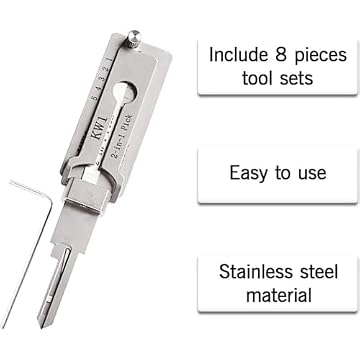
Photographs published on the Amazon listing.
The product listing describes this item as a multifunctional measurement and manipulation instrument engineered specifically for KW1 keyways. While documentation from the manufacturer is minimal, the package supplies the core physical hardware necessary for non-destructive opening and depth reading on compatible residential locksets.
- Stainless key gauge tool designed for standard KW1 cylinder profiles
- Integrated 2-in-1 pick arm and tension bar mechanism
- External measurement grid for pin position and depth decoding
- Compact physical housing measuring five inches in length
Key Specifications
Attribute
Detail
- Brand
- Generic
- Manufacturer
- Generic
- Model Number
- Generic
- Target Keyway
- KW1 (Standard Kwikset 5-Pin)
- Product Function
- Key gauge tool and 2-in-1 hook pick
- Package Dimensions
- 5 x 1.2 x 1.2 inches
- Item Weight
- 3.2 ounces
- Primary Material
- Stainless steel
- Power Source
- ac (as stated in product listing)
- Included Components
- Key Gauge Tool
Copied from the Amazon listing. These figures were not measured here.
Physical Build Quality and Materials
Evaluating the kw1 lock pick tool build quality begins with its physical architecture and material composition. The stainless kw1 2 in 1 tool relies on a rigid metallic frame that must withstand rotational tension while keeping the delicate lifting arm perfectly aligned with the internal pin stacks. Weighing in at 3.2 ounces and measuring 5 by 1.2 by 1.2 inches, the tool has a dense, compact feel in the hand that provides reassuring structural integrity. The stainless steel composition gives the blade sufficient rigidity to slide smoothly into standard keyways without binding against cylinder warding.

The external face of the tool features engraved lines that act as a visual key gauge decoder, showing both pin positions from one to five and depth increments from one to seven. Because the indicator arm moves across these lines under manual control, clear markings and minimal lateral play are vital for obtaining an accurate reading. When working on site or organizing a mobile service kit alongside hardware like the dewalt elite series bit set, having a dedicated, self-contained tool reduces the clutter of carrying separate tension wrenches and feeler picks.
One trade-off of this compact construction is the inherent delicacy of the pick tip itself. While the stainless steel body is sturdy, the fine lifting wire that manipulates individual bottom pins is narrow by design to fit within the restrictive KW1 keyway channel. Excessive rotational force or heavy vertical leverage can bend the tip out of true alignment. Maintaining light handling pressure ensures the mechanical components continue to track smoothly along the calibrated grid without distortion.
Lock Compatibility and Keyway Profiles
Understanding lock pick tool for kw1 cylinders requires knowing precisely which lock mechanisms accept this specific blade profile. The tool is cut to fit the traditional five-pin KW1 keyway, which remains one of the most common residential lock designs found across North America. Using the lishi kw1 for kwikset locks allows operators to interface directly with standard pin-tumbler deadbolts, entry handles, and padlocks that utilize this classic cylinder shape. Because the blade profile mirrors a standard key blank, it enters the cylinder smoothly when the keyway is clean and free of debris.
A crucial compatibility limitation involves newer cylinder mechanisms, particularly Kwikset SmartKey designs. SmartKey cylinders do not use standard top and bottom pin tumblers; instead, they rely on a perimeter sidebar and sliding wafers. As a result, this 2-in-1 decoding tool cannot decode or open SmartKey cylinders, and forcing the tool into such locks risks shearing internal components. Property managers transitioning older facilities away from traditional brass cylinders to electronic solutions like the lockin veno smart lock with palm vein should verify which doors retain legacy pin-tumbler cylinders before attempting to use this tool.
Additionally, while the tool excels on standard five-pin cylinders, it is not engineered for six-pin KW5 keyways or commercial profiles from other manufacturers such as Schlage. Attempting to insert the blade into an incompatible keyway will result in immediate binding, preventing both proper tensioning and accurate pin positioning. Checking the face of the cylinder for the classic KW1 stamp or examining existing physical keys confirms that the cylinder matches the tool profile prior to engagement.
Decoding Accuracy and Pin Reading
The primary advantage of choosing a kw1 2 in 1 key gauge decoder over conventional lock picks is the ability to read the exact bitting numbers of a locked cylinder. In practical terms, kw1 pick tool decoding accuracy depends on systematically testing each pin chamber while the plug is held under slight rotational tension. As the operator uses the lifting arm to feel each pin, spring-loaded pins will give a soft bounce, while binding pins feel rigid until lifted to the shear line, where they produce a distinct mechanical click.
Once all binding pins are picked and the lock plug rotates slightly, the operator can conduct a complete decoding pass. Mastering how to use lishi kw1 tool involves moving the pointer along the numerical grid: by gently lifting each pin until it stops against the cylinder housing, the pointer indicates the exact cut depth from one to seven on the scale. Writing down these numerical values provides the complete key bitting code, enabling a technician to cut a functional replacement key without disassembling the lock cylinder.
Achieving consistent decoding results requires a clean internal lock environment. Cylinders with accumulated grime, dried lubricants, or corrosion can cause pins to hang up within their chambers, leading to false depth readings on the measurement scale. Applying a quick blast of dry lubricant or warming stubborn cylinders with a tool such as the dewalt 20v heat gun during cold weather maintenance helps ensure that pins drop freely, allowing the indicator arm to reflect accurate pin elevations.
Handling Characteristics and Technique Requirements
Operating a 2-in-1 tool requires a distinct tactile approach compared to traditional lock picking methods. Because the tensioning arm is integrated directly into the tool handle, the user controls rotational torque and pin elevation simultaneously with one hand or balanced between both hands. Applying very light turning pressure is essential; heavy tension binds the cylinder plug too tightly, causing the lifting arm to flex rather than smoothly moving pins into their set positions.
The stainless steel build provides clear tactile feedback through the lifting wire, but users must learn to interpret subtle mechanical resistances. When a pin is resting at its natural height, the spring resistance feels spongy. When the pin reaches the shear line under proper tension, it settles with a sharp, subtle stop. Because the external grid reflects the internal position of the wire tip, users can identify exactly which chamber they are manipulating without having to count chambers internally by touch alone.
Patience during setup prevents unnecessary tool wear. Users should ensure the blade is fully seated to the shoulder of the keyway before extending the tension arm. If the blade is inserted at an angle or partially disengaged, the lifting arm will not align with the pin centerlines, which can cause the tip to slip off brass pins and score the internal chamber walls.
Lishi KW1 2-in-1 Tool Pros and Cons
Pros
- Durable stainless steel construction
- Dual picking and depth decoding design
- Clear external pin measurement grid
- Compact five-inch overall length
- Lightweight 3.2-ounce profile
Cons
- Listing provides inaccurate AC power specification
- Lacks included instruction manual or documentation
- Restricted strictly to standard KW1 keyways
Check Lishi KW1 2-in-1 Tool on Amazon
Is the Lishi KW1 2-in-1 Tool Worth It
Determining whether this tool represents a practical investment depends on your typical maintenance tasks and the specific locks you encounter. For maintenance professionals, landlords, and emergency responders who routinely deal with standard Kwikset five-pin deadbolts, the ability to both open a locked door and decode the key bitting in one continuous process is an enormous time saver. It eliminates the need to replace entire locksets simply because a tenant or homeowner misplaced an original key.
For hobbyists exploring non-destructive entry and locksport mechanics, this tool serves as an excellent visual learning instrument. Being able to see pin positions mapped directly to an external measurement scale demystifies the spatial layout inside a lock cylinder. However, buyers should be aware that the listing comes from a generic manufacturer and erroneously lists an AC power source in its technical data, indicating that post-purchase customer support and formal documentation are virtually non-existent.
If you primarily encounter modern SmartKey locks or commercial hardware profiles, this tool will not fulfill your requirements due to its strict KW1 compatibility. For those managing standard residential pin-tumbler installations, it provides a functional, non-destructive decoding instrument that performs its designated task effectively when handled with the proper care and delicate touch.
Other Options to Consider
2 Pcs Outdoor Multi-Tool Kit suits individuals who need versatile general-purpose utility tools for outdoor adventure and emergency tasks rather than a specialized lock decoding device.
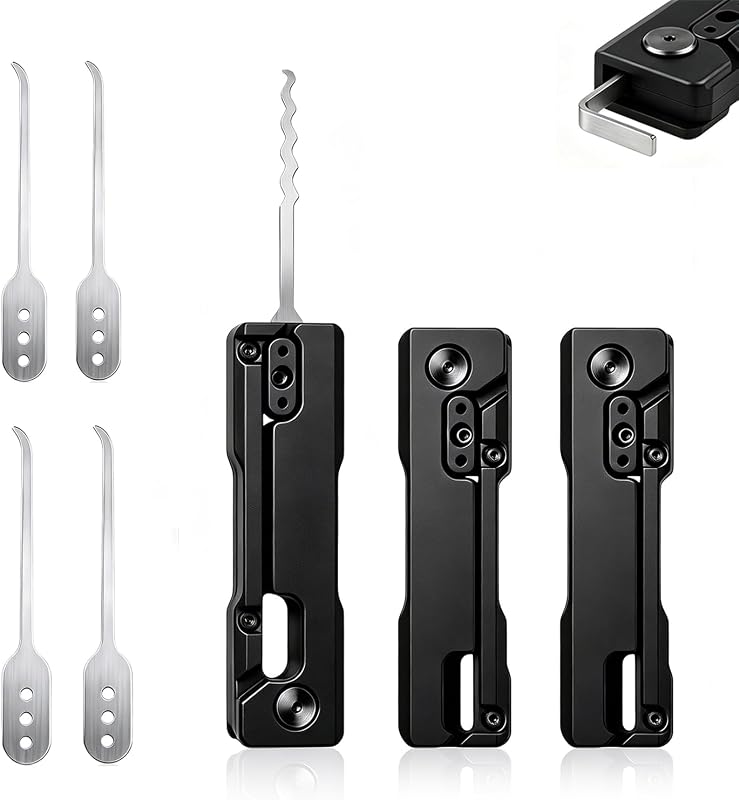
Rindion 10PCS Pick Set Mechanic suits automotive mechanics and DIY repairers who require heavy-duty hooks and picks for removing O-rings, seals, and gaskets rather than manipulating residential lock cylinders.
Lock Pick suits property technicians and automotive mechanics looking for a broad 20-piece hand tool emergency pocket kit to handle varied utility cabinets and vehicle maintenance needs.
FAQ
Can the Lishi KW1 tool open Kwikset SmartKey cylinders?
No, this tool is designed exclusively for traditional pin-tumbler cylinders. Kwikset SmartKey systems use an internal sidebar and sliding wafer mechanism that does not operate on standard pin physics, meaning this tool cannot manipulate or decode them.
What does 2-in-1 mean for this tool?
The term 2-in-1 indicates that the tool combines both picking and decoding capabilities in a single unit. It features an integrated tension handle to turn the lock plug and a calibrated lifting arm with an external scale to read the depth of each pin.
Why does the product listing state that the tool uses an AC power source?
The listing mentions an AC power source due to an erroneous categorization by the seller. The tool is entirely mechanical, requires no batteries or electrical power, and relies completely on manual operation.
How do you read the bitting code once the lock is picked?
After the cylinder plug turns slightly into the picked position, you move the lifting arm to touch each pin until it stops. The indicator line points to a number from one to seven on the tool face, revealing the factory cut depth for that pin position.
Does this tool work on six-pin Kwikset locks?
The listing does not specify support for six-pin cylinders. Because this tool is engineered around the five-pin KW1 format, it does not feature the necessary blade length or position markings to decode longer KW5 cylinders.


