
As Amazon Associates, we earn from qualifying purchases. This means we may receive a small commission at no extra cost to you if you click through and make a purchase.
For campers, road-trippers, and outdoor enthusiasts who need dependable off-grid electricity without back-breaking bulk, finding the right balance between battery capacity and transportability is essential. The Jackery Solar Generator 300 pairs an updated 292Wh portable power station with a compact 40W folding solar panel, targeting users who want an accessible, plug-and-play energy setup for basic personal electronics. If you need to keep phones, digital cameras, camping lamps, drones, and modern laptops topped off during weekend outings, this integrated solar kit provides an approachable entry into clean portable power.
This particular bundle is engineered for light-to-moderate recreational demands rather than whole-home backup during prolonged electrical grid blackouts. In this Jackery Explorer 300 solar generator review, we break down what you actually get in the bundle, examine how the upgraded LiFePO4 battery chemistry improves service life, review realistic solar recharge timelines, inspect output wattage limits, and help you decide whether this portable generator meets your camping and emergency power requirements.
What You Get With the Jackery Solar Generator 300
Jackery Solar Generator 300
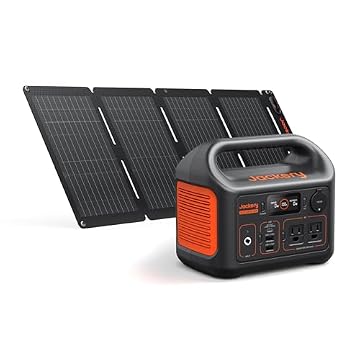
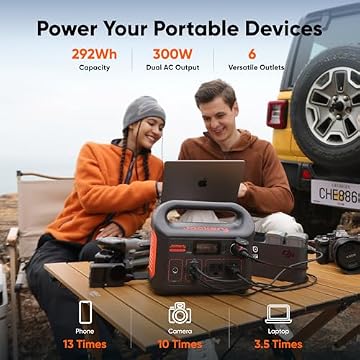


Photographs published on the Amazon listing.
Unboxing this package reveals an all-in-one charging station designed to function away from municipal power lines immediately. The listing specifies that the power station and solar panel may be shipped separately, meaning your order could arrive across multiple deliveries. The complete kit includes:
- 1 Jackery Explorer 300 portable power station (model JE-300E).
- 1 SolarSage 40W Air solar panel.
- 1 AC adapter for standard home wall charging.
- 1 car charger cable for 12V vehicle cigarette lighter ports.
- 1 user guide covering setup, safety parameters, and operation.
Key Specifications
Attribute
Detail
- Model Number
- JE-300E
- Battery Capacity
- 292Wh
- Battery Chemistry
- LiFePO4 (Lithium Iron Phosphate)
- Cycle Life
- 4,000+ charge cycles to 70% capacity (11+ years service life)
- Continuous Running Output
- 300 watts
- Starting Peak Surge
- 600 watts
- AC Outlets
- 2 x 120V AC outlets
- USB Ports
- 1 x 100W USB-C PD port, 2 x USB-A ports
- 12V DC Output
- 1 x 120W car auxiliary port
- Power Station Weight
- 7.5 pounds
- Total Package Dimensions
- 15.43"L x 9.92"W x 11.89"H
Copied from the Amazon listing. These figures were not measured here.
Portability and Physical Design in the Field
Managing gear weight is one of the most critical considerations when packing for an outdoor trip or setting up a compact campsite. The standalone Explorer 300 power station weighs just 7.5 pounds, which the listing notes is 17 percent lighter than the industry average for its power class. Paired with a solid, ergonomically molded top handle, the station can easily be picked up with one hand while carrying additional camping gear in the other.
The entire boxed kit—including cables and the SolarSage 40W Air panel—lists a total weight of 12.9 pounds, keeping the full bundle exceptionally manageable. Because the exterior dimensions measure 15.43 by 9.92 by 11.89 inches, the unit fits comfortably behind a car passenger seat, inside a camper van cubby, or tucked under a camp table. It occupies far less physical volume than mid-tier off-grid equipment such as the jackery 1000 solar panel bundle, making it an ideal choice for vehicles with strictly limited cargo room.
Durability also plays a major role during transport over rough terrain. The station features a rigid exterior shell built to handle being shifted in transit or placed on outdoor camp surfaces. Its balanced footprint ensures it remains stable on tailgate shelves or flat ground, providing quick, wobble-free access to every outlet on the front panel.
Long-Term Durability and LiFePO4 Chemistry
Battery longevity has undergone a substantial upgrade in this generation of the Explorer 300 line. Older portable battery designs frequently relied on traditional lithium-ion chemistries that offered roughly 500 to 800 cycles before experiencing noticeable degradation. In contrast, the modern Jackery 300 lifepo4 battery life is rated for over 4,000 complete charge cycles before capacity drops to 70 percent.
Translating those specifications into everyday ownership, Jackery estimates this cell chemistry provides more than 11 years of reliable service life even with consistent use. LiFePO4 cells are also widely recognized for superior chemical and thermal stability, lowering the risk of thermal runaway and performing safely across a broader range of ambient conditions encountered during spring, summer, and autumn excursions.
For buyers interested in long-term resilience, this chemistry transformation changes the ownership calculation. Rather than needing a battery replacement every few seasons due to natural cell wear, the internal cells remain functional and stable for years of regular use, weekend getaways, and seasonal hunting outings.
Solar Recharging Performance and Panel Compatibility
When operating entirely off-grid, recharging efficiency determines how long you can remain disconnected from conventional power sources. This bundle comes packaged as a jackery 40w solar panel kit, pairing the station with the lightweight SolarSage 40W Air panel. According to manufacturer benchmarks, the 40W solar panel can restore the battery to 80 percent charge in approximately 7.5 hours under direct, unobstructed sunlight.
A 7.5-hour recharge window means that achieving a near-complete replenishment requires deliberate panel placement and full daytime exposure. If your daily consumption drains the 292Wh capacity entirely, a 40W panel serves primarily as a maintenance trickle to steady your power supply or stretch your battery capacity over a weekend rather than providing rapid intraday replenishment. For faster turnaround, the power station can be paired with an optional 100W solar panel, reducing the 80 percent charge timeline to approximately 2.8 hours.
Weather conditions, solar angle, and tree canopy coverage will inevitably impact solar charging speeds in the real world. Setting up the SolarSage panel flat on camp furniture or tilting it directly toward the sun allows the station to take in clean energy while powering connected devices, but buyers relying strictly on solar power should plan around sunlight availability.
Running Output Limits and Port Flexibility
Understanding device compatibility comes down to reviewing the continuous output and surge tolerances. The station provides a 300-watt running output with a 600-watt peak surge capacity. This allows the internal pure sine wave inverter to handle small electronics, lighting strings, and sensitive consumer tech smoothly without introducing electrical hum or harmonic distortion.

Port variety is one of the strongest practical benefits of this power station, offering simultaneous connectivity for up to six separate devices. You get two 120V AC wall outlets, two USB-A ports, a dedicated 120W 12V car socket, and a powerful 100W USB-C Power Delivery (PD) port. The 100W USB-C port is especially practical because it allows modern laptops and handheld tablets to charge at full speed without needing a standard AC charging block plugged into an inverter outlet.
However, running high-draw heating appliances is beyond the capability of a 300W inverter. You cannot operate standard household blenders, electric skillets, hair dryers, or space heaters from this machine. Users planning to power high-draw basecamp kitchen appliances or heavy power tools should consider larger systems such as a jackery 1500 with solar panels or the heavy-duty jackery solar generator 2000 pro, which are built specifically to accommodate heavy multi-kilowatt electrical demands.
Setup, Ease of Use, and Charging Methods
Operating the power station is straightforward and approachable, requiring zero technical background or specialized electrical knowledge. The front face features clear physical push-buttons to activate or shut off the AC, DC, and USB output sections independently. This segmented control prevents unnecessary background power drain when specific outlet banks are not being used.
Replenishing the internal battery is flexible whether you are at home, traveling in a vehicle, or posted at a remote campsite. In addition to clean solar replenishment, the included AC wall adapter lets you fully charge the battery from any residential wall socket before hitting the road. The included 12V car charger cable enables continuous charging directly from your vehicle auxiliary port while driving between destinations.
The integrated display panel provides clear visibility into current battery percentages, active output draws, and incoming input wattage. Because the station operates silently without exhaust fumes, it can be safely used inside a tent, camper cabin, or vehicle cabin without any ventilation hazards.
Jackery Solar Generator 300 Pros and Cons
Pros
- Ultra-light 7.5 lb power station
- Long-lasting 4,000+ cycle LiFePO4 battery
- Fast 100W USB-C Power Delivery port
- Powers up to 6 devices simultaneously
- Convenient integrated carrying handle
Cons
- Included 40W solar charging takes 7.5 hours
- 300W running wattage limits high-draw appliances
- Station and solar panel may ship separately
Check Jackery Solar Generator 300 on Amazon
Is the Jackery Solar Generator 300 Worth It
Determining whether this bundle represents the right investment depends entirely on the scale of your off-grid electrical needs. For solo campers, drone operators, outdoor photographers, and weekend travelers who want dependable, silent energy in a 7.5-pound package, this bundle hits a sweet spot. The inclusion of long-lasting LiFePO4 cells offering 4,000+ cycles ensures you will not outgrow the battery due to premature capacity loss.
On the other hand, if you require a solar generator to run medical CPAP machines with heated humidifiers across consecutive nights, power compact compressor fridges continuously in cloudy conditions, or serve as emergency home backup during extended storm outages, the 292Wh capacity and 40W solar panel will feel restrictive. In those scenarios, you will either need to add a larger 100W solar panel to speed up daily collection or step up to a higher-capacity power station class.
For its intended application as an ultra-portable, easy-to-carry mobile power hub for small consumer electronics, the bundle delivers reliable build quality, comprehensive port selection, and exceptional cell longevity without unnecessary bulk.
Other Options to Consider
GRECELL Portable Power Station 500W is a stronger alternative for campers who need significantly more electrical headroom, offering a larger 519Wh battery capacity, a 500W continuous pure sine wave inverter, and dual AC outlets for slightly heavier camp equipment.

Pure Sine Wave AC Outlet (ALLWEI 300W) provides a competitive 256Wh LiFePO4 battery pack with 60W USB-C PD charging and built-in MPPT protection, appealing to buyers focused on an ultra-compact footprint for light emergency CPAP use or basic outdoor backup.
Power Bank with AC Outlet (MARBERO 88Wh) is designed for minimalist backpackers and casual anglers who only need an ultra-light 88Wh battery pack with eight output ports and a 120W peak surge to maintain phones and headlamps on brief day trips.

FAQ
How long does the 40W solar panel take to recharge the battery?
Under optimal, direct sunlight conditions, the included 40W SolarSage panel can recharge the station to 80 percent capacity in approximately 7.5 hours. Cloud cover, panel angle, and tree shade will extend this duration.
Can this solar generator run a household coffee maker or microwave?
No. The station provides 300W of running power with a 600W starting surge limit. Standard kitchen appliances like microwaves and drip coffee makers typically require 800 to 1,500 watts, which exceeds the output capacity of this unit.
How many devices can be powered simultaneously?
You can power up to six devices at the same time using its two 120V AC outlets, one 100W USB-C PD port, two USB-A ports, and one 120W 12V car auxiliary outlet, provided the combined power draw remains within 300 watts.
What advantage does LiFePO4 chemistry offer over traditional lithium-ion?
LiFePO4 chemistry provides substantially greater cycle longevity, offering over 4,000 charge cycles before dropping to 70 percent capacity. It also delivers enhanced thermal stability and a longer overall service life exceeding 11 years.
Do the power station and solar panel always ship together?
The product listing explicitly notes that the Explorer 300 power station and the solar panel may be shipped in separate packages, so they could arrive on different days depending on carrier handling.


