As Amazon Associates, we earn from qualifying purchases. This means we may receive a small commission at no extra cost to you if you click through and make a purchase.
As an Amazon Associate we earn from qualifying purchases. Links on this page are affiliate links.
This expressive e osmose ce 61 key review examines a dedicated MPE MIDI controller designed for detailed acoustic-style articulation. Two core specifications define the instrument: its 61-key expressive keybed with per-note pitch, vibrato, and pressure control, and its three distinct controller modes for standalone MPE playing, traditional MIDI performance, and digital audio workstation navigation. You also get hardware integration via DIN MIDI connections and USB-C. Expressive E equips the unit with a 4.3-inch color display and bundled Ctrl-E software to let you manage your presets and custom performance parameters across stage and studio hardware setups.
- 61-key expressive keybed with per-note pressure, pitch bend, vibrato, shake, and strum control
- Three controller modes supporting expressive per-note control, traditional MIDI operation, and DAW navigation
- Press Glide functionality and an expressive arpeggiator with independent note behavior
- Hardware controls including a 4.3-inch color display, seven encoders, nine buttons, and pitch and modulation sliders
- Ctrl-E software featuring over 900 presets with eight pre-mapped macros per sound
Good fit for
This controller suits synthesists, producers, and sound designers who want continuous physical nuance without relying on external mod wheels. If your workflow uses hardware synths or virtual instruments, the DIN MIDI In, DIN MIDI Out/Thru, and USB-C ports integrate directly into hybrid studios. It fits players who use MPE articulations, custom macros, and real-time parameters using the built-in 4.3-inch display, seven encoders, and dual assignable pedal inputs.
Who can skip it
You should skip this model if you need a standard 88-key weighted hammer keyboard for classical piano repertoire. The listing provides a 61-key layout focused on per-note electronic gestures rather than traditional grand piano key resistance. Because this unit is a dedicated MIDI controller without onboard speakers or analog audio outputs, performers seeking an all-in-one standalone digital piano with direct acoustic sound production will need to choose a different instrument.
Verdict
The Expressive E Osmose CE gives you deep per-note acoustic and synthetic modulation across a responsive 61-key keybed. It functions as an advanced studio and stage centerpiece for controlling MPE plugins, external hardware, and digital audio workstations.
Key Specifications Explained in Plain Terms
Creative Modes: Expressive arpeggiator, Press Glide
Press Glide lets you shift between pitches by altering key pressure rather than lifting your fingers. The arpeggiator runs patterns while maintaining independent note articulation. You benefit if you create ambient beds, evolving pads, or solo leads requiring smooth transitions. Compare this to standard controllers that limit glides to pitch wheels or global portamento settings.
Display: 4.3-inch color display
A dedicated screen provides visual feedback directly on the hardware. You can check preset names, edit menu parameters, and view active assignments without looking at your computer monitor. Studio producers and stage performers benefit from reduced reliance on laptops during live play. Compare this with digital keyboards offering basic numeric LED readouts or no visual screens at all.
Controls: Seven encoders, nine buttons, pitch and modulation sliders
These physical controls let you adjust software instruments and parameters on the fly. The sliders replace traditional wheels for pitch and modulation tweaks, while the buttons and encoders handle quick system navigation. You benefit if you prefer tactile sound sculpting over mouse editing. When shopping, compare this layout to minimalist MIDI keyboards that lack physical encoders entirely.
Included Software: Ctrl-E with 900 expressive presets
The bundled program supplies sounds tuned specifically for the keybed, each featuring eight macro controls. You can start producing immediately without having to program custom response curves from scratch. This suits musicians who want ready-to-play expressive patches out of the box. Compare this to standard MIDI controllers that include only generic software bundles or basic trial instruments.
Hardware Layout and Physical Build Details
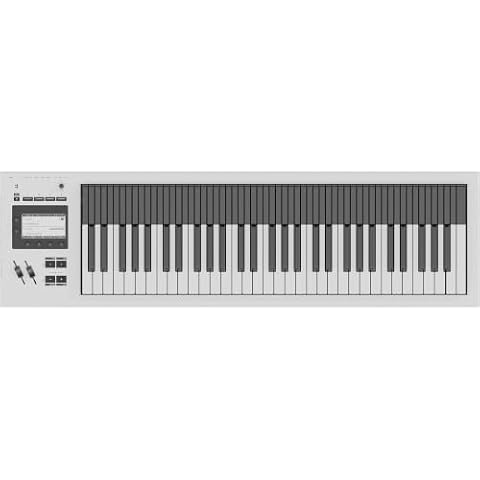
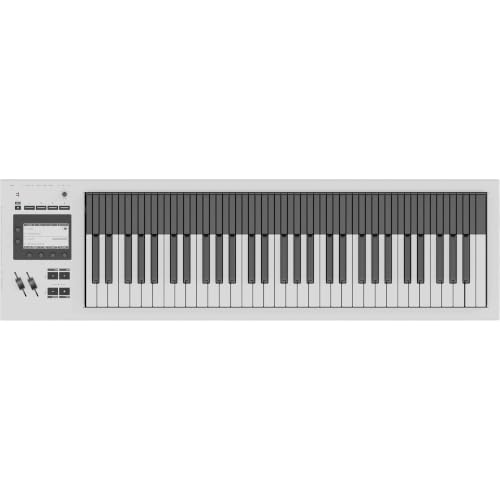
The Expressive E Osmose CE features a 61-key layout with a white finish, according to the listing. This footprint offers five octaves of playing range, while a 49-key variation also exists for narrower desk setups. The white chassis houses the 61-key expressive keybed along with an integrated interface section. This physical format fits standard keyboard stands and studio workstations configured for five-octave instruments.
The control layout places performance tools directly above and beside the keybed. You interact with a 4.3-inch color display, seven encoders, and nine buttons centered on the panel, according to the listing. Pitch and modulation sliders sit next to the keys rather than traditional wheels. This positioning keeps parameter navigation and real-time adjustments close to your hands without cluttering the playing surface.
Hardware connectivity is built directly into the instrument for flexible studio routing. You get a USB-C port, DIN MIDI In, DIN MIDI Out/Thru, and two assignable pedal inputs. This port selection supports simultaneous connections to computers, external MIDI sound modules, and foot controllers. You can position the controller within pure software setups, hardware-only synth desks, or hybrid stage rigs.
Connections, Setup, and Daily Workflow
Connecting the Expressive E Osmose CE to your gear relies on three hardware pathways. The USB-C port links the unit directly to a computer for running digital audio workstation software and virtual instruments. For external hardware synths, you can use the standard DIN MIDI In and DIN MIDI Out/Thru ports. Two assignable pedal inputs allow you to integrate foot switches or continuous expression pedals into your routing. Setup on your computer centers on the included Ctrl-E software, which gives you access to more than 900 presets configured for the keybed. Each preset comes with eight pre-mapped macros for rapid parameter adjustments.
In daily operation, the controller adapts to different tasks through three distinct modes. You can select expressive per-note control, switch to traditional controller operation for standard MIDI devices, or manage your digital audio workstation plugins. Monitoring your settings occurs through the built-in 4.3-inch color display. To shape sounds during playback, you use seven encoders and nine buttons alongside dedicated pitch and modulation sliders. The 61-key surface tracks various physical inputs, allowing you to tap, press, bend pitch, add vibrato, shake, strum, and shape note release on individual keys without extra configuration.
What to Consider Before You Buy
Before selecting this MPE MIDI controller, verify how it integrates with your setup. You will need external sound gear or software to produce audio. The unit includes Ctrl-E software with over 900 presets, so ensure your computer supports this program alongside your digital audio workstation. If you plan to use external hardware, confirm your instruments accept standard DIN MIDI connections.
You may also want assignable pedals to plug into the two pedal jacks on the rear panel. For routine upkeep, keep dust off the white casing, the 4.3-inch color display, sliders, encoders, and buttons.
Among 2026 Digital Pianos & Keyboards options, this model functions specifically as an expressive controller rather than a standalone home piano. It suits you if you prioritize per-note pitch bends, vibrato, and pressure over traditional acoustic-style keybeds.
Check before you buy
- Ensure your computer or host setup supports the included Ctrl-E software and preset library.
- Confirm your hardware synthesizers accept standard DIN MIDI In or DIN MIDI Out connections.
- Verify you have compatible pedals ready for the two assignable pedal input jacks.
- Decide whether the 61-key footprint or the smaller 49-key size variation suits your workspace.
Expressive E Osmose CE 61-Key MPE Controller
Best for: electronic producers needing per-note expressive synth control
- Number of Keys
- 61
- Creative Modes
- Expressive arpeggiator, Press Glide
- Connectivity
- USB-MIDI
- Color
- White
The Expressive E Osmose CE is a 61-key MPE MIDI controller designed for detailed physical articulation. You get per-note pitch bending, aftertouch, and vibrato on every key. It features a 4.3-inch color screen, standard 5-pin DIN MIDI ports, and USB-C. This hardware suits you if you produce layered synth tracks and need direct tactile control over sound parameters.
- 61-key keybed with per-note pitch bending and pressure modulation
- Dedicated 4.3-inch color display with seven encoders and nine buttons
- Full DIN MIDI In and Out/Thru jacks alongside USB-C
- Includes Ctrl-E software with over 900 presets and eight macro controls
- 61-key range offers fewer octaves than standard 88-key digital pianos
- No built-in speakers for unamplified standalone monitoring
- You want individual per-note vibrato, pitch bends, and polyphonic pressure on each key.
- You need both modern USB-C and traditional DIN MIDI ports to drive external hardware synths.
- You want pre-mapped macros and software presets ready for immediate studio production.
- You need an 88-key weighted hammer-action keybed for classical piano repertoire.
- You want an all-in-one keyboard with integrated internal speakers for standalone practice.
Verdict: Expressive E Osmose CE 61-Key MPE Controller provides multidimensional per-note articulation and dedicated hardware editing controls. It fits electronic musicians and composers who need deep modulation options across hybrid hardware and software setups.
Specifications side by side
| Spec | Expressive E Osmose CE 61-Key MPE Controller |
|---|---|
| Number of Keys | 61 |
| Creative Modes | Expressive arpeggiator, Press Glide |
| Connectivity | USB-MIDI |
| Color | White |
| Features | MIDI |
| Size | 61-Key |
| Model | XPEOSM61CE-1 |
Frequently asked questions
Does the Expressive E Osmose CE 61-Key feature internal speakers?
No, the Expressive E Osmose CE is an MPE MIDI controller without internal speakers. You connect it via USB-MIDI to your computer or audio interface to route sound to external monitors or headphones. Model XPEOSM61CE-1 concentrates entirely on expressive input control rather than standalone sound output.
What finish does the Expressive E Osmose CE 61-Key have?
The Expressive E Osmose CE 61-Key comes in a white finish according to its product specifications. This clean color scheme covers the chassis around the 61-key layout. You get a modern look that easily pairs with contemporary studio monitors, audio interfaces, and synthesizer modules on your desk.
Who is the Expressive E Osmose CE 61-Key best for?
Electronic producers needing per-note expressive synth control will benefit most from this hardware. The instrument delivers multidimensional per-note articulation alongside dedicated hardware editing controls. If you build hybrid hardware and software setups requiring deep modulation options during composition, this controller matches your workflow directly.
What is the model number of this 61-key controller?
The specific model identifier for this instrument is XPEOSM61CE-1. Expressive uses this code for the white 61-key version of the controller. You can reference this part number when searching for official firmware updates, checking software compatibility, or verifying correct hardware documentation from the manufacturer.
How does the Expressive E Osmose CE 61-Key link to a computer?
The instrument links to your digital audio workstation primarily through USB-MIDI connectivity. This connection passes your performance messages straight to software instruments on your computer. You can record multi-channel expression data into compatible tracks without requiring separate audio cables directly from the controller itself.
Does this controller support standard MIDI protocols?
Yes, the instrument includes standard MIDI functionality in addition to multidimensional polyphonic expression. You can transmit regular MIDI notes and control values through its USB-MIDI connection. This spec ensures your legacy virtual instruments and non-MPE software synthesizers still accept standard note triggers and continuous controller changes.