
As Amazon Associates, we earn from qualifying purchases. This means we may receive a small commission at no extra cost to you if you click through and make a purchase.
When mains electricity drops unexpectedly, low-voltage electronics risk abrupt shutdowns that can corrupt file systems or disrupt critical equipment, making the DWEII YX850 an intriguing proposition for electronics hobbyists. The core question behind yx850 power failure automatic switching is whether this compact, multi-voltage module can transfer power to a standby battery smoothly without causing attached devices to reboot. As a universal 5v 48v automatic power cut switch, the board acts as an emergency battery converter module that actively monitors a primary direct current input and shifts to a backup battery the instant mains electricity cuts out.
In this comprehensive DWEII YX850 review, we explore the mechanical and electrical capabilities of this DC uninterrupted power supply module to see how it performs in everyday DIY installations. We will break down the essential yx850 specs, evaluate the real-world impact of the yx850 switching speed, provide a practical yx850 wiring guide, and determine whether using the yx850 for router backup and automation hardware makes sense. Along the way, we will also examine whether this low-voltage switch is worth adding to your workbench or if an alternating-current transfer switch is better suited for your project.
What You Get With the DWEII YX850
DWEII YX850


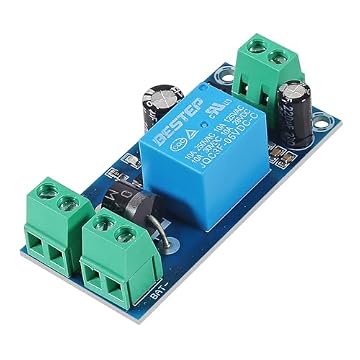

Photographs published on the Amazon listing.
The DWEII YX850 is sold as a multi-pack component bundle geared toward DIY hardware builders who need redundant power routing across multiple devices. Rather than supplying a single pre-boxed peripheral, the package provides bare printed circuit boards ready for integration into custom project boxes and equipment chassis.
- Three individual DWEII YX850 power failure automatic switching modules (also referenced under model JY-850)
- Integrated onboard screw terminal blocks for tool-free conductor retention without required soldering
- Mechanical relay-driven automatic emergency battery switching architecture
- Dual 3mm mounting holes for securing the bare circuit board onto non-conductive standoffs
- Universal DC operational span supporting inputs from 5 volts up to 48 volts
- Current carrying capacity rated up to 10A for low-voltage DC loads
Key Specifications
Attribute
Detail
- Brand
- DWEII
- Model Number
- YX850 (JY-850)
- Application Area
- DC 5V – 48V
- Current Rating
- 10A
- Switching Transfer Time
- Less than 1 second temporary power interruption
- Dimensions
- Approx. 61mm x 30mm x 18mm (2.4 x 1.2 x 0.7 inches)
- Mounting Hole Spacing
- Approx. 23mm (2 x Ф3mm holes)
- Item Weight
- 1 ounce
- Unit Count
- 3 Count (1 Pack)
- UPC
- 687117759016
Copied from the Amazon listing. These figures were not measured here.
Switching Speed and Transfer Latency in Practice
The primary concern with any emergency transfer board is how rapidly it completes the switchover when utility power drops. According to the manufacturer specifications, the DWEII YX850 experiences a temporary power failure lasting less than one second during the changeover. In practical terms, this transfer speed is dictated by the physical mechanical motion of an internal relay armature moving between the primary DC contacts and the standby battery contacts. Because this is an electromechanical switch rather than a solid-state semiconductor arrangement, the physical movement takes several milliseconds to complete.
For relatively forgiving electrical loads, a sub-second transfer delay presents absolutely no operational penalty. Simple resistive heating circuits, low-voltage incandescent lighting, cooling fans, and aquarium aeration pumps maintain enough thermal or mechanical momentum that a fractional break in supply voltage is entirely imperceptible. In these situations, the DWEII YX850 functions seamlessly, engaging the standby battery pack quickly enough to prevent system stagnation without requiring any complex control code or manual user intervention.
However, modern digital microprocessors and microcontrollers operate on microsecond tolerances where even a five-millisecond interruption can drop the input voltage rail below the processor reset threshold. If you deploy the module to back up microcomputers, small single-board servers, or programmable logic hardware, that sub-second drop will cause the device to initiate a cold reboot. Buyers intending to protect sensitive microprocessor loads must install a supplementary capacitor bank or diode-isolated storage reserve on the output load rail to keep the operating voltage sustained across that fractional switching gap.
Voltage Matching and Load Capacity Constraints
A vital operational requirement emphasized by the manufacturer is that the voltages of the primary power source, the standby battery, and the connected load must all be identical. The DWEII YX850 is strictly a routing switch, not a buck-boost converter or a voltage regulator. There are no onboard step-up or step-down transformers to alter potential differences between the input terminals and the output terminals. Whatever voltage is applied to the active input terminal flows directly through the relay contacts to your downstream hardware.
This requirement demands careful system planning when configuring battery chemistries. For example, if you are backing up a 12-volt load using an external battery pack like a super start power pack portable 12 volt power source, your primary wall adapter must also be rated for 12 volts nominal. You cannot connect a 24-volt primary power supply and expect the board to route down to a 12-volt battery; doing so would risk catastrophic overvoltage to both the standby battery and the downstream equipment once the relay trips. Each side of the circuit must operate on the exact same nominal DC voltage standard.
Regarding current capacity, the board is rated for up to 10A across its DC 5V to 48V operational envelope. A 10-amp capacity is substantial for low-voltage equipment, allowing up to 120 watts of power throughput at 12 volts, or nearly 480 watts on a 48-volt bus. While the onboard traces and mechanical contacts are built to support 10A peaks, running sustained high-amperage loads generates ambient thermal buildup. Ensuring free air convection around the open board is recommended when running prolonged loads exceeding 5 to 7 amps.
Wiring and Installation Process
Integrating the DWEII YX850 into an existing power configuration is relatively straightforward thanks to its integrated screw terminal blocks. Each block features recessed clamp screws that secure stripped copper wires firmly in place, allowing users to assemble or reconfigure connections with a basic precision screwdriver. The board layout clearly separates the main DC adapter leads, the backup battery leads, and the outbound load leads, reducing the likelihood of cross-wiring during bench assembly.
Physical installation requires mindful handling because the module is shipped as an exposed printed circuit board. Measuring approximately 61mm by 30mm by 18mm, the compact footprint fits easily inside standard modular enclosures or 3D-printed project boxes. Mounting is facilitated by two 3mm screw holes positioned 23mm apart. When mounting the board near domestic automation hardware such as a eufy omni e25 or in utility cabinets subject to vibration, using non-conductive nylon standoffs is essential to ensure that the underside solder joints never short-circuit against bare metallic surfaces.
One crucial integration detail involves battery management: the DWEII YX850 does not incorporate an active battery charging circuit. While the product specification references a 10A charging parameter in the technical translation, the board does not contain the multi-stage constant-current and constant-voltage logic required to charge lithium-ion or lead-acid cells safely. When primary power is present, the board routes that power to the load, but you must supply a dedicated, external charging controller if you wish to keep your standby battery topped up automatically over long standby intervals.
Suitability for Network Routers and Sensitive Electronics
One of the most frequent DIY applications for low-voltage failover boards is keeping household network hardware online during utility power drops. Utilizing the yx850 for router backup can be an effective strategy, but success depends on the specific power input filtering built into your networking hardware. Many standard home routers and optical network terminals contain internal input filter capacitors designed to smooth incoming ripple from basic wall transformers. When these internal capacitors are large enough, they can maintain internal rail voltages during the brief mechanical relay switch, yielding an uninterrupted Wi-Fi connection.
Conversely, more modern compact routers often cut costs on internal bulk capacitance, meaning that even a fractional-second power droop forces the router’s processor to restart. A reboot cycle often takes two to five minutes while the modem re-synchronizes with the internet service provider, defeating the purpose of an instant failover switch. Testing your specific router on the bench by abruptly disconnecting the primary DC barrel connector while monitoring connection logs will quickly reveal whether your particular hardware requires supplemental outboard capacitance.
For electronics placed throughout a smart home or workshop environment near appliances like the philips lattego 4400, continuous clean power prevents annoying clock resets and dropped wireless connections. If your network equipment does reboot during switchover testing with the YX850, adding an electrolytic capacitor rated for appropriate voltage across the load terminals provides the temporary buffer needed to carry the microprocessor across that sub-second transfer window.
DWEII YX850 Pros and Cons
Pros
- Wide DC 5V to 48V operating range
- Convenient screw terminal blocks
- Generous 10A current handling capacity
- Compact circuit board footprint
- Includes three modules per package
Cons
- Brief sub-second power transfer interruption
- Lacks built-in battery charging regulation
- Requires identical input and output voltages
- Bare board without protective enclosure
Is the DWEII YX850 Worth It
The DWEII YX850 is a worthwhile acquisition for electronics hobbyists, makers, and DIY builders who want a simple, hardware-level emergency switching mechanism without the complexity of microcontrollers or programmable transfer logic. Its wide 5V to 48V operating threshold and 10A current ceiling make it exceptionally versatile across a broad spectrum of low-voltage DC setups, from small 5V development boards to substantial 24V or 48V automation controls. Having three units in a single package adds substantial value for multi-device installations.
That said, buyers seeking an out-of-the-box, fully integrated consumer uninterruptible power supply will likely find the YX850 lacking. It does not provide battery charging management, voltage regulation, or protective plastic housing, requiring the user to supply appropriate power supplies, battery chargers, project enclosures, and wire termination. It is a discrete circuit component designed to be incorporated into a larger electrical design rather than a standalone consumer appliance.
If you have basic wiring tools, understand the necessity of matching system voltages, and are running loads that can tolerate a brief mechanical transfer latency, the DWEII YX850 delivers dependable, repeatable failover switching. For delicate computing gear requiring zero-millisecond transfer times, it can still serve reliably provided you are willing to install supplementary output capacitance to bridge the relay gap.
Other Options to Consider
AC120V 15Amp Automatic Transfer Switch is suited for users who need an automated transfer switch for standard household alternating-current equipment, featuring integrated NEMA 5-15 plugs and receptacles rather than bare DC terminal blocks.

100Amp AC110V Automatic Manual Transfer fits homeowners and workshop managers looking for heavy-duty mains-level or solar transfer management, offering a 2-pole 100A DIN rail mounted switch capable of handling high-current AC home generator and RV power changeovers.
30 Amp Automatic Transfer Switch serves recreational vehicle owners and campers who require a dedicated 120VAC transfer switch rated specifically for 30-amp RV power systems rather than low-voltage DIY direct current circuits.

FAQ
Does the DWEII YX850 charge the backup battery automatically?
The listing does not specify an integrated intelligent battery charging circuit on the board. While the module switches power between the main DC source and the standby battery, maintaining proper battery health requires connecting an independent, chemistry-appropriate battery charger to the standby battery pack.
Can I use different voltages for the primary power source and the backup battery?
No. The manufacturer explicit notes state that the voltages of the power source, battery, and load must all be the same. The YX850 acts as a mechanical routing switch without voltage conversion, so any voltage mismatch can damage connected hardware.
How fast is the switching speed between main power and the battery?
The manufacturer specifications state that when the module switches power sources, there will be a temporary power failure lasting less than one second. This sub-second delay is standard for mechanical relay switching.
Will my Wi-Fi router reboot during a power cut?
It depends on the router’s internal input filtering. Some routers possess sufficient internal capacitance to run through the sub-second transfer time without interruption, while others will reboot unless you add an external buffer capacitor across the load terminals.
What gauge wire should I use with the screw terminals?
The listing does not specify a specific American Wire Gauge size for the onboard screw terminals. However, standard hookup wire suited for low-voltage electronics and rated to handle up to 10A can be clamped securely into the screw blocks.
Can the DWEII YX850 handle alternating current household power?
No. The DWEII YX850 is rated strictly for direct current applications within an operational span of DC 5V to 48V. Using it with alternating current mains power exceeds the design parameters and presents a severe electrical hazard.


