
As Amazon Associates, we earn from qualifying purchases. This means we may receive a small commission at no extra cost to you if you click through and make a purchase.
When summer heat peaks, standard fans often fail to drop indoor temperatures, leading homeowners to look for dedicated room cooling. The Whynter ARC-14S is built for buyers who need serious cooling output across medium to large living areas up to 500 square feet without mounting a permanent window unit. Rated at 14,000 BTU under ASHRAE standards (and 9,500 BTU SACC), this freestanding machine relies on a dual-hose system designed to cool rooms rapidly while avoiding the negative air pressure common in single-hose designs. If you need a powerful seasonal cooler for an apartment, sunroom, or living area, this model delivers substantial thermal relief, provided you have the space to house its hefty frame.
Choosing the right portable air conditioner involves understanding physical dimensions, power draw, and real-world installation requirements. This comprehensive breakdown evaluates the cooling performance, operational modes, sound output, and physical build of this popular model. We will examine how the dual-hose configuration works, how simple the setup is, how it behaves in sleep environments, and how it stacks up against competing alternatives on the market so you can decide if it matches your home layout.
What You Get With the Whynter ARC-14S
Whynter ARC-14S





Photographs published on the Amazon listing.
Unboxing the unit reveals a complete ventilation kit and basic air management accessories alongside the main cabinet. The manufacturer supplies the essential components required to vent the unit through standard sliding or hung windows without purchasing third-party adapters.
- Whynter ARC-14S indoor portable air conditioner unit
- Extendable intake and exhaust hoses stretching up to 60 inches with a 5.9-inch diameter
- Adjustable window slider kit fitting openings from 20 inches minimum up to 46 inches maximum width
- Activated carbon air filter designed to capture light odors and trace impurities
- Washable nylon pre-filter to catch dust, pet hair, and airborne lint
- Protective storage cover bag for off-season storage
Key Specifications
Specification
Detail
- Cooling Capacity
- 14,000 BTU ASHRAE (9,500 BTU SACC)
- Coverage Area
- Up to 500 square feet
- Airflow Volume
- 430 m3/h / 253 CFM
- Dehumidifying Capacity
- 71 pints per 24-hour period
- Operating Modes
- Cool, Dehumidify, Fan (3 speeds)
- Thermostat Range
- 61°F to 89°F
- Sound Level
- 51 dBA at low fan speed
- Compressor Type
- Rotary scroll (No Inverter)
- Refrigerant
- CFC-free R-32
- Power Consumption & Voltage
- 1300 Watts / 11.6 Amps, 115 Volts
- Dimensions & Weight
- 19" D x 16" W x 35.5" H; 73 pounds
Copied from the Amazon listing. These figures were not measured here.
Cooling Capacity and Dual-Hose Efficiency
Understanding the mechanical value of this unit starts with the Whynter ARC-14S dual hose architecture. Standard single-hose portable air conditioners pull indoor air that has already been conditioned, use it to cool down the internal condenser, and pump that hot air out the window. This process generates negative air pressure inside the room, which pulls hot outdoor air inward through door frames, electrical outlets, and baseboards. By utilizing two dedicated 5.9-inch hoses, this unit draws outside air across the internal condenser coils through one duct and exhausts it outdoors through the second, keeping room air balanced and contained.

The Whynter ARC-14S cooling capacity is rated at 14,000 BTU under traditional ASHRAE testing guidelines, translating to 9,500 BTU under modern Department of Energy SACC metrics. Backed by an airflow rate of 253 CFM (cubic feet per minute), the internal blower pushes cold air far into open floor plans up to 500 square feet. It uses environmentally conscious R-32 refrigerant, which operates cleanly while maintaining strong thermodynamic heat exchange across the cooling coils.
As a heavy-duty Whynter 14000 BTU portable AC, the ARC-14S is engineered for high-demand thermal loads, such as top-floor apartments, south-facing living spaces, and rooms with large window expanses. If you are comparing raw output against other high-capacity options, our evaluation of the agtana 14000 btu portable air conditioner highlights how traditional portable configurations handle thermal challenges in everyday residential spaces.
Noise Profile and Bedroom Usability
Operating a portable air conditioner inside a sleeping area requires balancing cooling power against acoustic distraction. Measuring 51 dBA on low fan speed, the Whynter ARC-14S noise level sits within a reasonable range for a machine of this size, though it is not whisper-quiet. The hum consists primarily of continuous rushing air from the 253 CFM blower paired with a steady mechanical buzz from the rotary scroll compressor.
Using the Whynter ARC-14S for bedroom cooling works well for light sleepers who appreciate a consistent white-noise background that masks exterior street sounds. However, because this model uses a traditional single-speed rotary scroll compressor rather than an inverter, the compressor engages and disengages with a noticeable mechanical click as the thermostat regulates room temperatures between 61°F and 89°F. Those who wake up from sudden shifts in ambient hum should run the fan speed on high or medium to keep the auditory floor steady throughout the night.
Shoppers who prioritize quieter overnight performance often look into compact models engineered specifically for low-noise air distribution. Reading our review of the dreo 740s portable air conditioner provides helpful context on how different internal blower designs impact ambient bedroom sound levels.
Window Kit Installation and Physical Footprint
Completing the Whynter ARC-14S window kit installation involves fitting the included plastic slider panel into your window opening and locking the intake and exhaust ducts into position. The window slider adjusts between 20 inches and 46 inches in length, accommodating most standard hung sash windows and horizontal sliders. Because both 5.9-inch diameter hoses must fit side by side on the bracket, the window opening must provide at least 6.5 inches of vertical or horizontal clearance.
Managing the physical footprint in your room requires planning. The unit itself measures 19 inches deep, 16 inches wide, and 35.5 inches tall, but you must also leave roughly 20 inches of clearance behind the cabinet to prevent pinching the two 60-inch flexible hoses. Bending the thick hoses too sharply reduces airflow, which forces the rotary compressor to work harder and reduces overall efficiency.
Weight is another factor to keep in mind. At 73 pounds, the ARC-14S is one of the heavier standalone portable units in its class. While it features integrated caster wheels on the base for gliding across hardwood and low-pile rugs, carrying it up a flight of stairs requires two capable adults. The cabinet is finished in a two-tone platinum and black plastic scheme that blends cleanly with modern furniture, and the package includes an off-season fabric cover to protect the casing when stored away during colder months.
Dehumidifier Mode and Condensate Management
Excess humidity can make a room feel sweltering even when the air temperature is low. Operating in the dedicated Whynter ARC-14S dehumidifier mode pulls moisture out of the air at an impressive rate of up to 71 pints per 24-hour cycle. In pure dehumidification mode, the unit circulates air continuously across the cold coils without running the cooling blower at full blast, condensing vapor directly into its internal collection system.
A primary mechanical advantage of this unit is its patented auto-drain self-evaporating technology. During normal cooling operation, the internal mechanism sprays condensed moisture onto the hot condenser coils, evaporating the bulk of the water and blowing it outside through the exhaust hose. In moderately humid regions, you will rarely need to empty an internal drain pan manually during cooling mode.
In extremely humid climates where relative indoor humidity regularly climbs above 70 percent, moisture condensation can outpace the auto-drain evaporation rate. When this happens, the unit stores excess water inside an internal reservoir until it reaches capacity, at which point the compressor shuts down automatically to prevent overflowing. For continuous high-humidity operation, the back panel features a manual drain port where you can connect a gravity drain tube. Air quality is handled simultaneously through a dual-layer setup featuring a washable nylon pre-filter for pet hair and an activated carbon insert to help minimize household odors.
Whynter ARC-14S Pros and Cons
Pros
- Dual-hose design avoids negative room pressure
- Strong 14,000 BTU cooling for 500 square feet
- Self-evaporating auto-drain system exhausts condensate
- High dehumidification capacity at 71 pints daily
- Activated carbon filter and washable pre-filter included
Cons
- Heavy 73-pound frame limits easy multi-floor movement
- Lacks variable-speed inverter compressor technology
- Dual 5.9-inch hoses take up substantial window space
Check Whynter ARC-14S on Amazon
Is the Whynter ARC-14S Worth It
When determining whether the Whynter ARC-14S is worth it, buyers must weigh its robust dual-hose cooling capability against its physical bulk and power needs. Examining the Whynter ARC-14S specs reveals a machine built for raw cooling endurance rather than ultra-lightweight portability. At 1300 watts and 11.6 amps, it draws significant current, meaning it should ideally share a 15-amp circuit with very few other active electronic appliances.
This air conditioner is an excellent investment for renters, condo owners, and homeowners with strict HOA regulations that ban protruding window air conditioning units. It is particularly valuable for large spaces up to 500 square feet where single-hose portable models routinely struggle against afternoon heat. If you need powerful room-level cooling that you can set up quickly at the start of summer and leave in place until autumn, the ARC-14S handles demanding temperatures reliably.
Conversely, this model is less suitable for users who intend to roll their air conditioner between different rooms on different floors every day. Its 73-pound weight makes vertical transport cumbersome, and having two separate exhaust hoses requires a bit more care to assemble and seal than a basic single-hose kit. If you prefer modern variable-speed compressor technology over conventional single-speed compressors, explore our guide to the whynter portable air conditioner inverter 14000 btu smart wi-fi arc-1230wn to see how inverter-driven units behave.
Other Options to Consider
Garvee 3-in-1 Portable Air Conditioner suits shoppers who need cooling coverage across larger floor plans, as its listing specifies coverage up to 750 square feet with 14,000 BTU (9,300 BTU SACC) capacity, three fan speeds, a 24-hour timer, and an included remote control.
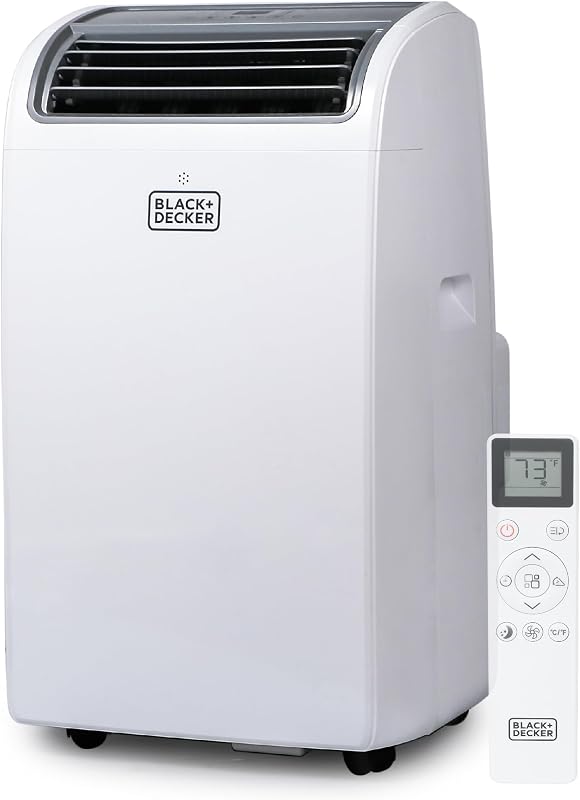
BLACK+DECKER Smart Portable Air Conditioner is a better fit for tech-oriented households wanting connected convenience, providing 14,000 BTU (10,200 BTU SACC) performance for spaces up to 700 square feet alongside a Follow Me remote and dedicated smart controls.
Portable Air Conditioners 4-in-1 Mini is designed specifically for personal desktop cooling rather than whole-room air conditioning, utilizing an evaporative fan with a 1000ml water tank, seven LED mood lights, and ultra-compact dimensions suited for a bedside table or office workstation.
FAQ
Does the Whynter ARC-14S require manual draining during cooling mode?
In most everyday cooling environments, manual draining is not required because the unit uses an auto-drain self-evaporation system that vents moisture through the exhaust hose. However, in regions with exceptionally high ambient humidity, water can accumulate faster than it evaporates, requiring you to empty the internal pan or attach a continuous drain hose to the rear drain port.
What window sizes work with the included installation kit?
The included window slider panel adjusts to fit window openings between 20 inches and 46 inches in length or height. The window track must also provide at least 6.5 inches of clearance width to accommodate the side-by-side mounting brackets for the two 5.9-inch diameter hoses.
Can the Whynter ARC-14S be operated using only one hose?
While the machine can physically turn on with a single hose attached, it is engineered specifically to operate with both the intake and exhaust hoses connected. Operating it with only one hose eliminates the efficiency benefits of the dual-duct design and forces the unit to create negative air pressure inside your room.
How loud is the unit when running in a quiet bedroom?
The unit produces approximately 51 dBA on its lowest fan speed, which resembles the sound level of a standard refrigerator hum or steady rainfall. While the steady airflow noise serves as effective white noise for many sleepers, the mechanical click of the non-inverter compressor cycling on and off may disturb light sleepers.
What is the difference between the 14,000 BTU and 9,500 BTU SACC ratings?
The 14,000 BTU figure reflects the older ASHRAE test standard, which measures raw cooling power under controlled laboratory settings without accounting for heat radiated by the exhaust ducting. The 9,500 BTU SACC (Seasonally Adjusted Cooling Capacity) rating represents the updated Department of Energy standard, reflecting real-world residential performance and duct heat leakage.


