
As Amazon Associates, we earn from qualifying purchases. This means we may receive a small commission at no extra cost to you if you click through and make a purchase.
As an Amazon Associate we earn from qualifying purchases. Links on this page are affiliate links.
The solid state logic harrison flex 10 10 in 2 out alternatives offer different features for your studio needs. This interface provides 10 inputs and 2 outputs with class-compliant USB-C connectivity. It delivers 32-bit/192 kHz audio resolution and includes two mic preamps. The unit also ships with Harrison Mixbus 12 DAW software. These specs suit producers who value analog tone shaping and classic saturation. You might look elsewhere if you need more inputs or a smaller footprint. The Focusrite Scarlett 4i4 is much more compact for home use. The Fender Quantum LT 16 offers 16 inputs for larger setups. You may also prefer onboard DSP from Elgato or Yamaha. We selected these options because their specifications overlap with the original model. Each alternative shares key traits like USB-C connectivity or specific I/O counts. You can compare these specs to find the best fit for your workflow. The following list ranks seven interfaces based on their technical capabilities. You will find options ranging from budget-friendly to premium models.
Comparing FleX-10 to 6 Alternatives
Focusrite Scarlett 4i4 4th Gen USB-C Interface
The Focusrite Scarlett 4i4 4th Gen offers a compact 4-in/4-out configuration, which is significantly smaller than the Harrison FleX-10. It measures 5.08 inches wide and weighs just 2.23 pounds, making it ideal for solo producers with limited desk space. While it provides 120dB dynamic range for clear audio conversion, it lacks the FleX-10’s 10 inputs and ADAT expansion. You should choose this if you prioritize portability and a lower channel count over the extensive I/O and analog saturation features of the Harrison unit.
Elgato Wave XLR Pro Dual USB-C Audio Interface
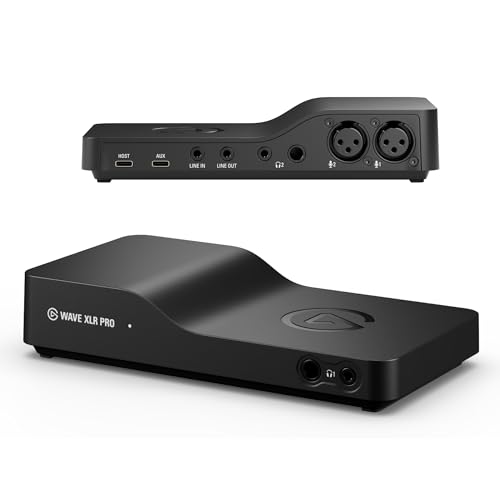
The Elgato Wave XLR Pro Dual focuses on streaming with dual USB-C connectivity and onboard DSP. It provides 80 dB of gain for clear vocal capture but limits you to two mic preamps, similar to the Harrison. Unlike the Harrison’s 32-bit/192 kHz resolution and ADAT expansion, this interface emphasizes hardware mixes and DSP effects. It is a better fit for streamers who need immediate processing power rather than high-resolution studio tracking. You should pick this if your workflow relies on onboard effects and simple dual-input setups.
Fender Quantum LT 16 USB-C Audio Interface
The Fender Quantum LT 16 expands your options with 16 inputs and 8 outputs, far exceeding the Harrison’s 10-in/2-out layout. It supports standalone mixing and modular synth connectivity, which the Harrison does not. At 19 inches wide, it is larger than the Harrison but offers more channels for hybrid studios. You should choose this if you need extensive I/O for large ensemble recordings or standalone operation. It trades the Harrison’s specific analog tone shaping for raw channel count and modular flexibility.
Focusrite Scarlett 18i16 4th Gen USB-C Interface
The Focusrite Scarlett 18i16 4th Gen delivers high channel counts with robust connectivity for complex studio environments. It offers significantly more inputs than the Harrison FleX-10, making it suitable for multi-input recording setups. While it lacks the Harrison’s bundled DAW and analog saturation features, it provides detailed recording capabilities with MIDI and USB-C support. You should select this if you need to record many sources simultaneously. It is the better choice for producers prioritizing sheer input count over the Harrison’s focused two-channel analog character.
Yamaha 6×4 USB-C Audio Interface
The Yamaha 6×4 USB-C Interface provides 6 inputs and 4 outputs with onboard DSP tools. It is smaller than the Harrison and focuses on processing power rather than raw channel count. While it offers solid analog conversion, it does not match the Harrison’s 10 inputs or ADAT expansion. This unit fits producers who value DSP effects for home studio workflows. You should pick this if you need moderate I/O with built-in processing. It is a practical alternative for those who prioritize onboard effects over the Harrison’s high-resolution audio and expansion capabilities.
PreSonus Quantum HD 8 USB-C Audio Interface
The PreSonus Quantum HD 8 provides eight mic preamps, which is more than the Harrison’s two but fewer than its total 10 inputs. It delivers high-resolution audio and robust preamp performance for serious home studios. The unit is larger than the Harrison, measuring 19 inches wide. It fits producers who need eight channels of high-gain inputs in a single unit. You should choose this if you require more preamps for multi-track recording. It trades the Harrison’s analog tone shaping for greater preamp channel count and extensive I/O for complex sessions.
| # | Product | Best for | Price |
|---|---|---|---|
| 1 | Harrison FleX-10 USB-C Audio Interface Best overall | Studio tracking with analog character and ADAT expansion | |
| 2 | Focusrite Scarlett 4i4 4th Gen USB-C Interface Best budget | compact 4-in/4-out home studio recording | |
| 3 | Elgato Wave XLR Pro Dual USB-C Audio Interface Also great | Streamers needing dual XLR inputs and DSP | |
| 4 | Fender Quantum LT 16 USB-C Audio Interface Best premium | Hybrid studios needing 16 inputs and standalone modes | |
| 5 | Focusrite Scarlett 18i16 4th Gen USB-C Interface Also great | multi-input studio recording setups | |
| 6 | Yamaha 6×4 USB-C Audio Interface Also great | Studio recording with onboard DSP effects | |
| 7 | PreSonus Quantum HD 8 USB-C Audio Interface Also great | Multi-track recording with eight mic preamps |

Harrison FleX-10 USB-C Audio Interface
Best for: Studio tracking with analog character and ADAT expansion
- Total I/O
- 10-in/ 2-out
- Mic Preamps
- 2
- Host Connection
- USB-C
- Audio Resolution
- 32-bit/192 kHz
- Digital Expansion
- ADAT
- Dimensions
- 16.7 × 9.65 × 5 inches
This Solid State Logic interface offers 10 inputs and 2 outputs via USB-C. It includes two mic preamps with ADAT expansion for more channels. You get 32-bit/192 kHz resolution and classic analog tone shaping. The package includes Harrison Mixbus 12 DAW software. It suits users needing focused analog character and moderate I/O for studio tracking.
- 10 inputs and 2 outputs for flexible routing
- 32-bit/192 kHz audio resolution for high fidelity
- ADAT digital expansion allows additional input channels
- Includes Harrison Mixbus 12 DAW software bundle
- Only two built-in mic preamps compared to four or more on other options
- Lower total input count than 16 or 18-input interfaces on the list
- Larger physical footprint at 16.7 inches in length
- You need classic analog tone shaping for vocals
- You want a bundled DAW for immediate use
- You require ADAT expansion for future growth
- You need more than two mic preamps without expansion
- You require a compact desktop form factor
- You prefer a higher total input count like 16 or 18
Verdict: SSL Harrison FleX-10 10-in/2-out Interface delivers focused analog character and a useful software bundle for users who prioritize tone and moderate I/O over high channel counts.

Focusrite Scarlett 4i4 4th Gen USB-C Interface
Best for: compact 4-in/4-out home studio recording
- Total I/O
- 4-In 4-Out
- Mic Preamps
- 2
- Host Connection
- USB-C
- Audio Resolution
- 24-Bit/192kHz
- Dynamic Range
- 120dB
- MIDI I/O
- MIDI In/Out
The Focusrite Scarlett 4i4 4th Gen is a compact 4-in/4-out USB-C audio interface. It features two mic preamps, two Hi-Z inputs, and four line inputs. The unit offers a 120dB dynamic range and 24-bit/192kHz resolution. Air mode enhances vocal and guitar tones. This interface suits creators who need balanced I/O for small studio setups without the bulk of larger units.
- 120dB dynamic range for studio-quality audio conversion
- Includes MIDI In/Out for gear connectivity
- Auto Gain and Clip Safe features simplify recording
- Air mode adds harmonic drive to recordings
- Only 4 inputs and 4 outputs, fewer than competitors like the Scarlett 18i16
- Weighs 2.23 pounds, making it slightly heavier than smaller solo interfaces
- Limited to 2 mic preamps compared to multi-preamp units
- You need a compact 4-in/4-out interface for a home studio
- You record vocals and instruments with MIDI gear
- You prefer a dedicated unit with Air mode for tonal shaping
- You require more than 4 inputs for a full band setup
- You need extensive hardware mixing controls
- You are looking for a multi-channel interface with 16+ inputs
Verdict: Focusrite Scarlett 4i4 4th Gen delivers reliable 4-in/4-out performance with 120dB dynamic range. It fits solo producers or small teams who prioritize compact size and clear audio conversion over high channel counts.
Elgato Wave XLR Pro Dual USB-C Audio Interface
Best for: Streamers needing dual XLR inputs and DSP
- Mic Preamps
- 2
- Host Connection
- Dual USB-C
- Preamp Gain
- 80 dB
- Features
- DSP
- Dimensions
- 3.82 × 7.28 × 1.5 inches
- Weight
- 13.4 ounces
The Elgato Wave XLR Pro is a dual XLR audio interface with onboard DSP. It provides 80 dB of gain per preamp and supports dual USB-C connections. You can create up to five hardware mixes and route audio via matrix mixing. This unit is compact at 1.5 inches high and weighs 13.4 ounces. It suits creators needing flexible routing and low-latency monitoring.
- 80 dB of gain per XLR preamp
- Dual USB-C connectivity for multiple hosts
- Onboard DSP with Wave FX Processor
- Up to five independent hardware mixes
- Compact 1.5-inch height and 13.4-ounce weight
- Only two mic preamps compared to the 10-in or 18-in options
- Heavier at 13.4 ounces than the 7.28-inch width suggests for portability
- Limited to two XLR inputs versus 16-in or 18-in alternatives
- You need high-gain preamps for sensitive microphones
- You want onboard DSP for real-time effects
- You require multiple hardware mixes for streaming
- You need more than two XLR inputs
- You prefer a lighter device under 10 ounces
- You require 16 or more simultaneous inputs
Verdict: Elgato Wave XLR Pro Dual XLR Interface offers 80 dB gain and dual USB-C for streamers needing onboard DSP and five hardware mixes, but its two-preamp limit excludes those needing higher channel counts.

Fender Quantum LT 16 USB-C Audio Interface
Best for: Hybrid studios needing 16 inputs and standalone modes
- Total I/O
- 16-in, 8-out
- Mic Preamps
- 8
- Host Connection
- USB-C
- Preamp Gain
- +75 dB
- MIDI I/O
- 5-pin MIDI I/O
- Suitable For
- Music Production
The Fender Quantum LT 16 is a 16-in, 8-out USB-C audio interface designed for hybrid studios. It features eight MAX-HD mic preamps with +75 dB of gain and 14 line inputs for external gear. DC-coupled outputs and 5-pin MIDI I/O support modular synths. Standalone modes allow mixing without a computer. It suits producers needing extensive I/O and Fender amp integration.
- 16 inputs and 8 outputs for large setups
- Eight MAX-HD preamps with +75 dB gain
- 14 line inputs for outboard gear expansion
- DC-coupled outputs for modular synth connectivity
- Standalone Mixer and Mic Pre modes
- Heavier build at 4.8 pounds compared to lighter competitors
- Fewer total I/O channels than the Focusrite Scarlett 18i16
- Smaller gain count than the Elgato Wave XLR with 80 dB
- You need 16 inputs for multi-mic drum kits
- You use modular synths requiring DC-coupled outputs
- You want standalone mixing without a computer
- You require more than 16 inputs
- You prefer a lighter, more portable unit
- You need higher preamp gain than +75 dB
Verdict: Fender Quantum LT 16 16-in 8-out offers extensive I/O for hybrid studios. It fits producers who need standalone mixing and modular synth connectivity.

Focusrite Scarlett 18i16 4th Gen USB-C Interface
Best for: multi-input studio recording setups
- Total I/O
- 18-In 16-Out
- Mic Preamps
- 4
- Host Connection
- USB-C
- Audio Resolution
- 24-Bit/192kHz
- Dynamic Range
- 122dB
- Preamp Gain
- 69dB
The Focusrite Scarlett 18i16 4th Gen is a 18-in/16-out USB-C audio interface designed for large setups. It offers four mic preamps with 69dB of gain and two Hi-Z inputs. The unit features 24-bit/192kHz converters with a 122dB dynamic range. Air modes add harmonic drive to recordings. It includes MIDI I/O and digital expansion via ADAT and S/PDIF for versatile connectivity.
- 18 inputs and 16 outputs for extensive connectivity
- 24-bit/192kHz converters with 122dB dynamic range
- Air modes add presence and harmonic drive
- Auto Gain and Clip Safe workflow tools
- Includes ADAT and S/PDIF digital expansion
- Only four mic preamps for a large I/O count
- Heavier build at 3.83 pounds compared to smaller interfaces
- Lower preamp gain of 69dB than some competitors
- You need extensive I/O for a full band
- You require digital expansion via ADAT or S/PDIF
- You want professional workflow tools like Auto Gain
- You only need two mic preamps
- You prefer a lighter, more portable unit
- You need higher preamp gain than 69dB
Verdict: Focusrite Scarlett 18i16 4th Gen suits producers needing high channel counts and digital expansion. It delivers detailed recording capabilities with robust connectivity options for complex studio environments.

Yamaha 6×4 USB-C Audio Interface
Best for: Studio recording with onboard DSP effects
- Total I/O
- 6 x 4
- Mic Preamps
- 4
- Host Connection
- USB-C, USB 3.0
- Audio Resolution
- 32-bit / 192 kHz
- MIDI I/O
- MIDI I/O
- Connectivity
- USB-MIDI, USB, USB-C
This Yamaha interface offers 6 analog inputs and 4 outputs via USB-C. It features 32-bit/192 kHz resolution and Class-A D-PRE preamps. The unit includes built-in DSP for latency-free monitoring with reverb and amp effects. It provides MIDI I/O and a rugged metal housing. This setup suits musicians needing reliable analog conversion and onboard processing for recording.
- 6 x 4 analog I/O configuration
- 32-bit / 192 kHz audio resolution
- Built-in DSP for monitoring effects
- Class-A D-PRE mic preamps
- Includes MIDI I/O ports
- Fewer total I/O channels than the 16-in or 18-in competitors
- Only 4 mic preamps compared to the 8 or 16 available on larger units
- Larger physical footprint at 15 inches long
- You need onboard DSP effects for monitoring
- You require MIDI connectivity alongside audio
- You prefer a durable metal chassis
- You need more than 6 analog inputs
- You require 16 or more simultaneous channels
- You want a compact desktop footprint
Verdict: Yamaha URX44C 6-in/4-out Interface delivers solid analog conversion and useful DSP tools for home studios. It fits producers who value processing power over raw channel count.

PreSonus Quantum HD 8 USB-C Audio Interface
Best for: Multi-track recording with eight mic preamps
- Total I/O
- 26×30
- Mic Preamps
- 8
- Host Connection
- USB-C
- Audio Resolution
- 32-bit / 192 kHz
- Preamp Gain
- +75 dB
- Color
- Black
The PreSonus Quantum HD 8 is a 26×30 USB-C audio interface designed for professional recording workflows. It features eight MAX-HD mic preamps with +75 dB of gain and supports 32-bit/192 kHz audio resolution. The unit includes instrument inputs co-developed with Fender engineers. This interface suits musicians needing extensive I/O and studio-grade preamp quality in a single rack-mountable unit.
- Eight MAX-HD mic preamps with +75 dB gain
- 32-bit / 192 kHz audio resolution
- 26×30 total input/output count
- Instrument inputs co-developed with Fender
- Includes Studio One Pro software license
- Heavier build at 6.3 pounds compared to lighter desktop options
- Larger footprint with 19-inch width requiring rack space
- Fewer mic preamps than 18-in/16-out competitors
- You need eight high-quality mic preamps for multi-track recording
- You require extensive I/O for complex studio setups
- You want Fender-tuned instrument inputs for guitar and bass
- You need more than eight mic preamps
- You prefer a compact desktop interface under 10 inches wide
- You only require a basic 2-in/2-out connection
Verdict: PreSonus Quantum HD 8 USB-C Interface delivers robust preamp performance and high-resolution audio for serious home studios. It fits producers who need eight channels of high-gain inputs and extensive I/O in a single unit.
Specifications side by side
Spec Harrison FleX-10 USB-C Audio Interface Focusrite Scarlett 4i4 4th Gen USB-C Interface Elgato Wave XLR Pro Dual USB-C Audio Interface Fender Quantum LT 16 USB-C Audio Interface Focusrite Scarlett 18i16 4th Gen USB-C Interface Yamaha 6×4 USB-C Audio Interface PreSonus Quantum HD 8 USB-C Audio Interface
- Total I/O
- 10-in/ 2-out
- Mic Preamps
- 2
- Host Connection
- USB-C
- Audio Resolution
- 32-bit/192 kHz
- Dynamic Range
- –
- Preamp Gain
- –
- Digital Expansion
- ADAT
- MIDI I/O
- –
- Connectivity
- USB, USB-C
- Suitable For
- –
- Color
- –
- Features
- –
- Dimensions
- 16.7 × 9.65 × 5 inches
- Weight
- –
- Model
- 723601X2
- Size
- –
Copied from the Amazon listing. These figures were not measured here.
Frequently asked questions
Which alternative offers the most inputs for hybrid studios?
The Fender Quantum LT 16 is the top choice for high channel counts. It provides 16 inputs and 8 outputs in a single unit. This configuration suits producers needing extensive connectivity for modular synths or large ensembles. Its standalone mixing mode adds flexibility for complex setups without relying on a computer.
What is the best compact option for solo producers?
The Focusrite Scarlett 4i4 4th Gen is ideal for small spaces. It features a 4-in/4-out configuration that fits easily on a desk. Weighing only 2.23 pounds, it offers reliable performance for solo recording. Its compact size and clear audio conversion make it a practical choice for limited environments.
Which interface includes onboard DSP for streamers?
The Elgato Wave XLR Pro Dual is designed for streaming needs. It includes onboard DSP and supports five hardware mixes. This allows for real-time processing without taxing your computer. It provides 80 dB of gain, making it suitable for streamers who require dedicated hardware mixing and low-latency performance.
How does the Scarlett 18i16 compare for multi-input recording?
The Focusrite Scarlett 18i16 4th Gen is built for high channel counts. It offers extensive I/O options for complex studio environments. This interface suits producers who need to record multiple sources simultaneously. Its robust connectivity supports detailed recording workflows, making it a strong alternative for larger setups.
Which alternative provides useful DSP effects for home studios?
The Yamaha URX44C includes onboard DSP tools for processing. It delivers 6 inputs and 4 outputs with solid analog conversion. This interface fits producers who value processing power alongside recording capabilities. The included DSP effects allow for immediate sound shaping without relying solely on software plugins.
What is the best option for eight-channel recording?
The PreSonus Quantum HD 8 offers eight mic preamps for serious home studios. It delivers high-resolution audio and robust preamp performance. This unit provides extensive I/O in a single chassis, making it ideal for multi-track recording. It suits producers needing multiple high-gain inputs without expanding their system.
Does the Harrison FleX-10 include analog character?
Yes, the Solid State Logic Harrison FleX-10 is known for its focused analog character. It includes a useful software bundle for users prioritizing tone. This interface delivers 10 inputs and 2 outputs with class-compliant USB-C connectivity. It is best for studio tracking where analog warmth is desired over sheer channel count.

