As Amazon Associates, we earn from qualifying purchases. This means we may receive a small commission at no extra cost to you if you click through and make a purchase.
As an Amazon Associate we earn from qualifying purchases. Links on this page are affiliate links.
This roland jd xi 37 key interactive analog digital review examines a compact crossover synthesizer designed for direct beat and tone creation. The unit combines two primary features: a hybrid engine with both an analog section and two digital SuperNATURAL synth engines, alongside a built-in four-track pattern sequencer. You also get 37 keys in a black chassis that weighs 4.14 pounds. It measures 28 inches long, 13 inches wide, and 5 inches high. These specifications make the hardware a self-contained production tool for crafting rhythm tracks, leads, and basslines in one portable setup.
- Hybrid sound engine featuring an analog section for leads and bass plus two digital SuperNATURAL synth sections
- Built-in four-track pattern sequencer with rhythm sounds for assembling multi-part arrangements
- Included gooseneck microphone paired with integrated Vocoder and AutoPitch processing
- Simultaneous processing using four dedicated effect paths: Effect 1, Effect 2, Delay, and Reverb
Good fit for
The JD-XI suits electronic musicians, beat producers, and live performers who need an all-in-one sound machine for compact spaces. Because it weighs 4.14 pounds and measures 28 inches across, you can pack it easily for small stages or home desks. The four-track pattern sequencer and rhythm sounds allow you to assemble complete backing grooves quickly. If you want direct vocal manipulation alongside synth lines, the included gooseneck mic handles vocoding on board.
Who can skip it
You should skip this instrument if you need a standard 88-note keyboard for two-handed acoustic piano repertoire. With only 37 keys, this layout restricts traditional keyboard playing and wide octave runs. Pianists looking for weighted hammer action or dedicated acoustic piano voices will find the specs focused instead on electronic synthesis. Musicians needing more physical key range from Roland should consider the larger 49-key variation or a dedicated digital piano.
Verdict
The Roland JD-XI combines an analog engine, two digital sections, and a four-track sequencer inside a 4.14-pound package. It gives electronic producers a versatile sequencing and sound-shaping workstation whenever full-sized key beds are not required.
Key Specifications and What They Mean
Number of Keys: 37
A 37-key layout gives you a three-octave range. This compact footprint fits tight studio desks and live stage setups where space is limited. It suits producers and solo performers focused on synth leads, basslines, and riffs rather than two-handed classical piano literature. When shopping for keyboards, compare this compact key count against standard 61-key or 88-key instruments if you require extended keyboard range.
Sequencer: Four-track pattern sequencer
A four-track pattern sequencer lets you build layered musical arrangements without connecting external hardware. You can capture drum grooves, bass patterns, and two separate synth parts simultaneously. This tool suits electronic musicians and beatmakers who construct complete loops during live sets or practice sessions. When comparing keyboards, contrast this onboard multi-track sequencing with basic single-track recorders or instruments that lack built-in pattern sequencing capabilities.
Weight: 4.14 pounds
At 4.14 pounds, this instrument provides high portability for mobile production and rehearsals. You can carry it easily in a standard backpack or shoulder bag between gig locations. It suits traveling musicians, gigging keyboardists, and bedroom producers with minimal desk area. When evaluating digital keyboards, compare this lightweight build against heavier stage pianos and full-sized workstations, which often weigh 20 pounds or more.
Effects: Four simultaneous effects (Effect 1/2, Delay, Reverb)
Running four simultaneous effects lets you shape your sounds without external processing pedals or software plugins. You can apply dedicated modulation, distortion, delay, and reverb together across your active tracks. This setup suits live performers and sound designers who want complete tone sculpting directly on the hardware. When shopping, compare this multi-effect processing against entry-level synthesizers and digital pianos that offer only basic master reverb.
Design and Build Specifications
The Roland JD-XI features a black finish measuring 28 inches long, 13 inches wide, and 5 inches high. At 4.14 pounds, according to the listing, the instrument remains light enough for you to carry between rehearsal spaces or balance securely on a compact studio workstation. The 37-key configuration keeps the exterior dimensions manageable while providing space for controls across the top surface.
The hardware layout accommodates sound shaping, sequencing, and vocal processing on a single surface. According to the listing, the package includes a gooseneck mic configured for use with the built-in Vocoder and AutoPitch features. Physical layout divisions manage the four-track pattern sequencer alongside the analog synth section for lead and bass tones and the two digital SuperNATURAL synth sections. You also get controls to process sounds through four simultaneous effects: Effect 1, Effect 2, Delay, and Reverb.
With its 5-inch height and 28-by-13-inch footprint, this black keyboard suits crowded desktop setups and portable live rigs. The light 4.14-pound build allows easy repositioning during live performances or studio reorganization. Integrating the gooseneck mic directly onto the synthesizer avoids extra stands, which helps you keep your gear footprint compact.
Setup and Everyday Use Considerations
Setting up the Roland JD-XI starts with connecting your audio outputs and attaching the included gooseneck microphone. This microphone plugs directly into the hardware to drive the built-in Vocoder and AutoPitch functions. You do not need an external vocal microphone to access these vocal processing tools.
Daily workflow centers on the four-track pattern sequencer. You can allocate each track to a specific internal sound source. For instance, you can program rhythm sounds on one track while assigning the analog synth section to another track for dedicated bass lines or lead lines. The remaining two tracks can host separate sounds from the two digital SuperNATURAL synth sections. This layout lets you build complete loops or layer melodic parts without reconfiguring the internal routing.
During playback, your daily sound shaping involves the built-in processing chain. The unit allows you to run four simultaneous effects at the same time: Effect 1, Effect 2, Delay, and Reverb. You can alter tones on the fly, adjust delay timing, or add reverberation directly to your sequenced tracks. Because the interactive crossover engine handles both analog and digital processing in parallel, you can switch between tracking patterns and tweaking vocal phrases in one continuous session.
Before You Buy the Roland JD-XI
Before you choose this synthesizer, consider how its crossover architecture fits your music workspace among other Digital Pianos & Keyboards. The Roland JD-XI is an interactive instrument built around an analog engine and two digital SuperNATURAL synth engines. It focuses on sound design, rhythm sounds, and pattern production rather than standard acoustic piano playing. If 37 keys do not fit your performance style, the product lineup also offers a 49-key size option. Upkeep requires keeping dust off the black chassis and caring for the included gooseneck microphone used with Vocoder and AutoPitch. You also need room to comfortably program the four-track pattern sequencer and adjust the four simultaneous effects, including Effect 1/2, Delay, and Reverb. Make sure this crossover synth workflow aligns with your studio gear.
Check before you buy
- Decide if 37 keys fit your playing style or if you need the 49-key variation.
- Confirm you want an analog and digital SuperNATURAL synthesizer rather than a traditional digital piano.
- Check that you have space for an instrument measuring 28 inches long and 13 inches wide.
- Ensure your setup accommodates using the included gooseneck mic for Vocoder and AutoPitch features.
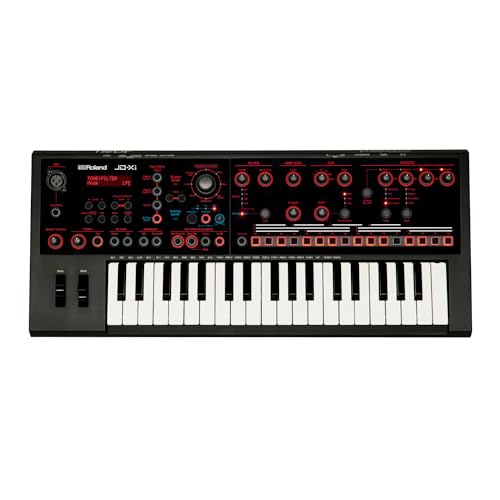
Roland 37-Key Crossover Synthesizer
Best for: compact hybrid synthesis and vocal performance
- Number of Keys
- 37
- Sound Engine
- Analog, digital SuperNATURAL
- Sequencer
- Four-track pattern sequencer
- Color
- Black
- Dimensions
- 28 × 13 × 5 inches
- Weight
- 4.14 pounds
The Roland 37-Key Analog-Digital Synthesizer combines an analog engine for leads and bass with two digital SuperNATURAL synth sections. You get a four-track pattern sequencer, rhythm sounds, and four simultaneous effects including delay and reverb. At 4.14 pounds, this compact instrument suits producers and keyboardists who need hybrid tone generation and vocal processing with the included gooseneck microphone.
- Hybrid sound engine with analog bass/lead and two digital SuperNATURAL sections
- Built-in four-track pattern sequencer with dedicated rhythm sounds
- Included gooseneck microphone for built-in Vocoder and AutoPitch
- Four simultaneous processing effects covering Effect 1/2, Delay, and Reverb
- Lightweight 4.14-pound chassis measuring 28 inches long
- Compact 37-key span limits two-handed acoustic playing range
- Pattern sequencer is restricted to four tracks
- You want both true analog and digital SuperNATURAL engines in a single keyboard.
- You need an integrated microphone for vocoder and pitch-correction effects.
- You want a lightweight four-track sequencing instrument weighing under 5 pounds.
- You require a wider 61-key or 88-key keybed for traditional piano pieces.
- You need more than four tracks on your onboard hardware sequencer.
Verdict: Roland 37-Key Analog-Digital Synthesizer delivers hybrid sound design, pattern sequencing, and vocal processing for electronic music producers working in small spaces.
Specifications side by side
| Spec | Roland 37-Key Crossover Synthesizer |
|---|---|
| Number of Keys | 37 |
| Sound Engine | Analog, digital SuperNATURAL |
| Sequencer | Four-track pattern sequencer |
| Color | Black |
| Dimensions | 28 × 13 × 5 inches |
| Weight | 4.14 pounds |
| Size | 37 Keys |
| Model | JD-XI |
Frequently asked questions
What type of sound engine does the Roland JD-XI use?
The Roland JD-XI uses a crossover sound architecture combining an analog section with digital engines. This setup provides an analog synth track alongside digital SuperNATURAL sound engines. You can generate warm analog leads or basslines while using the digital section for polyphonic pads, acoustic sounds, and modern electronic tones within one keyboard.
How many keys does the Roland JD-XI have?
The Roland JD-XI comes equipped with 37 keys. A 37-key configuration covers three full octaves, giving you enough horizontal room to play lead lines, bass phrases, and melodic parts. This size keeps the overall footprint significantly smaller than standard 49-key instruments, making it practical for compact production desks.
What are the dimensions and weight of the Roland JD-XI?
The instrument measures 28 inches long, 13 inches wide, and 5 inches high, weighing 4.14 pounds. These physical specifications make the synthesizer portable and easy to transport. The lightweight black frame allows you to place it onto tiered keyboard stands or standard studio workstations without requiring heavy-duty support.
Does the Roland JD-XI include vocal processing features?
Yes, the Roland JD-XI includes built-in vocal processing features designed for live vocal performance. The hardware supports vocoder and AutoPitch functions powered by an included gooseneck microphone. You can speak or sing into the microphone to modulate synth tones with your voice in real time during your music sessions.
What sequencing capabilities are available on the Roland JD-XI?
The Roland JD-XI includes pattern sequencing capabilities for electronic music production. The built-in sequencer lets you construct multi-part loops, rhythm tracks, and tonal phrases across the different sound engines. You can build complete musical ideas, program drum patterns, and loop dynamic backing grooves directly on the hardware.
Who is the Roland JD-XI best suited for?
The Roland JD-XI is best suited for electronic music producers needing compact hybrid synthesis and vocal performance. If you work in limited production spaces or travel frequently, its 37-key size and lightweight build offer mobility. The mix of analog-digital sound design provides versatile creative tools within a standalone device.