
As Amazon Associates, we earn from qualifying purchases. This means we may receive a small commission at no extra cost to you if you click through and make a purchase.
As an Amazon Associate we earn from qualifying purchases. Links on this page are affiliate links.
This polyend play standalone synthesizer review covers a black groovebox sampler and MIDI workstation built for music production. Two core specifications define the unit: 16 stereo tracks for sequencing and an onboard library of over 5000 samples. The device measures 3.94 inches long, 1.97 inches wide, and 0.5 inches high. It includes backlit performance pads for triggering sounds, along with USB-MIDI connectivity for controlling gear. For direct listening, Polyend provides a 3.5mm headphone out. Project files and audio storage rely on an included 16GB microSD card and dedicated card slot.
- 16 stereo audio tracks
- Over 5000 onboard samples
- Backlit performance pads
- 16GB microSD card and slot included
- USB-MIDI connectivity and 3.5mm headphone out
Good fit for
This groovebox suits electronic musicians and beatmakers who need a self-contained sequencer with 16 stereo tracks. If you produce without a computer, the 5000+ onboard samples and 16GB microSD card give you ready-to-use sounds and storage. Its compact dimensions of 3.94 by 1.97 by 0.5 inches fit crowded desks or travel setups. The backlit performance pads and USB-MIDI port also work well if you sequence external MIDI hardware.
Who can skip it
Skip this device if you need traditional piano keys. It relies on backlit performance pads rather than a full-size weighted keyboard. Pianists who practice acoustic piano repertoire will not find velocity-weighted keys here. You should also look elsewhere if you require built-in speakers or 1/4-inch stereo audio outputs, as this unit only lists a 3.5mm headphone out. Producers needing dedicated line inputs will need another tool.
Verdict
The Polyend Play+ combines 16 stereo tracks, over 5000 onboard samples, and USB-MIDI sequencing into a portable pad-based workstation. It gives electronic producers a compact, standalone environment for building tracks without a computer.
Key Specifications Explained for Buyers
Backlit Performance Pads
These illuminated pads let you trigger sounds, launch patterns, and view track statuses in low-light environments. You get clear visual feedback across your active steps without needing external desk lamps. This feature suits live performers and bedroom producers working in dim studios. When shopping for digital keyboards and desktop grooveboxes, compare pad surface responsiveness, backlighting colors, and whether the hardware relies on traditional keys instead of matrix grids.
16GB microSD Card & Slot
The included 16GB card and expansion slot give you local storage for user audio, project files, and system updates. You can swap storage cards directly to manage large sound libraries without connecting a host computer during sessions. This design benefits producers who require expandable memory for custom audio. When comparing digital instruments, check whether competing models include removable media slots or rely strictly on fixed internal flash memory.
3.5mm Headphone Out
This dedicated stereo output lets you plug standard consumer headphones directly into the hardware for private monitoring. You do not need quarter-inch adapters to practice or draft patterns quietly. Mobile musicians and desktop beatmakers in shared spaces benefit most. When shopping for digital keyboards, compare standard 3.5mm mini-jacks against larger 6.35mm sockets to ensure your monitoring headphones connect without extra adapters.
Connectivity: USB-MIDI
USB-MIDI integration enables you to send and receive digital performance data through a USB cable connected to computers or external hardware. You can synchronize clock tempos and automate sequencing parameters across your studio. Electronic musicians who integrate hardware with software workstations benefit directly. When evaluating digital keyboards, compare USB-MIDI ports against traditional 5-pin DIN connectors to verify how the unit links with your existing gear.
Hardware Dimensions and Interface Layout
According to the listing, the Polyend Play+ comes in a black finish and features an ultra-compact footprint. The manufacturer specifications list dimensions of 3.94 inches in length, 1.97 inches in width, and 0.5 inches in height. This slim, flat profile allows you to slide the groovebox into small gear bags or position it directly alongside other instruments on crowded studio desks without consuming valuable surface area.
The control surface relies on backlit performance pads. According to the listing, these illuminated controls provide clear visual feedback across your workspace, helping you identify and trigger tracks in dim studio spaces or dark stage environments. The tight pad layout keeps every control within easy reach for quick pattern adjustments.
For physical connections and data storage, the hardware includes a 3.5mm headphone output, an integrated card slot with an included 16GB microSD card, and USB-MIDI support. You can plug standard wired headphones directly into the 3.5mm jack for private monitoring while on the move. The microSD slot keeps sample files accessible directly on the device, while the USB-MIDI interface enables direct communication with your computer or external music gear.
Setup Process and Daily Integration
Setting up the Polyend Play+ centers on storage and basic cable connections. You start by inserting the included 16GB microSD card into the onboard card slot. This card holds the library of over 5000 onboard samples, which gives you immediate access to audio sources without downloading external files first.
For listening during daily sessions, the hardware includes a 3.5mm headphone out. You can connect standard headphones directly into this port for private sessions, or run a line out to monitors or a mixer.
Integrating the unit into a wider studio relies on its USB-MIDI connectivity. The groovebox sends and receives MIDI data over USB, which lets you sync playback with a computer or trigger external synthesizers. Because the system supports 16 stereo tracks, you can balance internal sample playback alongside your outboard gear.
In daily use, the unit operates as a standalone groovebox or as a compact desktop centerpiece. The microSD slot handles project storage, while the 3.5mm jack and USB-MIDI interface manage sound output and instrument synchronization. You program sequences across the tracks without relying on extra audio converters.
Things to Check Before You Buy
Before buying the Polyend Play+, confirm how its connections fit your current music setup. Audio monitoring relies on the 3.5mm headphone out, so you will need a 3.5mm cable or headphones with a matching plug. If you plan to route data to external studio gear, verify that your equipment supports USB-MIDI. Routine maintenance involves protecting the exposed microSD card slot from dust and debris when inserting or removing the included 16GB card. Within the wider category of 1 digital pianos and keyboards on our guide for 2026, this unit serves a distinct role. It uses backlit performance pads instead of traditional weighted piano keys. The 16 stereo tracks and onboard sampler focus on pattern production rather than acoustic piano repertoire, making it an electronic workstation rather than a classic practice keyboard.
Check before you buy
- Ensure your headphones or external speakers use a standard 3.5mm audio jack.
- Confirm your studio gear or computer accepts USB-MIDI data connections.
- Check that performance pads match your workflow instead of traditional piano keys.
- Keep the microSD card slot clear of dust to protect card access.
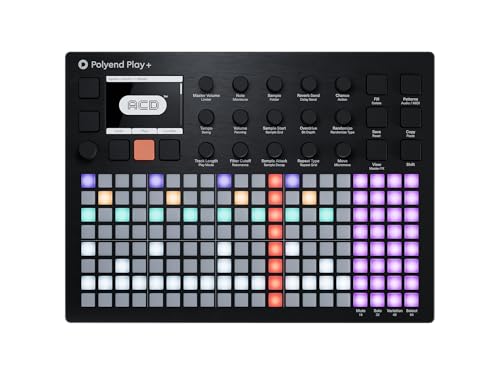
Polyend Play+ Synthesizer and Sampler
Best for: standalone 16-track groovebox sequencing
- Connectivity
- USB-MIDI
- Color
- Black
- Dimensions
- 3.94 × 1.97 × 0.5 inches
The Polyend Play+ is a standalone groovebox combining a synthesizer, sampler, and MIDI workstation. You get 16 stereo tracks for sequencing, over 5,000 preloaded samples, and backlit performance pads for real-time triggering. It connects to your setup via USB-MIDI and includes a 3.5mm headphone jack. This unit suits producers who build multi-part tracks without a computer.
- 16 stereo tracks for samples and synthesizer parts
- Backlit performance pads for sequencing and playback
- Includes 16GB microSD card preloaded with 5,000+ samples
- Direct monitoring through a 3.5mm headphone output
- Audio monitoring is limited to a 3.5mm headphone jack without 1/4-inch line outputs
- External hardware control is limited to USB-MIDI without standard 5-pin DIN ports listed
- You need 16 stereo tracks to sequence drum and synthesizer parts standalone.
- You want tactile sequencing using backlit performance pads.
- You route MIDI data directly through USB-MIDI connections.
- You require dedicated 1/4-inch line outputs for audio routing.
- You connect hardware instruments through legacy 5-pin DIN MIDI cables.
Verdict: Polyend Play+ 16-Track Synthesizer and Sampler suits electronic musicians who want an all-in-one standalone groovebox with extensive sample storage and 16 dedicated tracks. It provides immediate pad-based sequencing for hardware setups that rely on USB-MIDI.
Specifications side by side
| Spec | Polyend Play+ Synthesizer and Sampler |
|---|---|
| Connectivity | USB-MIDI |
| Color | Black |
| Features | MIDI |
| Dimensions | 3.94 × 1.97 × 0.5 inches |
| Model | PLB04378743 |
Frequently asked questions
Does the Polyend Play+ function as a standalone groovebox?
Yes, the Polyend Play+ operates as a standalone synthesizer and sampler unit. You do not need a computer tethered to sequence patterns or manage your sounds. The unit provides dedicated hardware controls along with 16 tracks designed for independent groovebox music production and playback in any studio environment.
How many tracks can you sequence on the Polyend Play+?
The Polyend Play+ provides 16 dedicated sequencing tracks for your arrangements. This track count allows you to separate individual drum voices, basslines, melodic leads, and polyphonic synthesizer parts without running out of lanes. You can program each track independently to build complex songs within a single project.
What kind of MIDI connectivity does the Polyend Play+ support?
The Polyend Play+ features USB-MIDI connectivity alongside standard MIDI features. This setup lets you send note and timing data directly to your digital audio workstation or control external synthesizers. It integrates cleanly into modern hardware setups without needing specialized proprietary cables or driver installations.
What is the official model number of the Polyend Play+?
The official manufacturer model number for the Polyend Play+ is PLB04378743. Referencing this code helps you confirm you are viewing the correct revised hardware version rather than earlier editions. You can use this designation to cross-reference technical documentation, firmware updates, or replacement parts.
What are the physical dimensions of the Polyend Play+?
Published manufacturer specifications list the Polyend Play+ at 3.94 inches in length, 1.97 inches in width, and 0.5 inches in height. This slim and compact black casing fits easily onto crowded gear desks. The shallow profile also simplifies packing the device into bags for mobile sessions.
Is the Polyend Play+ suitable for live electronic performances?
Yes, the Polyend Play+ is built specifically for live sequencing and performance manipulation. Its standalone groovebox design allows electronic musicians to trigger tracks, craft rhythmic patterns, and manage MIDI arrangements on the fly. Having 16 dedicated tracks gives you extensive flexibility to adjust song structures during live shows.
What finish and color options are available for this synthesizer?
According to the published hardware specifications, the Polyend Play+ comes in a standard black finish. This dark color matches standard studio hardware gear and prevents glare under bright lighting. The understated chassis appearance keeps visual focus directly on the backlit controls during active music sessions.


