As Amazon Associates, we earn from qualifying purchases. This means we may receive a small commission at no extra cost to you if you click through and make a purchase.
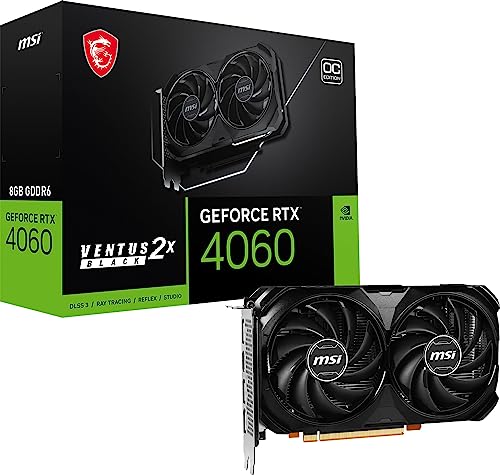
When upgrading an older desktop or building a mid-tier computer, finding hardware that delivers steady frame rates without requiring a massive power supply or a giant chassis is the primary goal. The MSI RTX 4060 Ventus 2X is aimed directly at desktop owners who want reliable modern graphical features without overcomplicating their setup. Powered by NVIDIA Ada Lovelace graphics architecture, this graphics card focuses on delivering high-efficiency performance for everyday displays. It emphasizes streamlined dual-fan cooling, moderate operating requirements, and dedicated tensor cores capable of running AI-enhanced image processing.
Evaluating modern graphics cards requires looking past marketing buzzwords to see how hardware performs inside a physical chassis during realistic gaming sessions. In this guide, we break down the practical strengths and design trade-offs of this graphics card across multiple areas of everyday use. We will explore its physical footprint, analyze cooling acoustics, examine the role of its 8GB memory configuration, and clarify what kind of desktop setup benefits most from this card before comparing it against alternative options.
What You Get With the MSI RTX 4060 Ventus 2X
MSI RTX 4060 Ventus 2X


Photographs published on the Amazon listing.
The retail package for this graphics card is direct and functional, giving system builders the necessary hardware components to get their desktop operational without unnecessary filler.
- MSI RTX 4060 Ventus 2X graphics card featuring a dual-fan cooling shroud
- Quick setup guide covering physical PCI Express slot installation and basic driver steps
- Three DisplayPort v1.4a outputs for high-refresh desktop monitors
- One HDMI 2.1 port supporting modern variable refresh rates and high-definition television hookups
- 8GB GDDR6 onboard memory operating across a 128-bit interface
- Dual TORX Fan 4.0 cooling units mounted to an aluminum heatsink base
Key Specifications
Specification Attribute
Hardware Detail
- Graphics Coprocessor
- NVIDIA GeForce RTX 4060
- GPU Series
- NVIDIA RTX 40 Series (Ada Lovelace)
- Video Memory
- 8 GB GDDR6
- Memory Interface Width
- 128-Bit
- Core / Extreme Clock Speed
- 2505 MHz
- Memory Clock Speed
- 2505 MHz
- Cooling Design
- Dual TORX Fan 4.0 Shroud
- Video Output Ports
- DisplayPort x 3 (v1.4a) / HDMI 2.1 x 1
- Physical Dimensions
- 7.83 inches Length x 4.72 inches Width
- Maximum Digital Resolution
- 7680 x 4320
Copied from the Amazon listing. These figures were not measured here.
Everyday 1080p Gaming and DLSS 3 Performance
The primary purpose of the MSI RTX 4060 Ventus 2X is delivering consistent fidelity on standard desktop monitors. When evaluating the MSI RTX 4060 for 1080p gaming, the card handles modern releases with ease, allowing players to maintain fluid visuals across fast-paced competitive multiplayer games and story-driven single-player titles. The 2505 MHz boost clock ensures the core processor operates at responsive speeds, preventing stuttering during intense on-screen sequences.
A central feature of the underlying Ada Lovelace silicon is hardware support for AI-accelerated frame rendering. Looking at MSI RTX 4060 DLSS 3 performance, the inclusion of modern frame generation enables players to bypass CPU-bound limitations in newer titles. In compatible titles, enabling DLSS 3 inserts AI-generated intermediate frames, noticeably smoothing out motion while preserving visual sharpness on high-refresh displays.
Dedicated ray tracing cores are also present on the die, though users should balance their visual ambitions. While the card accurately computes reflections and dynamic global illumination at standard resolutions, pushing complex ray tracing effects in graphically demanding releases will require leveraging upscaling features to sustain high frame rates. For the standard desktop gamer focused on clean visuals and high fluidity, this architecture provides a very functional toolset.
Thermal Management and TORX Fan Cooling
Keeping a compact graphics board cool without producing excessive motor hum is critical for smaller workspace setups. Thermal stability on this card is governed by MSI RTX 4060 TORX fan cooling, which utilizes paired TORX Fan 4.0 units. These fan blades are engineered in linked pairs that direct airflow downward into the dense heatsink fins beneath the shroud, maintaining steady static pressure over the copper and aluminum heat dissipation surfaces.
Because the physical card measures only 7.83 inches in length, the heatsink array is necessarily smaller than those found on larger triple-fan alternatives. Despite the smaller surface area, the dual-fan arrangement easily keeps the core processor within safe operational temperature ranges during extended gameplay. The fans modulate their speed automatically based on thermal sensors, allowing the system to operate quietly during everyday desktop browsing or lightweight creative tasks.
Under heavy graphical loads, the twin fans spin up to displace rising heat, producing an audible but gentle whoosh rather than high-pitched motor whine. For users who value low acoustic intrusion in compact desktop cases, this dual-fan implementation keeps noise levels manageable while preventing thermal throttling during long gaming sessions.
Compact Case Fit and Power Efficiency
One of the strongest arguments for this specific card is its physical versatility. Building an MSI GeForce RTX 4060 compact build is straightforward because the unit requires only two expansion slots and extends just 7.83 inches into the chassis. This makes it an ideal upgrade candidate for prefabricated office desktop cases, micro-ATX towers, and compact mini-ITX enclosures where bulky three-fan cards simply will not clear drive bays or front-mounted intake fans.
Power management is another area where modern architecture yields practical everyday benefits. Evaluating RTX 4060 8GB power efficiency shows that this generation achieves respectable graphical computation while drawing minimal wattage compared to previous generation mid-range hardware. Because power draw is kept modest, desktop builders do not need an oversized power supply unit to keep their machine running stably. Pairing this card with an affordable, dependable unit like the msi mag a650bn 650 w 80+ bronze certified atx power supply delivers ample overhead for the entire desktop ecosystem.
Physical installation requires only standard tools to secure the bracket screws and route internal PCI Express cabling. If you are servicing an older chassis or assembling your build from scratch, keeping a versatile tool set like the dewalt elite series bit set on hand makes working inside tight computer compartments significantly easier. Once seated firmly in the PCIe slot, the card’s low profile minimizes sagging and avoids putting undue mechanical stress on your motherboard.
Memory Interface and Resolution Limits
A clear understanding of hardware specifications helps avoid mismatched expectations, particularly regarding system memory configuration. Examining the MSI RTX 4060 Ventus 2X specs reveals an 8GB GDDR6 memory configuration paired with a 128-bit memory bus width. While this design is optimized for high efficiency at standard full-HD resolutions, it does establish distinct technical boundaries when moving to higher pixel counts.
In modern computer gaming, texture packages in uncompressed formats can quickly consume onboard video memory. At 1080p, 8GB remains sufficient for most contemporary titles, but pushing resolutions to 1440p or beyond with ultra texture packs will quickly saturate the memory buffer. The 128-bit interface provides narrower memory bandwidth compared to wider 192-bit or 256-bit buses, which can cause frame pacing fluctuations if high-resolution assets are continuously swapped across system memory.
The RTX 4060 Ventus 2X Black 8G OC supports digital displays up to 7680 x 4320 resolution across its three DisplayPort 1.4a outputs and single HDMI 2.1 port. While this allows the card to output directly to modern 4K monitors or television screens for media playback, productivity, and desktop tasks, users should not expect native high-framerate 4K rendering in demanding games. Knowing these hardware boundaries helps keep the card focused on the display resolution it was built to dominate.
MSI RTX 4060 Ventus 2X Pros and Cons
Pros
- Compact dual-fan size fits smaller cases
- Solid 2505 MHz extreme clock speed
- DLSS 3 AI frame generation support
- Four total high-resolution display outputs
- Low power draw simplifies system requirements
Cons
- 128-bit memory bus limits 1440p bandwidth
- 8GB VRAM capacity challenges heavy modern textures
- No physical multi-GPU bridging capability
Check MSI RTX 4060 Ventus 2X on Amazon
Is the MSI RTX 4060 Ventus 2X Worth It
Deciding if the MSI RTX 4060 is worth it comes down to matching your monitor resolution, desktop enclosure space, and everyday computing expectations. If you play games primarily on a standard 1080p screen and want to enjoy smooth frame rates, modern upscaling options, and low electrical consumption, this card delivers a very balanced experience. Its modest physical dimensions make it one of the easiest drop-in upgrades available for aging desktop computers with space-constrained interiors.
For creative professionals utilizing NVIDIA Studio tools, video encoders, or entry-level 3D rendering apps, the Ada Lovelace architecture provides reliable performance without requiring custom liquid cooling loops or high-wattage power supplies. It functions seamlessly as a dependable daily workhorse that handles light workstation duties during the day and entertainment at night.
However, if your primary goal is native 1440p or 4K gaming without relying heavily on frame generation techniques, the 8GB memory capacity and 128-bit bus will feel constraining over time. Enthusiasts seeking maximum raw rasterization muscle or expansive video memory buffers for heavy machine-learning workloads will want to explore higher tiers of graphics hardware that provide broader memory pathways.
Other Options to Consider
ASUS SFF-Ready Prime NVIDIA GeForce serves desktop builders seeking next-generation architecture paired with a larger 12GB GDDR7 memory configuration. Built on a PCIe 5.0 interface with a 2.5-slot profile, dual BIOS, and axial-tech fans, this card caters to enthusiasts who want higher graphic overhead and newer display standards inside compact small-form-factor builds.

GIGABYTE Radeon RX 9070 XT appeals to gamers who prioritize a substantially larger video memory capacity over brand-specific rendering ecosystems. Featuring 16GB of GDDR6 memory on a modern PCIe 5.0 platform, it provides significantly more raw memory headroom for players running graphically intensive titles past standard resolutions.
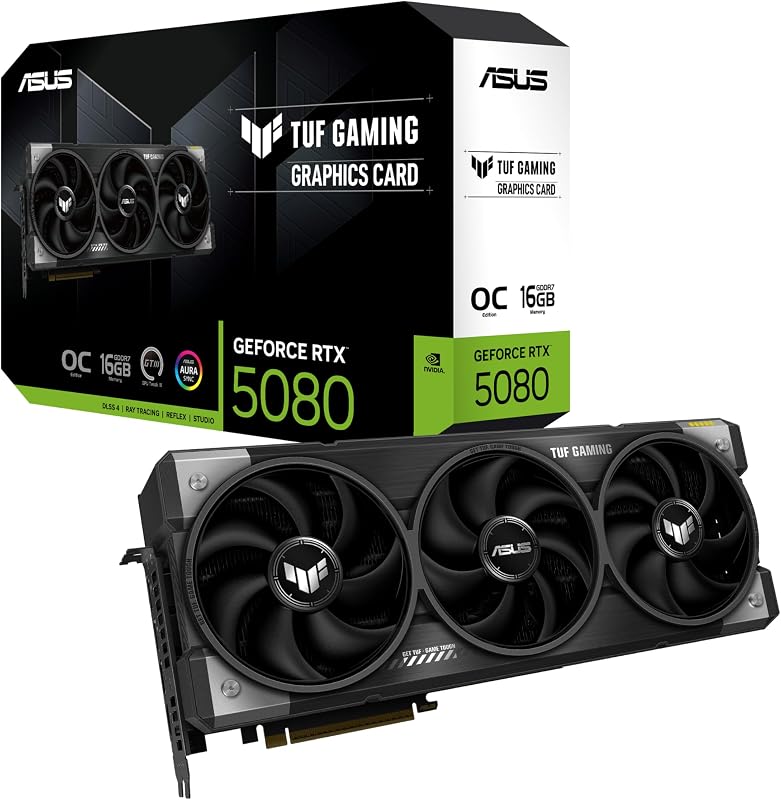
PCIe 5.0 fits desktop enthusiasts seeking heavy computing power without compromise. This ASUS TUF Gaming GeForce RTX 5080 card incorporates 16GB of rapid GDDR7 memory, a large 3.6-slot physical footprint, axial-tech cooling fans, and military-grade components designed for full-sized desktop cases handling intense rendering workloads.
FAQ
Does the MSI RTX 4060 Ventus 2X require a high-wattage power supply?
No, the card is designed around high electrical efficiency, allowing it to operate comfortably on standard mid-range desktop power supplies without requiring specialized heavy-duty wiring or ultra-high wattage units.
Can this graphics card drive multiple high-refresh monitors simultaneously?
Yes, the card provides four total video outputs, including three DisplayPort v1.4a ports and one HDMI 2.1 port, allowing users to connect up to four independent displays at resolutions up to 7680 x 4320.
Does the MSI RTX 4060 Ventus 2X support multi-GPU NVLink setups?
While the Amazon listing mentions NVLink in its product title, physical multi-GPU bridging hardware is not supported on this card. Modern consumer gaming architectures have transitioned away from physical SLI configurations in favor of single-GPU efficiency.
Will this graphics card fit inside a compact Mini-ITX or Micro-ATX chassis?
Yes, measuring approximately 7.83 inches in length and 4.72 inches in width, its dual-slot footprint fits easily into most small-form-factor desktop enclosures that have standard clearance for graphics cards.
Is 8GB of VRAM sufficient for modern gaming on this card?
The 8GB GDDR6 memory allocation is well-suited for standard 1080p gaming across most current titles. However, running games at 1440p or 4K with extreme texture settings may exceed this memory capacity, requiring adjustments to in-game graphic settings.


