As Amazon Associates, we earn from qualifying purchases. This means we may receive a small commission at no extra cost to you if you click through and make a purchase.
As an Amazon Associate we earn from qualifying purchases. Links on this page are affiliate links.
This guide breaks down the korg 61 key arranger keyboard vs 88 key lighter touch digital piano. Both instruments share the KORG brand and black finish, but they target different musical needs. The 61-key EK-50 is a portable workstation featuring 702 sounds, accompaniment styles, and onboard speakers. The 88-key B2N focuses on full piano range with lighter-touch keys and USB-MIDI connectivity for computer integration.
Number of keys
61 keys
88 keys
Key action
Not listed
Lighter-Touch
Total sounds
702 sounds
Not listed
Speaker system
2 x 10W stereo
Not listed
Connectivity
Input jack
USB-MIDI, USB
Weight
16.5 pounds
20.5 pounds
Choose the first if
- You want a wide sound library with 702 sounds, 280 styles, and a built-in 12-track linear sequencer.
- You prefer a lighter 16.5-pound instrument with integrated 2 x 10W stereo speakers and an audio input jack.
- You need illuminated buttons and a dedicated display screen to monitor settings clearly.
Choose the second if
- You need a full 88-key layout for standard two-handed piano repertoire.
- You prefer an instrument specifically designed with lighter-touch key action.
- You want direct USB-MIDI connectivity to use with computers and included software.
Verdict
Choose the EK-50 if you want an arranger workstation with hundreds of sounds, backing styles, and self-contained stereo speakers. Choose the B2N if you need a full 88-key setup with lighter-touch action and USB-MIDI capability. Your decision centers on whether you value accompaniment features or a full-size key range.
Korg EK-50 vs Korg B2N Comparison
Number of keys
Edge: KORG 88-Key Light-Touch Digital Piano
The Korg 61-Key Arranger Keyboard gives you 61 keys. This compact range covers five octaves, which works well for lead lines, chords, and basic accompaniment. In contrast, the KORG 88-Key Light-Touch Digital Piano features a full 88-key layout. This setup matches the complete span of a traditional acoustic piano. You gain the low bass register and upper treble octaves required for two-handed classical pieces, jazz standards, and complex arrangements. If you need a standard piano layout to practice full repertoire, the 88-key model provides the reach you need without running out of room on either end of the keybed.
Key action
Edge: KORG 88-Key Light-Touch Digital Piano
The KORG 88-Key Light-Touch Digital Piano features a lighter-touch key action. This specification provides a lighter feel under your fingers across the full 88-key bed. In contrast, the published data for the Korg 61-Key Arranger Keyboard does not list any specific key action type. If you want an instrument where the manufacturer specifies a lighter-touch mechanism for your playing style, the KORG 88-Key Light-Touch Digital Piano gives you that documented detail. The Korg 61-Key Arranger Keyboard functions as an arranger workstation, but without published action data, you cannot verify its exact key resistance from the spec sheet.
Sound library and styles
Edge: Korg 61-Key Arranger Keyboard
The Korg 61-Key Arranger Keyboard comes with 702 sounds and 280 accompaniment styles. Its sound list includes pianos, guitars, brass, saxophones, and drums. You can also use its built-in split function to divide the keyboard and trigger two distinct sounds at the same time. The KORG 88-Key Light-Touch Digital Piano does not publish a sound count or style library in its specifications. Instead, it includes free software and USB-MIDI connectivity. If you want a diverse, standalone instrument that delivers hundreds of preset instrument sounds and automated backing styles straight from the panel, the Korg 61-Key Arranger Keyboard holds a clear advantage.
Controls and recording
Edge: Korg 61-Key Arranger Keyboard
The Korg 61-Key Arranger Keyboard features a bright operating panel display with large characters for sound and style names. Its buttons feature built-in LED illumination so you can see current function settings quickly. For production, it provides one-touch recording alongside a 12-track linear sequencer to capture multi-part arrangements. The KORG 88-Key Light-Touch Digital Piano does not list an integrated display screen, illuminated buttons, or an internal sequencer. Instead, it relies on USB-MIDI connectivity and bundled free software to interact with external computer programs. For standalone visual feedback and onboard song recording without extra gear, the Korg 61-Key Arranger Keyboard leads.
Portability and weight
Edge: Korg 61-Key Arranger Keyboard
The Korg 61-Key Arranger Keyboard weighs 16.5 pounds and measures 39.1 inches long, 15.4 inches wide, and 5.2 inches high. Its shorter length and lower weight make it easier to pack into smaller spaces, load into a vehicle, or lift onto a stand. The KORG 88-Key Light-Touch Digital Piano weighs 20.5 pounds and has a length measuring 51.7 inches, alongside a width of 13.2 inches and a height of 4.61 inches. That added length reflects the broader 88-key frame. Because the Korg 61-Key Arranger Keyboard saves four pounds and more than a foot of horizontal room, it is the more portable choice.
Connectivity and software
Edge: KORG 88-Key Light-Touch Digital Piano
The KORG 88-Key Light-Touch Digital Piano includes USB-MIDI connectivity and bundled free software. This allows you to link the piano directly to computers and recording software for digital music production. In contrast, the Korg 61-Key Arranger Keyboard lists an audio input jack, enabling you to route audio from an external media device through its built-in 2 x 10W stereo speakers. However, its specifications do not detail USB-MIDI connectivity or included software programs. If your priority is plug-and-play computer communication via USB alongside provided software, the KORG 88-Key Light-Touch Digital Piano holds the advantage for studio setups.
Choosing Your Korg Keyboard
Songwriters who need multi-track recording
Our pick: Korg 61-Key Arranger Keyboard
You get an integrated 12-track linear sequencer and one-touch recording to capture ideas quickly. The keyboard provides 702 built-in sounds, 280 accompaniment styles, and a split function. Its 2 x 10W stereo speaker system also plays audio from external gear plugged into the input jack without separate amplifiers.
Pianists wanting a full 88-key layout
Our pick: KORG 88-Key Light-Touch Digital Piano
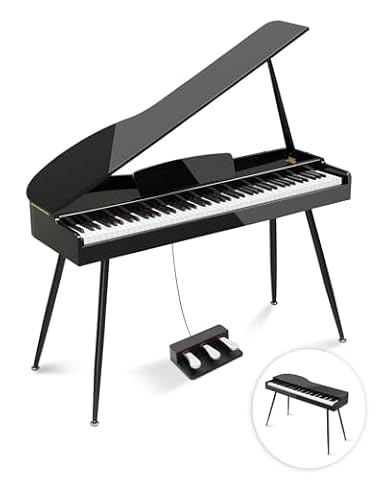
You receive a full 88-key layout with Lighter-Touch key action for practicing standard piano literature across the entire range. Its USB-MIDI port connects straight to your computer to run the included free software bundle. At 20.5 pounds, this 88-key instrument provides full-size keyboard access while remaining easy to move.
Performers seeking lightweight gear and visual controls
Our pick: Korg 61-Key Arranger Keyboard
You benefit from a 16.5-pound build measuring 39.1 inches long, making transport simple. The front panel features illuminated LED buttons and a clear display showing selected sound and style names in large characters. These visual controls help you navigate settings quickly during live sets without needing external lighting.

Korg 61-Key Arranger Keyboard
Best for: multi-instrument songwriting and style-backed solo performance
- Number of Keys
- 61 keys
- Total Sounds
- 702 sounds
- Form Factor
- Workstation
- Speaker System
- 2 x 10W
- Connectivity
- Input jack
- Color
- Black
This 61-key arranger keyboard gives you 702 instrument sounds, 280 accompaniment styles, and a built-in 12-track sequencer. The unit features 2 x 10W stereo speakers, an audio input jack, and LED-illuminated buttons for direct navigation. It suits musicians who want extensive multi-instrument accompaniment, sound variety, and onboard track recording in a compact 16.5-pound layout.
- 702 sounds and 280 accompaniment styles
- Onboard 12-track linear sequencer with one-touch recording
- Stereo speaker system with 2 x 10W output
- LED-illuminated control buttons with central display
- 61-key format limits full 88-key piano repertoire
- Carries a 16.5-pound total weight
- You want an expansive library of 702 sounds and 280 backing styles.
- You need a linear 12-track recorder to produce multi-part songs onboard.
- You plan to use split voices during live performance.
- You require the full 88-key range of an acoustic piano.
- You prefer an instrument lighter than 16.5 pounds for travel.
Verdict: KORG 61-Key Arranger Keyboard suits performers and songwriters who need hundreds of backing styles, split capability, and onboard multi-track recording in a 61-key frame.

KORG 88-Key Light-Touch Digital Piano
Best for: players wanting 88 keys with light action
- Number of Keys
- 88-key
- Key Action
- Lighter-Touch
- Connectivity
- MIDI USB
- Color
- Black
- Dimensions
- 13.2 × 4.61 × 51.7 inches
- Weight
- 20.5 pounds
This digital piano provides a full 88-key layout with lighter-touch action. It weighs 20.5 pounds and includes USB-MIDI connectivity to connect with external software and equipment. If you need a full piano keyboard range for practice and home recording without the resistance of heavy weighted keys, this instrument fits your workspace.
- Full 88-key lighter-touch keyboard
- USB-MIDI connectivity for external software
- Lightweight build at 20.5 pounds
- Lighter-touch action lacks traditional weighted hammer resistance
- Long 51.7-inch footprint requires dedicated setup width
- You want a full 88-key range with lighter key resistance.
- You need USB-MIDI connectivity for music software in a 20.5-pound package.
- You want heavy, graded hammer-action acoustic piano resistance.
- You need a shorter keyboard to fit into spaces under 51 inches wide.
Verdict: Korg 88-Key Lighter-Touch Digital Piano gives players an 88-key layout and USB-MIDI connection at 20.5 pounds. It suits home musicians who prioritize full key count over heavy hammer action.
Specifications side by side
| Spec | Korg 61-Key Arranger Keyboard | KORG 88-Key Light-Touch Digital Piano |
|---|---|---|
| Number of Keys | 61 keys | 88-key |
| Key Action | – | Lighter-Touch |
| Total Sounds | 702 sounds | – |
| Form Factor | Workstation | – |
| Speaker System | 2 x 10W | – |
| Connectivity | Input jack | MIDI USB |
| Color | Black | Black |
| Features | – | MIDI |
| Dimensions | 39.1 × 15.4 × 5.2 inches | 13.2 × 4.61 × 51.7 inches |
| Weight | 16.5 pounds | 20.5 pounds |
| Size | EK-50 | 11.7 cm (W) x 33.6 cm (L) x 131.2 cm (H) |
| Model | EK50 | B2N |
Frequently asked questions
Which keyboard weighs less for regular travel?
The Korg 61-Key Arranger Keyboard weighs less at 16.5 pounds. In comparison, the KORG 88-Key Light-Touch Digital Piano weighs 20.5 pounds. If you plan to carry your instrument to rehearsals or gigs regularly, the EK-50 saves you four pounds while maintaining a shorter 39.1-inch frame.
What are the physical dimensions of the Korg EK-50 versus the B2N?
The Korg EK-50 measures 39.1 inches long, 15.4 inches wide, and 5.2 inches high. The KORG B2N measures 51.7 inches long, 13.2 inches wide, and 4.61 inches high. You need more horizontal stand space for the B2N, but its depth takes up less desk space.
How does key count affect your playing range on these two Korg models?
The 88-key model provides the full seven-octave acoustic range, while the 61-key model covers five octaves. You will need 88 keys if you practice classical repertoire or advanced two-handed piano arrangements. A 61-key setup gives you enough span for pop songs, chord backing, and synthesizer solos.
Does the KORG 88-Key Light-Touch Digital Piano connect to computers for MIDI?
Yes, the KORG B2N includes USB and USB-MIDI connectivity. You can plug the instrument straight into your computer or mobile workstation using a standard cable. This connection transmits performance data directly to digital audio workstations, virtual instruments, and learning apps without needing an external audio interface.
What is the main design difference between an arranger keyboard and a digital piano?
An arranger keyboard focuses on solo accompaniment, built-in rhythm styles, and multi-track production tools. A digital piano prioritizes the physical key layout and feel of an acoustic instrument. The EK-50 gives you layered accompaniment tools, whereas the B2N emphasizes an 88-key layout with lighter key resistance.
Which model is better suited for small home studios or tight desk spaces?
The Korg EK-50 fits tighter studio spaces because its length is 39.1 inches. The B2N extends across 51.7 inches, which requires a much wider desk or dedicated stand. You should measure your available width beforehand to ensure the full 88-key body fits comfortably in your room.