As Amazon Associates, we earn from qualifying purchases. This means we may receive a small commission at no extra cost to you if you click through and make a purchase.
If you regularly pull cloudy wine glasses or damp plastic containers out of the dishwasher rack, you are likely wondering whether a standalone drying agent is necessary when your detergent claims to do it all. The short answer is yes: even premium dishwashing detergents struggle with surface tension during final rinse cycles, which is where a dedicated liquid like Finish Jet-Dry Rinse Aid makes a noticeable difference. Formulated specifically as a surfactant that breaks the surface tension of wash water, this liquid causes moisture to sheet cleanly off plates, utensils, and glassware rather than pooling into droplet formations. If your household frequently deals with hard water mineral deposits or an energy-efficient dishwasher that relies on condensation drying rather than an intense heating element, adding this drying agent directly targets those lingering spots and stubborn puddles.
This practical review examines the 32-ounce bottle of Finish Jet-Dry Rinse Aid, exploring how it functions alongside standard cleaning detergents to keep your kitchenware free of mineral film and standing water. We will break down its official specifications, evaluate its real-world performance against spot residues, outline the dispenser setup, and see how it integrates into daily dishwashing routines. By understanding the science behind modern cycle temperatures and surfactant chemistry, you can determine whether this drying agent justifies an extra step in your maintenance routine or if your current wash setup is sufficient on its own.
What You Get With the Finish Jet-Dry Rinse Aid
Finish Jet-Dry Rinse Aid


Photographs published on the Amazon listing.
The Finish Jet-Dry Rinse Aid package delivers a focused, single-purpose liquid designed to integrate seamlessly with the built-in dispenser found on almost all modern residential dishwashers. Inside the package, you receive the drying agent bottle engineered with a targeted pour spout that helps prevent spills during refills, backed by the manufacturer’s specific chemical claims:
- A large 32-ounce bottle volume containing concentrated liquid drying agent designed to last through dozens of standard wash loads.
- A targeted surfactant formula engineered to provide three times better drying performance compared to cycling with dish detergent alone.
- Specialized residue-fighting agents calibrated to eliminate mineral scale and droplet marks before dishes dry.
- Glassware protection chemistry designed to prevent cloudy haze and maintain a clear, mirror-like finish on clear items.
- Universal mechanical compatibility engineered to dispense automatically from your machine’s rinse aid chamber during the final rinse stage.
- A shelf-ready liquid consistency that flows easily into narrow appliance reservoirs without clogging internal metering valves.
Key Specifications
Understanding the basic physical parameters and manufacturing details helps ensure the bottle fits your under-sink storage space and meets your appliance requirements. Here is how the finish jet-dry specs break down based on official manufacturer details:
Attribute
Detail
- Brand
- Finish
- Item Form
- Liquid drying agent
- Liquid Volume
- 32 fluid ounces
- Product Dimensions
- 2.44 x 4.31 x 9.63 inches
- Total Item Weight
- 2 pounds
- Item Model Number
- 0
- Manufacturer
- AmazonUs/RECAS
- Primary Function
- Enhances drying, prevents spots and residues
- Dispenser Type
- Standard dishwasher rinse aid door compartment
- Scent Profile
- The listing does not specify
Copied from the Amazon listing. These figures were not measured here.
Finish Jet-Dry Drying Performance and Eliminating Standing Water
The primary reason most shoppers seek out this product comes down to sheer convenience: nobody enjoys opening a completed dishwasher cycle only to find bowls, mugs, and plastics covered in moisture. The finish jet-dry drying performance centers around a fundamental property of water known as surface tension. Untreated rinse water naturally clings to non-porous surfaces in spherical beads. When your appliance reaches the drying cycle, those beads evaporate from the outside edges inward, leaving behind concentrated dissolved solids while failing to evaporate entirely from recessed rims and plastic surfaces.
By releasing a measured surfactant solution into the final rinse, Finish Jet-Dry fundamentally alters how water behaves inside the tub. Instead of beading, the rinse water collapses into thin, flat sheets that quickly slide down vertical surfaces toward the machine drain. The manufacturer claims this creates three times better drying compared to detergent alone, which is especially vital in modern dishwashers. Older appliances used high-wattage heating coils that baked moisture away, but newer energy-saving units rely heavily on condensation drying, where hot water must sheet off dishes onto cooler stainless-steel interior walls to drain away passively.
If you pair this agent with a detergent formulated for intensive grease breakdown, such as finish quantum infinity shine, the physical drying phase operates with significantly higher efficiency. Dishes emerge from the cycle warm and truly shelf-ready, meaning you spend less time wiping down plastic lids or leaving the dishwasher door propped open across your kitchen floor. While deep indentations on the bottoms of coffee mugs may still collect small puddles due to physical gravity traps, flat plates and upright glasses dry completely.
Hard Water Marks and Residue Prevention
Beyond damp dishes, mineral deposits represent the second major headache for households running automatic dishwashers. When using finish jet-dry for hard water, the liquid addresses the dissolved calcium and magnesium ions commonly found in municipal and well supplies. If water droplets are allowed to linger and slowly evaporate on clear glass, those dissolved minerals fall out of solution, bonding to the surface as unsightly white chalk rings and cloudy haze.
Because the formula prevents spots & residues by forcing water to roll off surfaces before evaporation occurs, those dissolved minerals are carried directly down the drain pipe with the rinse water. The product delivers excellent dishwasher rinse aid film prevention, ensuring that delicate stemware and everyday tumblers emerge completely clear rather than obscured by a chalky coating. Over repeated wash cycles, this continuous sheeting action keeps mineral scale from building into permanent etched patterns on delicate glassware.
Households with moderate to severe water hardness will notice the most dramatic visual improvement on stainless steel flatware and clear glass bakeware. When mineral-heavy droplets sit on metal spoons and knives, they leave behind dark water spots that can eventually encourage surface pitting if neglected. By clearing moisture rapidly, the rinse agent preserves the smooth luster of flatware and keeps dinner party tableware looking polished without requiring post-wash buffing with a microfiber cloth.
Everyday Compatibility With Dishwasher Detergent
A common misconception among appliance owners is that multi-action detergent pods render separate rinse liquids completely redundant. While many premium packs feature small colored liquid reservoirs intended to aid rinsing, they are introduced early in the wash cycle during the main detergent wash. Because multiple drain and fill phases take place before the appliance enters its final rinse, much of that integrated detergent chemistry gets pumped away long before the final drying stage begins. A standalone fluid is inherently compatible with dishwasher detergent because it operates on a separate mechanical timeline inside the appliance.
Whether you choose to load standard liquid gels, budget powders, or high-end multi-chamber pods like cascade platinum plus, the dedicated rinse aid chamber holds the Finish liquid in reserve behind a sealed mechanical latch. The dishwasher only triggers this reservoir during the final hot rinse phase, perfectly timing the surfactant delivery when the wash water is completely clean and free of suspended food particles. This isolated release ensures that the drying agent does not interfere with the enzymatic cleaning actions of your chosen detergent.
This functional separation also gives you total freedom to switch detergent formats whenever you like. For example, if you prefer running an eco-friendly powder like seventh generation dishwasher detergent powder free and clear for regular daily loads, you can rely on the detergent for plant-based cleaning while letting the Finish rinse agent manage the mechanical water sheeting. The two products operate in complete harmony, ensuring clean plates from the wash phase and dry, spot-free results from the rinse phase.
How to Use Finish Jet-Dry in Your Dishwasher
Learning how to use finish jet-dry takes only a few seconds, as the product is engineered for passive, hands-off operation between monthly refills. Nearly all automatic dishwashers feature a round or rectangular rinse fluid compartment situated directly adjacent to the main detergent cup on the interior door. To fill the unit, pop open the rubber or plastic dispenser cap and carefully pour the liquid into the reservoir until the built-in optical indicator turns dark or reaches the indicated maximum fill line.
Once filled, the compartment automatically dispenses a calibrated dose—typically around two to three milliliters—into the final rinse cycle of each run. Most appliance dispensers feature an internal adjustment dial numbered from one to six beneath the cap. If you find your dishes are emerging with slight water spotting, you can turn the dial to a higher number to increase the fluid released; conversely, if you notice an iridescent streak or slick residue on glassware, reducing the setting dials back the dosage.
Because the 32-ounce bottle holds a substantial volume of fluid, a single bottle typically covers several months of everyday washing for an average household. The dispenser reservoir holds enough liquid for roughly 20 to 30 individual cycles before needing replenishment. Most modern machines include a clear inspection window or an electronic dashboard alert to notify you when the reservoir runs dry, making routine maintenance remarkably simple.
Finish Jet-Dry Rinse Aid Pros and Cons
Pros
- Delivers 3X better drying performance vs detergent alone
- Prevents mineral spots and hard water film
- Large 32-ounce bottle capacity provides dozens of refills
- Compatible with all standard automatic dishwasher dispensers
- Protects glassware clarity and enhances overall shine
Cons
- Requires regular dispenser monitoring and refilling
- Two-pound bottle can be awkward to pour into small doors
- Scent characteristics are not specified in listing data
Check Finish Jet-Dry Rinse Aid on Amazon
Is the Finish Jet-Dry Rinse Aid Worth It
Evaluating whether is finish jet-dry worth it depends on your specific kitchen hardware, local water chemistry, and tolerance for manual towel drying. If you live in an area with hard municipal water, or if you own a modern dishwasher that utilizes energy-efficient condensation drying, adding this rinse agent is easily worth the minimal effort. The noticeable reduction in stubborn water droplets, cloudy film, and damp dishware transforms the chore of unloading dishes from an annoying task into a quick, seamless routine.
Conversely, if your home already features a whole-house water softening system and you run an older appliance equipped with an aggressive, heated-dry heating element, the visual improvements will be more subtle. In soft water environments, detergent alone often rinses cleanly off plates without leaving chalky deposits behind. However, even under soft water conditions, plastic containers and silicone spatulas benefit considerably from the accelerated sheeting action, as plastics naturally shed heat too quickly to dry well via ambient evaporation.
For the vast majority of households utilizing modern high-efficiency dishwashers, Finish Jet-Dry provides a dependable, set-and-forget solution to one of the most common kitchen complaints. It effectively bridges the performance gap left by energy-saving wash cycles, ensuring glassware emerges transparent and plates can go directly from the rack straight into your cupboards.
Other Options to Consider
Amazon Basics Dishwasher Rinse Aid is an alternative for shoppers looking for a compact 8-fluid-ounce bottle rather than a bulky multi-pound container, offering spot prevention and drying enhancement in a smaller profile suited for compact kitchens or trial testing.

Hard Water Stain Remover represents an option from Lemi Shine that provides 25.35 fluid ounces of natural rinse aid formulated to target stubborn hard water spots and mineral film, making it appealing to users seeking specialized natural formulations for mineral-heavy well water.
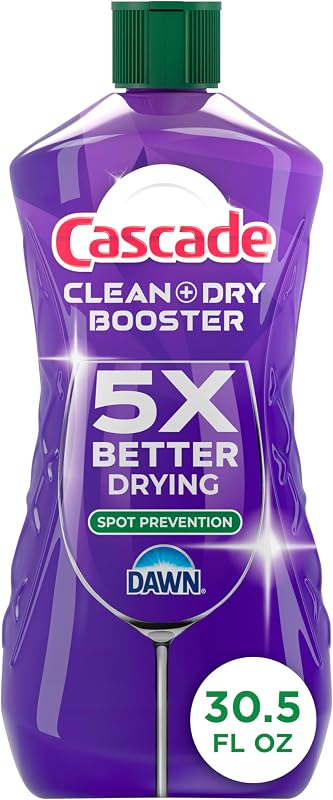
Cascade Rinse Aid Clean & delivers a 30.5-ounce rinse booster designed to pair cleanly with liquid, gel, and pod detergents, making it a natural pick for households that prefer sticking exclusively to Cascade brand products across their dish routine.
FAQ
How often do you need to refill Finish Jet-Dry Rinse Aid?
The frequency depends entirely on how often you run your machine and the dosage setting on your dispenser. Most dishwasher reservoirs hold enough liquid for approximately 20 to 30 wash cycles. For an average household running one load per day, you will typically need to top off the compartment once every three to four weeks.
Can Finish Jet-Dry replace your standard dishwasher detergent?
No, rinse aid cannot replace detergent. Dishwasher detergents contain cleaning enzymes, builders, and alkaline agents designed to dissolve food soils and grease during the main wash cycle. Finish Jet-Dry contains surfactants engineered strictly for the final rinse phase to sheet clean water off surfaces and accelerate drying. You must use both products together for proper cleaning.
Does Finish Jet-Dry work effectively in hard water conditions?
Yes, combating hard water is one of the primary benefits of this formulation. Hard water leaves behind dissolved calcium and magnesium deposits when water droplets evaporate on clean dishware. By breaking surface tension so water sheets off immediately, the minerals are flushed down the drain rather than left behind as chalky white rings.
Is Finish Jet-Dry safe for all dishwasher-safe materials?
Yes, the formula is designed for standard dishwasher-safe kitchenware, including ceramic plates, stainless steel flatware, everyday glassware, and food-grade plastics. It helps protect clear glass from cloudy mineral films and aids in drying difficult plastic food storage containers.
Why are plastic containers still damp even with rinse aid?
Plastics have a lower thermal mass than ceramic or glass, meaning they cool down very quickly once the hot wash cycle ends. Because condensation drying relies on residual heat stored in the dishware to vaporize surface moisture, plastics dry slower than other materials. While rinse aid dramatically improves plastic drying by sheeting water off, deep grooves and recessed lips may still hold trapped water droplets.