As Amazon Associates, we earn from qualifying purchases. This means we may receive a small commission at no extra cost to you if you click through and make a purchase.
As an Amazon Associate we earn from qualifying purchases. Links on this page are affiliate links.
This casio vs KORG digital piano comparison examines two distinct instrument designs. Both models provide built-in stereo speaker systems, integrated recording tools, and standard black finishes. Their physical builds and sound architectures differ significantly. The Casio Privia PX-870 offers an 88-key weighted hammer-action setup inside a stationary wooden cabinet. In contrast, the Korg EK-50 provides a portable 61-key workstation layout featuring 702 sounds and 280 accompaniment styles for flexible music production.
Number of keys
88 keys
61 keys
Key action
Scaled weighted hammer action with simulated ebony and ivory textures
Not listed
Sound library
Piano sound plus 18 additional tones
702 sounds and 280 styles
Speaker system
4-speaker sound projection system
2 x 10W stereo speakers
Form factor
Wooden cabinet with sliding key cover
Workstation keyboard
Weight
106 pounds
16.5 pounds
Choose the first if
- You want full 88-key scaled weighted hammer action.
- You prefer a stationary wooden cabinet with an included furniture bench.
- You prioritize a 4-speaker sound projection system.
Choose the second if
- You need a lightweight 16.5-pound portable workstation.
- You want 702 instrument sounds and 280 accompaniment styles.
- You require an audio input jack and a 12-track recorder.
Verdict
Select the Casio Privia PX-870 if you need an authentic 88-key weighted action and a stationary furniture cabinet. Pick the Korg EK-50 if you prioritize portability, multi-track sequencing, and hundreds of built-in voices. Each instrument serves distinct playing needs based on key count and mobility.
Casio PX-870 vs Korg EK-50 Comparison
Number of keys and key action
Edge: Casio Privia PX-870 Digital Piano
The Casio Privia PX-870 features a full 88-key layout with scaled, weighted hammer action and simulated ebony and ivory key textures. This configuration replicates the mechanical response and key count of an acoustic piano, giving you complete range for standard repertoire. In contrast, the Korg 61-Key Arranger Keyboard provides 61 keys, and its specific key action type is not listed in the specifications. Sixty-one keys limit the accessible octaves during two-handed classical pieces. If authentic resistance and full acoustic range are your priorities, the Casio Privia PX-870 holds the mechanical advantage over the smaller Korg keyboard.
Sound library and styles
Edge: Korg 61-Key Arranger Keyboard
For sonic diversity, the Korg 61-Key Arranger Keyboard offers 702 sounds and 280 preset styles, spanning instruments such as guitars, brass, saxophones, and drums. It also includes a split function to play separate sounds simultaneously across the keybed. The Casio Privia PX-870 provides a dedicated piano tone with detailed resonance plus 18 additional tones, focusing primarily on core keyboard instruments. While Casio emphasizes dedicated piano resonance, Korg gives you a substantially broader instrument palette for accompaniment and diverse genres. If you require hundreds of voices and backing styles directly on the instrument, the Korg keyboard delivers far greater tonal variety.
Built-in speaker system
Edge: Casio Privia PX-870 Digital Piano
The Casio Privia PX-870 incorporates a four-speaker sound projection system designed to distribute sound dynamically throughout your room. The Korg 61-Key Arranger Keyboard features two 10-watt stereo speakers. While Korg allows you to route audio from external hardware through its input jack to play through those speakers, Casio provides twice the speaker count. The four-speaker configuration in the Casio model helps project sound more evenly around a stationary cabinet setup. For standalone acoustic presence and dedicated multi-speaker projection, the Casio Privia PX-870 provides a more robust hardware audio setup than the two-speaker configuration found on the Korg instrument.
Physical size and portability
Edge: Korg 61-Key Arranger Keyboard
The Korg 61-Key Arranger Keyboard weighs 16.5 pounds and measures 39.1 inches long, 15.4 inches wide, and 5.2 inches high. This compact footprint allows you to lift, pack, and transport the keyboard easily between locations. In comparison, the Casio Privia PX-870 weighs 106 pounds and measures 60 inches long, 16 inches wide, and 15 inches high within a wooden cabinet structure. The Casio is built as a stationary home console, making routine relocation difficult. If your playing routine involves travel, frequent teardown, or limited storage space, the lightweight Korg workstation offers a clear practical advantage in physical portability.
Included package accessories
Edge: Casio Privia PX-870 Digital Piano
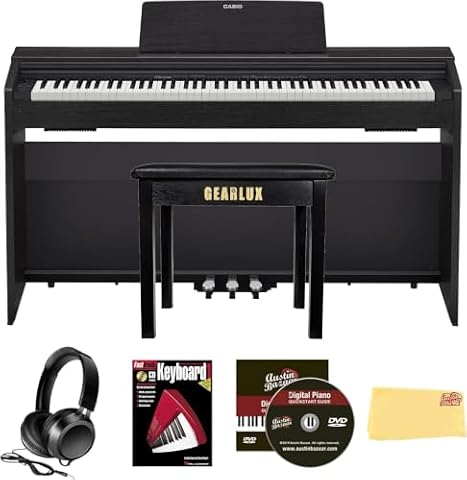
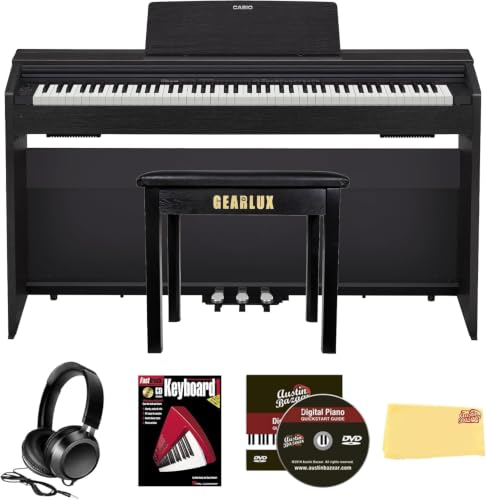
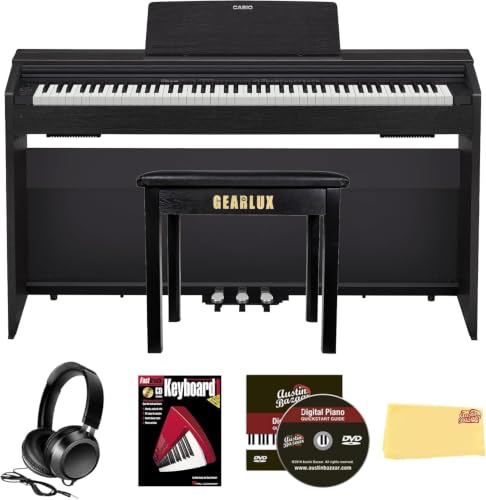
This Casio Privia PX-870 bundle arrives with a comprehensive accessory set for home practice. It includes a furniture bench, stereo headphones, an instructional book, an instructional DVD, online lessons, and an Austin Bazaar polishing cloth, alongside an integrated sliding key cover on the cabinet. In contrast, the Korg 61-Key Arranger Keyboard listing does not specify any bundled accessories in the product data, meaning you must source your own bench, headphones, or learning materials separately. For out-of-the-box readiness with essential seating, listening gear, and educational items, the Casio package provides complete setup equipment straight from the carton.
Recording and production tools
Edge: Korg 61-Key Arranger Keyboard
The Korg 61-Key Arranger Keyboard features one-touch recording and a built-in sequencer functioning as a 12-track linear recorder. Its central panel includes an illuminated display showing sound and style names in large text, backed by LED-lit buttons to monitor active functions. The Casio Privia PX-870 lists general recording, practice, and performance tools, but does not feature a multi-track linear sequencer or LED-illuminated controls in its specs. For musicians seeking multi-part song composition and detailed track layering directly on board the hardware, the Korg model provides advanced sequencing features and dedicated visual control feedback that the Casio does not match.
Which Keyboard Should You Buy
Pianists wanting a permanent home practice instrument
Our pick: Casio Privia PX-870 Digital Piano
You get an 88-key setup with scaled weighted hammer action and textured ebony and ivory keys. The wooden cabinet features a sliding key cover and a four-speaker projection system. The bundle supplies a furniture bench, headphones, and instructional materials. At 106 pounds, it provides a stable setup for dedicated home practice.
Songwriters needing extensive sound palettes and sequencing tools
Our pick: Korg 61-Key Arranger Keyboard
You get 702 sounds, 280 accompaniment styles, and a split keyboard mode. The built-in 12-track sequencer and one-touch recording function let you compose full arrangements directly on the device. An illuminated button interface and a clear central display simplify track navigation, while dual 10-watt speakers deliver immediate audio monitoring.
Performers needing a portable instrument with external audio input
Our pick: Korg 61-Key Arranger Keyboard
This 61-key keyboard weighs 16.5 pounds and measures 39.1 inches long, making it easy to move between spaces. It features an audio input jack to play sound from external devices through its 2 x 10W stereo speakers. LED-lit buttons and a clear screen give you visible control in any environment.
Casio Privia PX-870 Digital Piano
Best for: Dedicated home practice and traditional piano study
- Number of Keys
- 88 keys
- Key Action
- Scaled weighted hammer action
- Speaker System
- 4-speaker sound projection system
- Color
- Black
- Dimensions
- 60 × 16 × 15 inches
- Weight
- 106 pounds
This 88-key console digital piano gives you scaled, weighted hammer-action keys with simulated ebony and ivory textures. A 4-speaker sound projection system delivers audio through a wooden cabinet with a sliding key cover. It includes 19 total tones, built-in recording tools, and a matching furniture bench. It suits you if you want a stationary home piano for traditional practice.
- 88 scaled, weighted hammer-action keys
- 4-speaker sound projection system
- Simulated ebony and ivory key textures
- Wooden cabinet with sliding key cover
- Bundle includes furniture bench and headphones
- Heavy 106-pound total weight limits mobility
- Sound selection limited to 19 total tones
- Length of 60 inches requires dedicated floor space
- You want full 88-key weighted hammer action for acoustic-style practice.
- You need an all-in-one home bundle that includes a matching bench.
- You prefer a stationary wooden console cabinet with a sliding key cover.
- You need a lightweight, portable instrument to travel with.
- You want a large library of hundreds of electronic tones.
Verdict: Casio Privia 88-Key Digital Piano delivers authentic key weighting and a four-speaker sound system for players focused on acoustic piano technique. Its 106-pound wooden console build suits dedicated home spaces rather than touring setups.

Korg 61-Key Arranger Keyboard
Best for: Multi-track songwriting and portable arranger performance
- Number of Keys
- 61 keys
- Total Sounds
- 702 sounds
- Form Factor
- Workstation
- Speaker System
- 2 x 10W
- Connectivity
- Input jack
- Color
- Black
This instrument is a 61-key portable arranger workstation designed for composing and playing accompaniment. It features 702 onboard sounds, 280 auto-accompaniment styles, and an integrated 12-track sequencer for song recording. Built-in 2 x 10W stereo speakers project audio directly from the unit or connected external audio devices. It suits musicians who need multi-track composition tools and accompaniment in a 16.5-pound frame.
- Includes 702 sounds and 280 accompaniment styles
- Onboard 12-track sequencer with one-touch recording
- Dual 10W stereo speaker system with an external audio input jack
- Lightweight 16.5-pound build for portability
- Limited to 61 keys instead of a full 88-key piano range
- Total speaker output is limited to 20W combined
- You need an extensive library of 702 sounds and 280 accompaniment styles.
- You want to build songs using an integrated 12-track sequencer.
- You prioritize a portable 16.5-pound instrument over a full-sized cabinet.
- You need a full 88-key keyboard for traditional piano repertoire.
- You prefer a fixed furniture-style console piano with integrated pedals.
Verdict: KORG 61-Key Arranger Workstation serves home composers and performers who require hundreds of sound presets, onboard accompaniment styles, and a 12-track recorder in a lightweight 61-key format.
Specifications side by side
| Spec | Casio Privia PX-870 Digital Piano | Korg 61-Key Arranger Keyboard |
|---|---|---|
| Number of Keys | 88 keys | 61 keys |
| Key Action | Scaled weighted hammer action | – |
| Total Sounds | – | 702 sounds |
| Form Factor | – | Workstation |
| Speaker System | 4-speaker sound projection system | 2 x 10W |
| Connectivity | – | Input jack |
| Color | Black | Black |
| Dimensions | 60 × 16 × 15 inches | 39.1 × 15.4 × 5.2 inches |
| Weight | 106 pounds | 16.5 pounds |
| Size | Bundle w/ Furniture Bench | EK-50 |
| Model | PX870BK-COMBO-PRO-2 | EK50 |
Frequently asked questions
Which keyboard is easier to transport for live performance?
The KORG EK-50 is significantly easier to move for live performance. It weighs 16.5 pounds and measures 39.1 inches long, making it portable for travel. By contrast, the Casio Privia PX-870 weighs 106 pounds and uses a stationary wooden console build meant for a dedicated home setup.
How do the key counts differ between Casio and KORG models?
Your choice depends on your playing focus and repertoire needs. The Casio Privia PX-870 provides 88 keys, matching standard acoustic pianos for traditional piano study. In comparison, the KORG EK-50 offers 61 keys, giving you a compact format suited for songwriting, basic tracking, and portable arranger keyboard performance.
Can you produce complete songs directly on these keyboards?
The KORG EK-50 includes specific onboard tools designed for songwriting. It features a built-in 12-track recorder along with onboard accompaniment styles and hundreds of sound presets. The Casio Privia PX-870 focuses primarily on authentic piano practice and acoustic study rather than complex multi-track arranging features.
What are the physical dimensions of each model?
The Casio Privia PX-870 measures 60 inches long, 16 inches wide, and 15 inches high, requiring a dedicated floor area. The KORG EK-50 has a much smaller footprint at 39.1 inches long, 15.4 inches wide, and 5.2 inches high, fitting easily onto desktop spaces or portable stands.
What accessories are included with the Casio PX-870 package?
The Casio PX-870 listed here comes as a bundle that includes a dedicated furniture bench alongside the main unit. This wooden console setup forms a permanent home practice station. In contrast, the KORG EK-50 is supplied as a standalone arranger keyboard unit without integrated furniture components.
Which model is better suited for traditional piano practice?
The Casio Privia PX-870 is better for traditional piano study due to its authentic key weighting and 88-key build. Its four-speaker sound system also supports acoustic piano practice. The KORG EK-50 provides 61 keys and prioritizes portable performance, accompaniment styles, and multi-track songwriting over acoustic technique.