
As Amazon Associates, we earn from qualifying purchases. This means we may receive a small commission at no extra cost to you if you click through and make a purchase.
As an Amazon Associate we earn from qualifying purchases. Links on this page are affiliate links.
Choosing among the best keyboards under $2500 comes down to keybed type, dimensions, and sound architecture. We evaluated 6 models strictly using the specifications published on their product listings. The Yamaha 76-Key Semi-Weighted Synthesizer takes the top position because its 76-key semi-weighted keybed balances broad note range with a 49-inch frame built for hybrid stage and studio synthesis workflows.
This guide helps you select the right key count, physical dimensions, and hardware format for your performance setup.
Form Factor Dictates Portability And Setup
You should balance key count against total weight before choosing. Full 88-key instruments like the Arturia AstroLab 88 offer standard range but weigh 65 pounds, making them suited for permanent stands. Portable options like the Teenage Engineering OP-XY weigh 1.81 pounds, designed specifically for mobile sequencing workflows.
| # | Product | Best for | Price |
|---|---|---|---|
| 1 | Yamaha 76-Key Semi-Weighted Synthesizer Best overall | hybrid stage and studio synthesis workflows | |
| 2 | Arturia AstroLab 88 Stage Keyboard Best premium | stage players seeking expansive synth presets | |
| 3 | Teenage Engineering OP-XY Portable Sequencer Synth Best budget | portable multi-track sequencing and mobile sound design | |
| 4 | Yamaha 61-Key World Music Arranger Keyboard Also great | world music composers needing scale tuning presets | |
| 5 | Korg Pa700 61-Key Arranger Workstation Best brown | solo arrangers wanting built-in amplification and styles | |
| 6 | Roland Fantom 88-Key Workstation Bundle Also great | Complete 88-key workstation production setups |
The best fit for you
- You need a hybrid synth with semi-weighted keys – Yamaha 76-Key Semi-Weighted Synthesizer – The 76-key semi-weighted keybed provides fast synthesizer action across an extended board.
- You want a full stage layout anchored in place – Arturia AstroLab 88 Stage Keyboard – Its 88-key stage build and 65-pound chassis provide heavy-duty stability on a stand.
- You want an ultra-light setup for travel sequencing – Teenage Engineering OP-XY Portable Sequencer Synth – It weighs 1.81 pounds and measures 11.4 inches long with a built-in sequencer.
- You perform world music requiring dedicated microtonal scales – Yamaha 61-Key World Music Arranger Keyboard – This 61-key workstation provides specialized scale tuning presets for global genres.

Yamaha 76-Key Semi-Weighted Synthesizer
Best for: hybrid stage and studio synthesis workflows
- Number of Keys
- 76
- Key Action
- Semi-weighted
- Sound Engine
- Analog, FM, realistic instruments
- Dimensions
- 49 × 18 × 9.25 inches
The Yamaha 76-Key Semi-Weighted Synthesizer gives you three sound engines covering analog, FM, and realistic instrument sounds. Its interface features a color touch screen, six display knobs, eight physical faders, and the Super Knob. At 49 inches long with semi-weighted action, it suits stage and studio players who need versatile synthesis controls without an 88-key hammer-weighted footprint.
- Three sound engines for analog, FM, and realistic instruments
- Eight physical faders, Super Knob, and six display knobs
- Color touch screen for navigation and editing
- Expanded Softsynth Plugin (ESP) for DAW integration
- Uses semi-weighted action rather than fully weighted hammer action
- 76-key layout lacks the full 88-key acoustic range
- Substantial 49-inch length requires adequate desk or stand space
- You want physical faders and dedicated knobs for live sound adjustment
- You work extensively in a DAW and want plugin integration
- You play diverse parts requiring analog, FM, and sample-based engines
- You require fully weighted hammer action for classic piano literature
- You need a compact instrument shorter than 49 inches
Verdict: Yamaha 76-Key Semi-Weighted Synthesizer delivers multi-engine sound design and deep hardware control for stage and studio performers. It fits keyboardists who prioritize fast synth action and DAW integration over traditional weighted piano keys.

Arturia AstroLab 88 Stage Keyboard
Best for: stage players seeking expansive synth presets
- Number of Keys
- 88
- Key Action
- Velocity sensitive
- Preset Count
- 1,800+
- Form Factor
- Stage
- Color
- White
- Dimensions
- 59.5 × 19.7 × 7.28 inches
The Arturia AstroLab 88-Key Stage Keyboard provides a full 88-note velocity-sensitive keybed with aftertouch and 1,800 onboard presets from 40 instruments. You get eight real-time macro encoders, a central navigation screen, and direct integration with software sound libraries. At 65 pounds, it suits stage performers and studio producers who need extensive synthesizer sound engines across a complete 88-key range.
- Full 88-note velocity-sensitive keybed with aftertouch
- Over 1,800 built-in presets across 40 onboard instruments
- Eight real-time macro encoders and central display screen
- Chord mode, scale mode, and multi-lane arpeggiator
- Heavy 65-pound build complicates frequent transport
- Large 59.5-inch length requires substantial stand and desk space
- You need a full 88-key layout with aftertouch for virtual synthesizer engines.
- You want direct hardware control using eight dedicated macro knobs and preset hotkeys.
- You need a lightweight stage board under 65 pounds for touring.
- You have a compact studio desk that cannot accommodate a 59.5-inch footprint.
Verdict: Arturia AstroLab 88-Key Stage Keyboard equips studio musicians and stage players with an expansive 88-note aftertouch keybed and direct access to over 1,800 presets. Its 65-pound chassis makes it best anchored to a permanent stand rather than moved daily.

Teenage Engineering OP-XY Portable Sequencer Synth
Best for: portable multi-track sequencing and mobile sound design
- Sound Engine
- 8 unique synth engines
- Built-In Speakers
- Built-in speaker
- Sequencer
- 64-step
- Form Factor
- Portable
- Built-In Features
- Sequencer
- Dimensions
- 11.4 × 4 × 1.2 inches
The Teenage Engineering OP–XY is a compact portable synthesizer, sampler, and sequencer. It features eight unique synth engines, a 64-step sequencer, and eight auxiliary tracks to control external gear. Measuring 11.4 inches long and weighing 1.81 pounds, it includes built-in speakers, a microphone, and Bluetooth LE. You get a mobile production setup designed for sequencing and sound design anywhere.
- Weighs 1.81 pounds and measures 11.4 inches long
- 64-step sequencer with 8 instrument tracks and 8 auxiliary tracks
- 8 unique built-in synth engines with integrated audio sampler
- Connectivity includes CV, 4-in-1 multi-out, USB-C MIDI, and Bluetooth LE
- Lacks full-size piano keys for traditional keyboard playing
- Compact 11.4-inch chassis limits two-handed multi-octave performance
- You need an ultra-portable 1.81-pound synthesizer and sequencer for travel.
- You want multi-track sequencing with CV and MIDI control over external hardware.
- You build tracks using polyrhythmic step sequences and built-in sampling.
- You require full-size weighted keys for conventional acoustic piano practice.
- You need a standard 61-key, 76-key, or 88-key stage layout.
Verdict: Teenage Engineering OP–XY Portable Synthesizer fits traveling electronic musicians and beatmakers who need extensive sequencing and modular CV connectivity in a compact build.
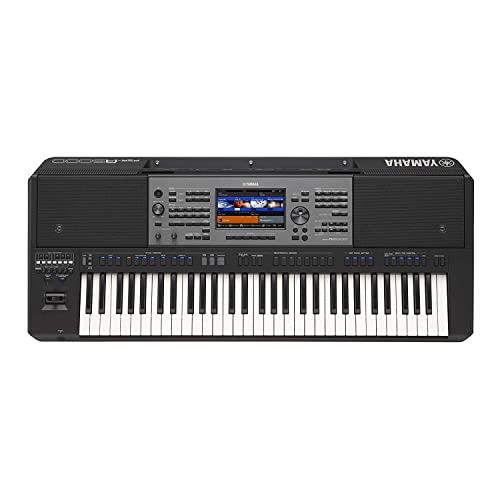
Yamaha 61-Key World Music Arranger Keyboard
Best for: world music composers needing scale tuning presets
- Number of Keys
- 61
- Color
- Black
- Dimensions
- 17 × 14.1 × 5.5 inches
- Weight
- 25.4 pounds
This 61-key Yamaha arranger keyboard focuses on non-Western tuning and global styles. You get front-panel real-time scale tuning presets, 210 world music styles, and assignable knobs alongside a joystick controller. Super Articulation voices capture instrument nuances, while velocity-sensitive portamento shapes note transitions. At 25.4 pounds, it suits performers and composers who build world music arrangements without external MIDI controllers.
- Real-time scale tuning on the front panel with custom preset storage
- 210 built-in world music styles
- Assignable joystick controller and real-time control knobs
- Super Articulation voices with key-off percussion sounds
- 61-key range offers less reach than 76-key or 88-key options on this list
- Weighs 25.4 pounds, making it heavy for a 61-key instrument
- You perform microtonal or non-Western music requiring quick scale tuning changes on the fly.
- You want physical performance control via assignable knobs and an integrated joystick.
- You produce tracks using regional rhythms and Super Articulation acoustic nuances.
- You need a full 76-key or 88-key compass for classical or multi-octave piano repertoire.
- You need a lightweight board designed specifically for frequent travel.
Verdict: Yamaha 61-Key World Music Arranger Keyboard delivers specialized real-time scale switching and expressive performance controls for musicians dedicated to global and microtonal genres.

Korg Pa700 61-Key Arranger Workstation
Best for: solo arrangers wanting built-in amplification and styles
- Number of Keys
- 61
- Sound Engine
- EDS-X
- Preset Count
- 1,700+
- Built-In Speakers
- 2 x 25W Speaker System
- Color
- Brown
- Dimensions
- 21.4 × 46.1 × 10.4 inches
The Korg 61-Key Arranger Workstation provides an integrated performance platform in a brown finish. You get 61 keys, over 1,700 onboard sounds, and more than 370 backing styles. An internal two-way 25-watt speaker setup delivers direct sound without external monitors, while a built-in MP3 player includes a vocal remover for rehearsing. It suits solo performers needing extensive accompaniment.
- Over 1,700 preset sounds
- Built-in 2 x 25W speaker system
- More than 370 integrated music styles
- MP3 player with vocal remover function
- Limited to 61 keys rather than an extended 76- or 88-key range
- Weighs 31.1 pounds, adding bulk during transport
- You want a self-contained workstation with built-in 25-watt stereo speakers.
- You need a vast library of over 1,700 sounds and 370 accompaniment styles.
- You rehearse alongside backing tracks using an onboard MP3 vocal remover.
- You require a full 88-key or extended 76-key playing range.
- You want an ultra-lightweight keyboard under 30 pounds for frequent travel.
Verdict: Korg 61-Key Arranger Workstation equips solo entertainers and accompanists with an expansive sound bank and onboard amplification. It delivers complete standalone performance capability for players who rely on automated backing styles.

Roland Fantom 88-Key Workstation Bundle
Best for: Complete 88-key workstation production setups
- Number of Keys
- 88
- Sound Engine
- ZEN-Core, SuperNATURAL, VTW Organ
- Color
- Black
- Dimensions
- 0.1 × 0.1 × 0.1 inches
- Weight
- 1 pounds
This Roland 88-key music workstation bundle equips you with a 16-part multitimbral engine, onboard sampling, sequencing, and multiple sound generators including ZEN-Core, SuperNATURAL, and VTW Organ. You get full-size acoustic range alongside a double-X stand, bench, and sustain pedal in one package. It suits keyboardists seeking deep sequencing tools and complete stage furniture without purchasing hardware accessories separately.
- 88-key format with 16-part multitimbral architecture, sequencing, and onboard sampling
- Three sound engines: ZEN-Core, SuperNATURAL, and VTW Organ
- Bundled with a double-X stand, adjustable bench, and piano-style sustain pedal with polarity switch
- Integrated multi-FX engine for real-time sound processing
- Large 88-key footprint demands more setup space than 61-key or 76-key options
- No built-in speakers included in specifications, requiring external audio amplification
- You need a full 88-key range with advanced multitimbral synthesis and organ engines
- You want an all-in-one workstation package that includes a stand, bench, and sustain pedal
- You produce tracks using onboard sampling and step sequencing directly on the keyboard
- You prefer a portable 61-key or 76-key form factor for tight performance spaces
- You require internal speakers for quick standalone practice without headphones
Verdict: Roland 88-Key Music Workstation Bundle provides stage and studio musicians with a deep multi-engine workstation setup complete with structural hardware.
Specifications side by side
Spec Yamaha 76-Key Semi-Weighted Synthesizer Arturia AstroLab 88 Stage Keyboard Teenage Engineering OP-XY Portable Sequencer Synth Yamaha 61-Key World Music Arranger Keyboard Korg Pa700 61-Key Arranger Workstation Roland Fantom 88-Key Workstation Bundle
- Number of Keys
- 76
- Key Action
- Semi-weighted
- Sound Engine
- Analog, FM, realistic instruments
- Preset Count
- –
- Built-In Speakers
- –
- Sequencer
- –
- Form Factor
- –
- Color
- –
- Built-In Features
- –
- Dimensions
- 49 × 18 × 9.25 inches
- Weight
- –
- Size
- M7
- Model
- MODX M7
Copied from the Amazon listing. These figures were not measured here.
How to Choose the Best Keyboard
Evaluate Keyboard Key Count
You should match the key count to the repertoire you plan to play. Standard acoustic piano literature requires a full 88-note layout to access the lowest bass and highest treble notes. If you focus primarily on synthesizer leads, organ parts, or studio production, a 61-key or 76-key instrument gives you sufficient octave span while saving space. Review the keybed specifications to ensure the hardware range matches your performance needs.
Assess Keybed Action Responsiveness
Key action alters how notes respond under your fingers during dynamic passages. Semi-weighted keybeds offer light spring resistance, which favors rapid lead lines, fast synthesizer arpeggios, and quick organ riffs. Fully weighted or aftertouch-equipped keybeds provide deeper resistance and secondary modulation pressure when holding down notes. The Arturia AstroLab 88 features an aftertouch keybed for continuous sound shaping. Check keybed specs to find the mechanical resistance suited to your technique.
Check Onboard Amplification Hardware
You must verify whether a model includes internal speakers before planning your monitoring setup. Keyboards with onboard amplification allow you to practice and perform without connecting external audio monitors or wearing headphones. The Korg Pa700 61-Key Arranger Workstation includes built-in amplification for self-contained use. Professional synthesizers and stage boards omit internal speakers and require dedicated stage monitors or audio interfaces. Review output specifications to see if external sound gear is required.
Examine Specialized Tuning Capabilities
If you compose non-Western music, standard equal temperament scales limit your performance. Specialized arranger keyboards provide real-time scale switching and microtonal adjustments directly on the front panel. The Yamaha 61-Key World Music Arranger Keyboard features dedicated scale tuning presets to alter individual note pitches during live play. If you work exclusively with standard Western harmony, general synthesizers suffice. Compare tuning controls in the specification sheet if you require regional scales.
Consider Hardware Sequencing Tools
Musicians who build complex arrangements without a computer should inspect onboard sequencing features. Hardware sequencers record multiple tracks and trigger external analog gear through modular connections. The Teenage Engineering OP-XY provides built-in sequencer functions alongside modular CV connectivity for routing signals to external gear. If you only play acoustic parts or perform live piano pieces, dedicated sequencing hardware adds unnecessary complexity. Check the feature list to determine if sequencer tracks fit your production workflow.
Measure Studio Surface Dimensions
Keyboard chassis depths and lengths vary widely, directly impacting studio desk placement. A deep chassis exceeding 18 inches requires a deep table or a separate heavy-duty stand. The Yamaha 76-Key Semi-Weighted Synthesizer measures 49 inches long by 18 inches wide, demanding significant table space. Compact desktop units take up less than 12 inches of width. Measure your available table depth and clearance before selecting a model to verify that the hardware footprint fits your workstation layout.
Frequently asked questions
What is the difference between an arranger keyboard and a synthesizer workstation?
An arranger keyboard focuses on automated backing accompaniment, while a synthesizer workstation targets deep sound synthesis. Models like the Korg Pa700 provide built-in amplification and backing styles for solo performers. Synthesizers like the Yamaha MODX M7 emphasize multi-engine sound design and digital audio workstation integration instead of automated accompaniment.
Can you produce complete songs directly on a portable sequencer synthesizer?
Yes, you can build full tracks using hardware sequencers and modular connections. The Teenage Engineering OP-XY includes a built-in sequencer and modular CV connectivity in a 1.81-pound chassis. This compact setup allows you to construct multi-track arrangements, shape original sounds, and control external gear without needing a computer.
What hardware features should you check for world music and microtonal performance?
You should look for dedicated scale tuning presets and real-time scale switching controls. The Yamaha PSRA5000 61-Key arranger provides specialized controls designed for microtonal tuning and regional musical genres. These physical buttons allow you to alter scale temperaments instantly during a live performance without navigating complex digital menus.
Why do some stage keyboards include aftertouch on their keybeds?
Aftertouch lets you alter pitch, vibrato, or filter parameters by applying extra downward pressure to keys after striking them. The Arturia AstroLab 88 includes an aftertouch-equipped 88-note keybed alongside 1,800 presets. This physical control gives you dynamic modulation options directly under your fingers during expressive stage performances.
Do professional workstation keyboards require external speakers to produce sound?
Most professional stage keyboards and synthesizers require external amplification or headphones because they lack onboard speakers. However, specific arranger models like the Korg Pa700 feature built-in amplification directly inside the chassis. If your keyboard lacks internal speakers, you must connect external studio monitors, keyboard amplifiers, or headphones to hear playback.
What are the advantages of choosing a 76-key keyboard over 61 or 88 keys?
A 76-key layout provides extra octave range for split performances while remaining shorter than full 88-key boards. The Yamaha MODX M7 measures 49 inches in length, saving space compared to typical 59-inch stage frames. Its semi-weighted synth action balances fast lead playing with enough physical range for split bass lines.


