
As Amazon Associates, we earn from qualifying purchases. This means we may receive a small commission at no extra cost to you if you click through and make a purchase.
As an Amazon Associate we earn from qualifying purchases. Links on this page are affiliate links.
Finding the best gray audio interfaces requires matching hardware connectivity and channel counts to your studio workflow. We compared 2 options strictly by the specifications published on their listings.
The RME Babyface Pro FS USB Audio Interface leads our list for cross-platform multi-channel home and mobile recording with its 12-In/12-Out audio routing and compact 9.1-inch dimensions. This guide helps you decide which connection type, channel layout, and chassis size fit your recording setup.
Host Connection Types Dictate Your Workflow
Examine your host connections before choosing. The Antelope Audio Zen Quadro provides USB-C ports with onboard DSP, weighing 1.98 pounds. In contrast, the RME Babyface Pro FS relies on standard USB connectivity in a 3.82-pound chassis. Match the physical port types and weight to your desk space and mobile needs.
| # | Product | Best for | Price |
|---|---|---|---|
| 1 | RME Babyface Pro FS USB Audio Interface Best overall | cross-platform multi-channel home and mobile recording | |
| 2 | Antelope Audio Zen Quadro Dual USB-C Audio Interface Best usb-c | dual-host USB-C streaming and multi-device recording |
The best fit for you
- You need multi-channel recording with two microphones – RME Babyface Pro FS USB Audio Interface – It delivers twelve inputs and twelve outputs over USB.
- You need to route audio across two separate machines – Antelope Audio Zen Quadro Dual USB-C Audio Interface – It offers dual USB-C connectivity with dual-host routing.
- You want a lightweight interface with onboard DSP processing – Antelope Audio Zen Quadro Dual USB-C Audio Interface – It weighs 1.98 pounds and includes onboard DSP features.
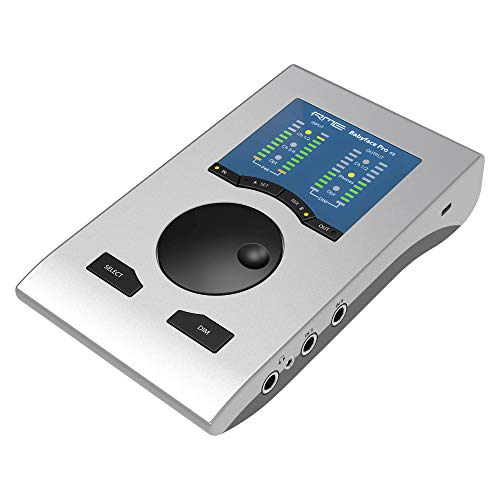
RME Babyface Pro FS USB Audio Interface
Best for: cross-platform multi-channel home and mobile recording
- Color
- Gray
- Total I/O
- 12-in/12-out
- Mic Preamps
- 2
- Host Connection
- USB 2.0
- Audio Resolution
- 24-bit/192kHz
- Digital Expansion
- Digital I/O
This compact gray audio interface from RME gives you 12 input and 12 output channels with 24-bit/192kHz resolution. It connects via USB 2.0 and works across macOS, Windows, and iOS systems. With two onboard mic preamps and digital I/O expansion, it suits you if you need portable, multi-channel recording with flexible platform support on your desk.
- 24-bit/192kHz audio resolution
- 12-in/12-out channel count with digital I/O
- Cross-platform support for macOS, Windows, and iOS
- Includes plug-in bundle
- Limited to two mic preamps
- Uses USB 2.0 host connection
- You need 12-channel I/O capacity with digital expansion options.
- You record across macOS, Windows, and iOS setups.
- You need more than two onboard microphone preamps.
- You require a host connection faster than USB 2.0.
Verdict: RME Babyface Pro FS 12-In/12-Out Audio Interface delivers multi-channel digital flexibility and wide operating system support for producers who track with up to two microphones.

Antelope Audio Zen Quadro Dual USB-C Audio Interface
Best for: dual-host USB-C streaming and multi-device recording
- Color
- Gray
- Total I/O
- 14-In/10-Out
- Mic Preamps
- 4
- Host Connection
- Dual USB-C
- Dynamic Range
- up to 130 dB
- Preamp Gain
- up to 75 dB
This gray desktop interface provides 14 inputs and 10 outputs with dual USB-C ports for connecting two devices at once. It features four discrete preamps delivering up to 75 dB of gain, alongside hardware DSP effects processing. If you produce music across two computers or need to route audio between a tablet and PC, this hub suits your workflow.
- Dual USB-C ports allow simultaneous connection and routing between two host devices.
- Four discrete microphone preamps provide up to 75 dB of gain.
- Onboard DSP and FPGA hardware processes 37 included real-time effects without host CPU load.
- Digital expansion supports up to eight extra channels via ADAT plus stereo S/PDIF.
- Only two of the four input channels support direct Hi-Z instrument signals.
- No hardware 5-pin MIDI connections are included.
- You want to route audio between two computers or a tablet and PC simultaneously.
- You use low-gain microphones that benefit from up to 75 dB of preamp headroom.
- You track with real-time effects and want to offload processing from your host computer.
- You require built-in 5-pin DIN MIDI ports for outboard synthesizers.
- You want a simpler two-channel interface with a smaller desk footprint than 8.27 inches wide.
Verdict: Antelope Audio Zen Quadro USB-C Interface gives multi-device creators four high-gain preamps and dual-host routing in a compact desktop chassis. It fits producers and streamers who manage audio across two separate machines or require ADAT expansion.
Specifications side by side
Spec RME Babyface Pro FS USB Audio Interface Antelope Audio Zen Quadro Dual USB-C Audio Interface
- Total I/O
- 12-in/12-out
- Mic Preamps
- 2
- Host Connection
- USB 2.0
- Audio Resolution
- 24-bit/192kHz
- Dynamic Range
- –
- Preamp Gain
- –
- Digital Expansion
- Digital I/O
- Connectivity
- USB
- Color
- Gray
- Features
- –
- Dimensions
- 9.1 × 9.1 × 9.1 inches
- Weight
- 3.82 pounds
- Size
- Compact
- Model
- BABYFACEPROFS
Copied from the Amazon listing. These figures were not measured here.
Choosing the Right Gray Audio Interface
Measure Desk Surface Dimensions
Check the exact physical dimensions of your workspace before you purchase an audio interface. Compact units save valuable space on crowded producer desks. For example, the Antelope Audio Zen Quadro measures 5.35 by 8.27 by 2.29 inches. Measure your available desktop area to confirm the unit leaves enough clearance for connected cables and surrounding gear. Compact chassis designs keep your desk neat.
Count Microphone Preamp Needs
Check the number of built-in microphone preamps on the interface specification sheet. Solo performers need one or two preamps, while multi-mic recording setups require more analog inputs. The Antelope Audio Zen Quadro provides four high-gain preamps for tracking multiple sources simultaneously. Calculate how many microphones or instruments you plan to record at the exact same time before selecting your hardware unit.
Evaluate Digital ADAT Expansion
Check the specification sheet for digital expansion options like ADAT connectivity. An interface with ADAT inputs allows you to connect multi-channel external preamps when your recording needs expand. If you plan to track full drum kits or live bands in the future, expansion ports prevent the need to replace your entire interface. Confirm the unit lists digital expansion before you finalize your choice.
Check Unit Weight Specifications
Inspect the weight specification of the hardware to match your studio environment. A heavier audio interface stays firmly in place on your desk when connected to heavy microphone and monitor cables. The RME Babyface Pro FS weighs 3.82 pounds, which provides solid tabletop balance. If you travel frequently, lighter units pack easily, while heavier units resist sliding during active studio sessions.
Match Hardware Exterior Colors
Review the exterior color and chassis finish listed in the product specifications. Audio interfaces with a gray finish match modern metal laptops, studio monitors, and synthesizer hardware. If you want a uniform visual theme across your workspace, check the color spec before you buy. Choosing a neutral gray chassis ensures your interface blends smoothly into professional studio desks and mobile setups alike.
Frequently asked questions
What makes gray audio interfaces a practical choice for your studio?
Gray audio interfaces offer a neutral aesthetic that fits cleanly into modern workspaces. Devices like the RME Babyface Pro FS and Antelope Audio Zen Quadro feature matte gray enclosures that minimize the look of dust and smudges during regular desktop use while keeping controls clearly visible under studio lighting.
How many microphones can you record with on the RME Babyface Pro FS?
You can record up to two microphones simultaneously using the RME Babyface Pro FS. This gray interface includes two onboard preamps designed for tracking vocals or stereo instruments. For larger sessions, you can expand its input capacity up to twelve channels total by integrating external gear through digital connections.
Does the Antelope Audio Zen Quadro feature built-in hardware DSP?
Yes, the Antelope Audio Zen Quadro comes equipped with onboard DSP processing. This internal chip computes signal processing directly on the interface hardware, which frees up processing resources on your host computer. The gray USB-C unit uses this hardware architecture to keep performance responsive during complex recording sessions.
Can you use the Antelope Audio Zen Quadro with two computers at once?
Yes, the Antelope Audio Zen Quadro supports simultaneous operation with two separate systems using its dual USB-C connectivity. Its dual-host routing architecture lets you transfer audio between two distinct computers or mobile devices at the same time, making it suitable for live streamers and multi-device studio setups.
What total channel capacity does the RME Babyface Pro FS offer?
The RME Babyface Pro FS provides a twelve-input and twelve-output configuration over USB connectivity. While you can connect two microphones to its built-in preamps, the remaining channels operate through its digital connections. This setup allows you to route multichannel audio through a single compact desktop unit.
How much do compact gray audio interfaces weigh for mobile setups?
Chassis weight depends on the hardware layout and internal components. The Antelope Audio Zen Quadro weighs 1.98 pounds, giving you a lightweight option for portable laptop bags. The RME Babyface Pro FS weighs 3.82 pounds, offering a sturdier desktop anchor that resists moving when cables are connected.


