
As Amazon Associates, we earn from qualifying purchases. This means we may receive a small commission at no extra cost to you if you click through and make a purchase.
As an Amazon Associate we earn from qualifying purchases. Links on this page are affiliate links.
Onboard digital signal processing handles audio routing directly on hardware without burdening your computer. You can compare 4 of the best audio interfaces with DSP based on specifications published on the listings. The Elgato Wave XLR Pro Dual USB-C Audio Interface leads the lineup because it delivers 80 dB of preamp gain alongside dual-host routing.
These technical comparisons help you choose the right hardware processing, connection ports, and input capabilities for your studio workflow.
Match hardware connectivity to your workflow
Check your connectivity needs before you choose. Models like the Elgato Wave XLR Pro offer dual USB-C ports to route audio across two separate computers. If you integrate external instruments, options like the Yamaha 6×4 provide dedicated USB-MIDI connections instead. Confirm whether your gear requires dual-host links or MIDI.
| # | Product | Best for | Price |
|---|---|---|---|
| 1 | Elgato Wave XLR Pro Dual USB-C Audio Interface Best overall | dual-computer streaming setups requiring high gain | |
| 2 | Universal Audio Volt 4 Max USB Interface Best budget | home producers wanting DSP compression and expansion | |
| 3 | Yamaha 6×4 USB-C Audio Interface Best usb-midi | multi-mic tracking with external MIDI gear | |
| 4 | Antelope Audio Zen Quadro Dual USB-C Audio Interface Best gray | multi-device streaming and DSP-powered studio tracking |
The best fit for you
- You run a dual-computer streaming setup – Elgato Wave XLR Pro Dual USB-C Audio Interface – Dual USB-C connectivity and 80 dB of preamp gain manage two systems directly in hardware.
- You require 32-bit capture and ADAT expansion – Universal Audio Volt 4 Max USB Interface – It provides 32-bit capture alongside ADAT digital input expansion and hardware DSP compression.
- You track multiple microphones with external MIDI gear – Yamaha 6×4 USB-C Audio Interface – Four mic preamps and dedicated USB-MIDI connections support multi-mic sessions alongside external MIDI hardware.
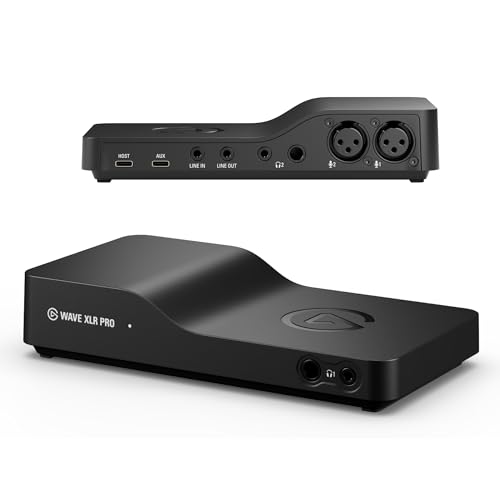
Elgato Wave XLR Pro Dual USB-C Audio Interface
Best for: dual-computer streaming setups requiring high gain
- Features
- DSP
- Mic Preamps
- 2
- Host Connection
- Dual USB-C
- Preamp Gain
- 80 dB
- Dimensions
- 3.82 × 7.28 × 1.5 inches
- Weight
- 13.4 ounces
The Elgato Wave XLR Pro is a dual-microphone audio interface featuring onboard DSP. You get two XLR inputs with 80 dB of preamp gain each, plus Clipguard 2.0 protection. Dual USB-C connections link two computers or devices at once, while onboard hardware routes five separate mixes. This layout suits creators running multi-device streaming and voice recording setups.
- 80 dB of preamp gain on both XLR inputs
- Onboard Wave FX DSP processor with Clipguard 2.0
- Dual USB-C ports for routing between two hosts
- Hardware support for five independent mixes
- Limited to two XLR microphone inputs
- No integrated MIDI input or output ports
- You run a two-computer streaming or podcasting setup requiring dual USB-C routing.
- You need 80 dB of clean gain to drive low-sensitivity XLR microphones.
- You want hardware-level matrix mixing across up to five discrete audio mixes.
- You need more than two XLR preamps for multi-mic studio recording.
- You rely on standard 5-pin MIDI connections for hardware instruments.
Verdict: Elgato Wave XLR Pro Dual USB-C Interface provides 80 dB of preamp gain and dual-host routing for creators running multi-device broadcasts. Its onboard DSP and five-mix matrix engine handle complex audio distribution directly in hardware.

Universal Audio Volt 4 Max USB Interface
Best for: home producers wanting DSP compression and expansion
- Features
- DSP
- Host Connection
- USB
- Audio Resolution
- 32-Bit
- Digital Expansion
- ADAT
- MIDI I/O
- MIDI
- Dimensions
- 9.45 × 5.91 × 4.72 inches
The Universal Audio Volt 4 Max is a USB audio interface equipped with onboard DSP and 32-bit audio resolution. You get hardware tone-shaping preamps, compressor presets for vocals and instruments, and built-in MIDI connections. An ADAT input lets you expand your channel count with external gear, making it a capable centerpiece if you track instruments at home.
- 32-bit audio capture resolution
- Onboard DSP compressor presets for vocals, guitar, and bass
- ADAT input for digital channel expansion
- Dedicated hardware MIDI input and output ports
- Compressor processing relies on presets rather than manual parameter controls
- At 2.2 pounds and 9.45 inches long, the chassis requires dedicated desk space
- You want onboard DSP compressor presets for tracking vocals, guitar, and bass
- You plan to expand your input count later using an external ADAT unit
- You connect hardware synthesizers or controllers via dedicated MIDI ports
- You require granular, manual parameter tweaking for dynamic effects
- You need a compact, ultra-portable interface for field recording
Verdict: Universal Audio Volt 4 Max USB Interface gives home recording musicians built-in DSP compression, 32-bit capture, and digital ADAT expansion. It suits solo tracking artists who need quick hardware processing and future input growth.

Yamaha 6×4 USB-C Audio Interface
Best for: multi-mic tracking with external MIDI gear
- Features
- MIDI, DSP
- Total I/O
- 6 x 4
- Mic Preamps
- 4
- Host Connection
- USB-C, USB 3.0
- Audio Resolution
- 32-bit / 192 kHz
- MIDI I/O
- MIDI I/O
This Yamaha unit is a 6-in and 4-out USB-C audio interface with dedicated MIDI I/O. It provides 32-bit integer recording at 192 kHz across four combo microphone inputs and two line inputs. Onboard DSP delivers latency-free monitoring effects, including reverb, channel strips, and amp simulations. It suits you if you need hardware MIDI connections alongside multi-mic recording.
- 32-bit integer and 192 kHz recording resolution
- Onboard DSP latency-free monitoring with REV-X reverb and amp modeling
- Four Class-A D-PRE mic preamps with +48V phantom power
- Hardware MIDI input and output ports
- Large footprint measuring 15 inches long
- Only two inputs support Hi-Z instruments
- You need dedicated MIDI I/O alongside multi-channel microphone inputs.
- You require zero-latency DSP monitoring with guitar amp and channel strip effects.
- You lack desk space for a 15-inch-long full-metal chassis.
- You need more than two direct Hi-Z instrument inputs simultaneously.
Verdict: Yamaha 6×4 USB-C Audio and MIDI Interface gives home and project studios four mic preamps, hardware MIDI routing, and onboard DSP processing. It serves musicians tracking multi-mic sessions alongside external MIDI hardware.

Antelope Audio Zen Quadro Dual USB-C Audio Interface
Best for: multi-device streaming and DSP-powered studio tracking
- Features
- DSP
- Total I/O
- 14-In/10-Out
- Mic Preamps
- 4
- Host Connection
- Dual USB-C
- Dynamic Range
- up to 130 dB
- Preamp Gain
- up to 75 dB
This gray 14-in/10-out audio interface features dedicated DSP and FPGA processing with 37 included real-time effects. You get four microphone preamps with up to 75 dB of gain, 130 dB dynamic range, and dual USB-C ports to connect two devices simultaneously. It suits multi-instrument tracking and dual-system streaming setups needing low-latency hardware processing without host computer CPU load.
- Dedicated DSP and FPGA hardware runs 37 included real-time effects
- Four microphone preamps deliver up to 75 dB of gain
- Dual USB-C ports link two computers or mobile devices with loopback
- Expandable up to 14 inputs and 10 outputs through ADAT and S/PDIF
- Preamp gain reaches 75 dB rather than 80 dB
- No traditional 5-pin MIDI connectivity listed
- You run real-time effects processing directly off internal DSP and FPGA chips.
- You route audio between two separate computers or a computer and tablet.
- You need four analog preamps plus digital expansion options.
- You require 5-pin DIN MIDI ports for legacy hardware synthesizers.
- You need more than 75 dB of gain from a single preamp.
Verdict: Antelope Audio Zen Quadro DSP Audio Interface provides onboard DSP processing, four preamps, and dual-host routing for producers running multi-device studio setups.
Specifications side by side
Spec Elgato Wave XLR Pro Dual USB-C Audio Interface Universal Audio Volt 4 Max USB Interface Yamaha 6×4 USB-C Audio Interface Antelope Audio Zen Quadro Dual USB-C Audio Interface
- Total I/O
- –
- Mic Preamps
- 2
- Host Connection
- Dual USB-C
- Audio Resolution
- –
- Dynamic Range
- –
- Preamp Gain
- 80 dB
- Digital Expansion
- –
- MIDI I/O
- –
- Connectivity
- USB, USB-C
- Color
- –
- Features
- DSP
- Dimensions
- 3.82 × 7.28 × 1.5 inches
- Weight
- 13.4 ounces
- Model
- 20MAM9901
- Size
- –
Copied from the Amazon listing. These figures were not measured here.
How to Choose a DSP Audio Interface
Check Desktop Physical Dimensions
Consider your workspace clearance before choosing a unit. Audio interface chassis vary significantly in depth and width. If you work on a compact desk, a shallow unit keeps your setup clean and cables manageable. A larger device, such as the Yamaha 6×4 measuring 15 inches in length, requires ample open tabletop space. Measure your intended workspace depth and check published dimensions to ensure your cabling and controls fit comfortably without crowding other equipment.
Evaluate Preamp Gain Capacity
Microphone gain dictates how cleanly an interface boosts quiet audio signals without introducing noise. If you use low-output dynamic microphones, look for interfaces that deliver high gain directly from hardware. The Elgato Wave XLR Pro provides up to 80 dB of preamp gain, which drives hungry microphones without extra in-line boosters. Compare the published decibel ratings to match your specific microphone specifications, ensuring you have enough headroom for clear vocal tracking without digital amplification artifacts.
Count Hardware Preamp Inputs
Review how many live sound sources you intend to record at the same time. Solo vocalists or podcasters often need only a single input channel, whereas tracking an ensemble, multi-person panel, or drum kit demands multiple discrete inputs. The Antelope Audio Zen Quadro includes four preamps, enabling simultaneous tracking across separate physical channels. Examine the specifications for total preamp count so your setup accommodates every microphone or instrument line you run without needing an external mixer.
Assess Unit Chassis Weight
Hardware weight impacts both portable travel needs and stationary desk stability. Lighter interfaces pack easily into gear bags, but they may shift on your desk when you connect stiff audio cables. Heavier options anchor your workspace securely. The Universal Audio Volt 4 Max weighs 2.2 pounds, keeping the device stationary during knob adjustments and cable plugging. If you record on the road, compare weight specs to balance lightweight portability against firm physical stability on a studio desk.
Verify Audio Bit Depth
Capture bit depth determines the dynamic range and recording headroom available to your DAW. Standard 24-bit recording suits predictable studio levels, but high-resolution 32-bit capture protects against digital clipping during unpredictable, loud audio peaks. Checking this specification helps you decide whether you need extra dynamic protection for live broadcasts or dynamic instrumental performances. Look at the audio resolution specs if you track spontaneous volume shifts and want maximum fidelity without constantly adjusting hardware gain stages manually.
Frequently asked questions
What does DSP do in an audio interface?
Digital signal processing executes effects and signal routing directly inside interface hardware. This reduces latency during real-time tracking because calculations happen before digital audio reaches host drivers. You can monitor input signals with processing active without placing extra computational burdens on your computer CPU.
Which DSP audio interface provides the highest preamp gain?
The Elgato Wave XLR Pro Dual USB-C Audio Interface delivers 80 dB of preamp gain. This spec allows low-output dynamic microphones to produce healthy signal levels without external hardware boosters. Its onboard DSP and five-mix matrix engine simultaneously manage distribution directly across hardware.
Can you connect external MIDI gear directly to a DSP interface?
Yes, you can connect external instruments directly if the unit includes dedicated MIDI ports. The Yamaha 6×4 USB-C Audio Interface features USB-MIDI connectivity alongside onboard DSP processing. This allows you to sequence synthesizers and drum machines while tracking up to four microphone inputs simultaneously.
How does dual USB-C connectivity function on DSP audio interfaces?
Dual USB-C connectivity lets you connect two separate host devices at the same time. The Elgato Wave XLR Pro and Antelope Audio Zen Quadro offer this feature. Internal DSP manages audio streams between both computers, letting you separate streaming broadcast tasks from gaming or recording workloads.
Which DSP audio interface supports digital input expansion?
The Universal Audio Volt 4 Max USB Interface provides digital ADAT expansion alongside onboard DSP compression. ADAT connections permit adding external multichannel mic preamps via optical cabling as your studio grows. The interface also supports 32-bit capture, which preserves audio resolution during dynamic tracking sessions.
Which DSP audio interfaces provide four microphone preamps?
Both the Yamaha 6×4 USB-C Audio Interface and the Antelope Audio Zen Quadro include four preamps. These configurations support multi-mic setups such as acoustic drum kits or panel discussions. Each device relies on onboard DSP to process incoming microphone signals before the audio enters your digital workstation.


