
As Amazon Associates, we earn from qualifying purchases. This means we may receive a small commission at no extra cost to you if you click through and make a purchase.
As an Amazon Associate we earn from qualifying purchases. Links on this page are affiliate links.
This asm hydrasynth desktop synthesizer review examines the model HSDR sound module. The hardware measures 24 by 13 by 6 inches and weighs 19.8 pounds. It operates on an advanced wavetable synthesis engine with three oscillators, dual Wave Mutators, and two filters that run in series or parallel. Instead of traditional piano keys, the unit provides 24 polyphonic pressure touch pads for standalone input without an external controller. It also ships with rack ears for standard 19-inch audio racks. You get a flexible desktop instrument built strictly around wavetable sound design.
- Advanced wavetable engine with 3 oscillators and dual Wave Mutators
- Two audio filters configurable in series or parallel
- 24 polyphonic pressure touch pads for playing without a separate controller
- Included rack ears for mounting inside a standard 19-inch equipment rack
Good fit for
This unit suits studio producers and sound designers who build patches with wavetable synthesis. If you use rack equipment, the included rack ears let you mount the module directly into a standard 19-inch studio frame. It also fits producers with compact desk space who want to trigger sounds directly using the 24 polyphonic pressure touch pads without needing an external MIDI controller.
Who can skip it
You should skip this model if you want full piano keys. The unit provides only 24 polyphonic pressure touch pads, so you must connect your own external keyboard if you prefer traditional keybeds. Musicians who need an ultra-light portable setup should also look elsewhere. At 19.8 pounds and 24 inches long, this hardware is heavy and bulky compared to compact portable modules.
Verdict
The ASM Hydrasynth Desktop delivers deep wavetable sound design with three oscillators, dual Wave Mutators, and onboard touch pads in a rack-mountable form factor. It gives you flexible synthesis routing in a dedicated desktop chassis.
Key Specifications Explained in Detail
24 polyphonic pressure touch pads
These integrated pads let you play notes, trigger chords, and shape sounds without an external keyboard controller. Each pad senses individual finger pressure after striking, giving you expressive polyphonic modulation right from the desktop interface. This design benefits producers with limited studio desk space. When shopping for synthesizers, compare this layout against traditional plastic keys or non-velocity grid buttons to see how much finger control you require.
Rack ears for standard 19" rack
Rack ears let you mount the synthesizer directly into a standard 19-inch equipment rack. Musicians with dedicated gear racks or crowded studio furniture benefit from mounting the unit vertically instead of using desktop surface space. When evaluating synthesizers and keyboard modules, check whether mounting hardware comes included or must be sourced separately. Compare this modular mounting capability against tabletop-only synths that cannot fit standard studio racks.
Sound Engine: Wavetable
A wavetable engine reads through digital single-cycle waveforms to produce evolving, complex tones beyond standard analog shapes. Sound designers and electronic music producers benefit from this setup when crafting shifting pads, digital textures, and sharp leads. When shopping for keyboards and synthesizers, compare wavetable architecture to sample-playback or subtractive analog engines. Wavetable systems provide deeper tone manipulation, whereas sample-based digital pianos focus strictly on reproducing acoustic instrument recordings.
2 filters configured in series or parallel
Routing two filters in series directs the output of the first filter into the second, while parallel routing processes your oscillator sound through both filters at the same time. This routing flexibility benefits synthesizer programmers who create complex frequency curves and layered acoustic textures. When comparing synthesizers and digital keyboards, evaluate whether filter routing options exist. Many entry-level synths offer only a single fixed filter, limiting overall sound-shaping variety.
Design, Form Factor, and Hardware Build
The ASM Hydrasynth Desktop Synthesizer, model HSDR, features a chassis measuring 24 inches long, 13 inches wide, and 6 inches high. It weighs 19.8 pounds, which gives you a substantial piece of studio hardware that stays firmly planted on your workstation without shifting during use. The color scheme is listed as multicolor, providing distinct visual contrast across its interface. Because the unit occupies a sizable footprint, you will want to reserve sufficient workspace before setting it up on a standard table.
For studio integration, the unit comes with rack ears so that you can mount it directly into a standard 19-inch equipment rack. This setup helps you save flat desk space by securing the hardware alongside your other rack-mounted gear. The control layout incorporates 24 polyphonic pressure touch pads directly onto the surface. These integrated pads let you play sounds, audition patches, and perform without needing to connect a separate MIDI keyboard or secondary controller. According to the listing, the overall hardware layout is designed for maximum flexibility, giving you the choice between using it as a desktop module or installing it into a permanent rack system.
Setup Options and Daily Studio Operation
Setting up the ASM Hydrasynth Desktop Synthesizer gives you two main hardware configurations. You can secure the module into a standard 19-inch equipment rack using the included rack ears. If you prefer a desktop layout, you can place the 19.8-pound chassis directly on your workspace across its 24 by 13-inch footprint.
Connecting external gear is optional during initial setup. The hardware features 24 polyphonic pressure touch pads, allowing you to play the unit without needing to connect a keyboard or other controller. For integrated studio environments, you can still choose to link an external controller to drive the wavetable engine.
Daily operation centers on sound design through the internal synthesis signal path. You construct tones using three oscillators and alter them with dual Wave Mutators. For subtractive sculpting, the unit provides two filters that you can route in series or parallel. Running filters in series processes the signal consecutively, while parallel routing processes audio through each filter path simultaneously. This physical interface and architecture allow you to operate the synthesizer either as a standalone tabletop instrument or within a dedicated 19-inch rack.
Purchasing Considerations for the Hydrasynth Desktop
Before choosing this module among the 1 options in Digital Pianos & Keyboards, evaluate how it integrates into your workflow. The unit operates as a dedicated wavetable sound module rather than a traditional keyboard. While the 24 built-in polyphonic pressure touch pads allow standalone play, you may want an external MIDI keyboard controller if you require standard piano keys. Check your available surface area or studio furniture before installation. The chassis measures 24 by 13 by 6 inches and weighs 19.8 pounds, so ensure your desk or shelf handles the physical load. If you intend to rack-mount the hardware, verify that your standard 19-inch equipment frame has adequate space and structural support for the included rack ears. Upkeep requires keeping the touch pads and multicolor housing free of studio dust.
Check before you buy
- Confirm your rack frame accepts standard 19-inch hardware and supports 19.8 pounds.
- Measure your desk to ensure it accommodates the 24 by 13-inch footprint.
- Decide whether 24 polyphonic touch pads meet your needs or if you require an external keyboard.
- Ensure you have standard supplies to keep dust off the touch pads and controls.
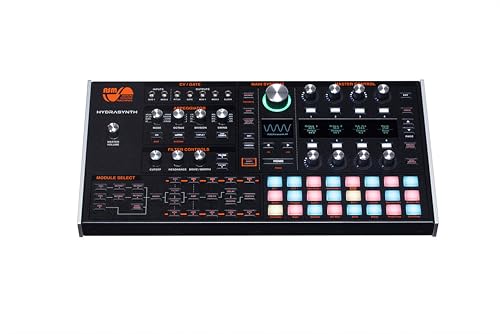
ASM Hydrasynth Desktop Synthesizer
Best for: Rackmount wavetable sound design without external controllers
- Sound Engine
- Wavetable
- Dimensions
- 24 × 13 × 6 inches
- Weight
- 19.8 pounds
The ASM Hydrasynth Desktop Synthesizer gives you a wavetable sound engine with three oscillators, dual Wave Mutators, and two configurable filters. You can play directly using its 24 polyphonic pressure touch pads without an external controller. At 19.8 pounds and 24 inches long, it includes rack ears for mounting into standard 19-inch studio setups.
- Wavetable sound engine with 3 oscillators and dual Wave Mutators
- 2 filters configurable in series or parallel
- 24 polyphonic pressure touch pads for standalone playing
- Includes rack ears for standard 19-inch rack mounting
- Weighs 19.8 pounds, making it heavy for portable desktop use
- Uses touch pads rather than standard piano keys
- You want to mount your sound module into a standard 19-inch equipment rack.
- You need standalone pad control without connecting an external keyboard controller.
- You build complex patches using three oscillators with series or parallel dual filters.
- You prefer traditional piano keys over touch pads.
- You need a lightweight module under 19.8 pounds for travel.
Verdict: ASM Hydrasynth Desktop Synthesizer fits sound designers who want a flexible 3-oscillator wavetable module that mounts directly into a studio rack. Its built-in touch pads give you immediate control without dedicated keyboard hardware.
Specifications side by side
| Spec | ASM Hydrasynth Desktop Synthesizer |
|---|---|
| Sound Engine | Wavetable |
| Dimensions | 24 × 13 × 6 inches |
| Weight | 19.8 pounds |
| Color | Multicolor |
| Model | HSDR |
Frequently asked questions
Does the ASM Hydrasynth Desktop require an external keyboard controller to play?
You do not need an external keyboard to play notes on this module. It features built-in touch pads directly on the front panel. These controls let you audition sounds, program melodic lines, and trigger patches immediately without attaching external MIDI hardware to your desktop or rack workstation.
Can you mount the ASM Hydrasynth Desktop in a standard studio rack?
Yes, you can mount the ASM Hydrasynth Desktop into a studio rack enclosure. The unit is designed for rackmount setups, giving you a dedicated wavetable engine directly in your gear frame. This installation format keeps your work surface clear while integrating the 3-oscillator synth engine into your permanent studio signal flow.
What is the official model number for the ASM Hydrasynth Desktop?
The official manufacturer model number for the desktop unit is HSDR. Knowing this code helps you verify you are reviewing the dedicated module version rather than a keyboard-equipped alternative. The HSDR model designation confirms the exact 24 by 13 by 6-inch chassis specifications and hardware configuration for rack or desk setups.
How heavy is the ASM Hydrasynth Desktop synthesizer module?
The ASM Hydrasynth Desktop weighs 19.8 pounds. This substantial weight reflects its solid studio hardware construction, helping the module remain stable on your desk during performance. The heft ensures the chassis does not shift when you press the integrated touch pads or adjust controls during deep wavetable sound design sessions.
What are the physical dimensions of the ASM Hydrasynth Desktop?
The synthesizer chassis measures 24 inches in length, 13 inches in width, and 6 inches in height. These dimensions allow the unit to fit comfortably on wide studio desks or within standard rack configurations. You should measure your available workspace before integrating this 19.8-pound hardware module into your studio.
What synthesis architecture does the ASM Hydrasynth Desktop use?
The ASM Hydrasynth Desktop operates on a flexible wavetable synthesis engine featuring three oscillators. This 3-oscillator structure generates rich digital waveforms that you can shape into complex textures. The synthesis setup provides deep tone-crafting capabilities directly from the module without requiring secondary external synth voices or third-party computer software.
What finish or color scheme does the ASM Hydrasynth Desktop have?
The ASM Hydrasynth Desktop comes in a multicolor finish. This color layout highlights the various interface sections, control pads, and editing zones across the chassis. Clear visual separation helps you navigate the 3-oscillator wavetable parameters quickly whether the unit sits on a desk or is mounted inside a studio rack.


