
As Amazon Associates, we earn from qualifying purchases. This means we may receive a small commission at no extra cost to you if you click through and make a purchase.
Connecting an outbuilding, barn, detached garage, or remote workshop to an existing home network often feels like choosing between trenching an Ethernet cable or navigating complex enterprise networking settings. The Ubiquiti NanoStation 5AC Loco pre-configured bundle solves this dilemma by pairing two outdoor wireless transceivers before they arrive at your door. Instead of requiring you to master network subnets, radio frequency bands, and bridge modes, this package delivers a functional link designed to work straight out of the box. For property owners seeking a dependable connection across a yard or acreage without configuration headaches, this hardware bridges the gap smoothly.
In this review, we examine the pre-programmed version of the hardware to see if it genuinely eliminates the steep learning curve associated with standalone Ubiquiti gear. We evaluate the physical hardware, real-world data expectations, weather-resistant design, and performance when supporting demanding devices such as video surveillance cameras. We also outline the exact specifications, highlight practical limitations, compare the set to alternative networking devices, and answer common setup questions to help you decide if this point-to-point solution matches your property layout.
What You Get With the Ubiquiti NanoStation 5AC Loco
Ubiquiti NanoStation 5AC Loco


Photographs published on the Amazon listing.
The pre-configured wireless bridge bundle comes with the essential hardware needed to establish an operational link between two physical locations, saving you from purchasing individual power injectors and pairing accessories separately.
- Two paired airMAX NanoStation 5 AC Loco units configured in access point and station roles
- Two dedicated POE injectors paired with matching power cords for clean power delivery over Ethernet
- Two heavy-duty mounting straps designed to secure each transceiver to an exterior pole or mount
- Manufacturer installation guide along with an information sheet outlining pre-configured network details and passwords
- Pre-applied link encryption and pre-set managed IP addresses to protect network traffic out of the box
- Pre-activated PoE passthrough verified during assembly for simplified hardware connectivity
Key Specifications
Specification
Detail
- Wireless Standard
- 802.11ac (Wi-Fi 5)
- Operating Frequency
- Single-Band 5GHz
- Maximum Throughput
- 450 Mbps (Listing notes 150+ Mbps real-world throughput)
- Maximum Operating Range
- 10+ km (Up to 15 km listed range)
- Ethernet Interface
- 1000 Mbps Gigabit LAN port
- Antenna Configuration
- 4 fixed internal antennas
- Operating System
- airOS
- Security & Protocol
- WPS and pre-configured link encryption
- Network Modes
- Point-to-Point and Point-to-Multipoint capability
- Power Delivery
- PoE Injector (included)
Copied from the Amazon listing. These figures were not measured here.
Setting Up the Pre-Configured Wireless Bridge
A major hurdle with commercial-grade networking gear is initial software configuration, but this pre-programmed package eliminates that step entirely. In a standard airmax nanostation 5ac loco setup, users typically must assign static IP addresses to their computers, log into the airOS operating system, select operating modes, adjust channel widths, and manually configure security keys. With this bundle, the two units are already matched: one unit operates as the transmitting access point and the other serves as the receiving station. Link encryption is established, passwords are set, and management IPs are assigned, allowing you to bypass browser-based software setup.
Physical deployment still requires care to achieve a dependable nanostation 5ac loco point to point link. You connect one transceiver to your primary home router using an Ethernet cable running through the provided PoE injector, then mount the second transceiver on the outbuilding. The listing specifies that the units use touch control methods and fixed internal antennas, requiring you to physically align both faces toward one another with an unobstructed line of sight. For remote locations where you need to verify power before running permanent exterior cables, an anker solix c300 dc portable power station provides convenient portable power for the PoE injector during link testing.
Once both devices are powered and aligned, the wireless link functions like an invisible Ethernet extension. Because the transceivers communicate across their own dedicated link, the remote unit outputs standard network traffic from its Gigabit Ethernet port. You can plug that port directly into a switch, an access point, or a computer. The listing confirms that an information sheet is provided with each bundle, giving you the pre-set credentials so you retain complete administrative visibility over the hardware.
Range and Real-World Throughput Expectations
When evaluating the airmax nanostation 5ac loco range, the official listing highlights capabilities reaching 10+ km and up to 15 km under optimal conditions. For everyday property owners, this vast range capacity translates into exceptional signal stability across shorter distances, such as 200 feet to a detached garage or several hundred yards to a remote workshop. Because the transceivers are built to shoot signals across several kilometers, bridging modest yard distances leaves substantial signal overhead, ensuring weather conditions like heavy rain or fog do not disrupt communication.
Data speed is another essential consideration, and the listing provides realistic parameters for nanostation 5ac loco throughput. While the maximum theoretical transfer rate on the 5GHz 802.11ac standard reaches 450 Mbps, the listing explicitly notes an expected real-world speed of 150+ Mbps. This distinction is vital for setting proper expectations. The 1000 Mbps LAN port ensures that the physical network connection does not bottleneck wireless transmission, but the wireless link itself caps out around that 150+ Mbps to 450 Mbps window depending on interference and alignment.
For standard household tasks, streaming high-definition video, or handling typical office workloads in a detached studio, 150+ Mbps provides plenty of bandwidth. Multiple users can browse the web and stream simultaneously without noticing that their internet originates from a wireless bridge rather than a hardwired cable. However, if your home internet plan exceeds 500 Mbps and you expect full gigabit speeds in the remote building, this Wi-Fi 5 bridge will not pass the full bandwidth of your connection.
Interference Management and Outdoor Reliability
The ubiquiti loco5ac outdoor bridge is built specifically to operate outside in challenging wireless environments. Because it operates exclusively on the 5GHz frequency band, it avoids the crowded 2.4GHz spectrum used by Bluetooth devices, older smartphones, and common household electronics. The listing notes exceptional noise immunity, which helps the transceivers isolate their communication from competing neighborhood Wi-Fi signals and ambient wireless chatter.
Physical resilience is just as critical when mounting hardware outdoors on poles or exterior walls. The package includes heavy-duty straps designed to cinch the transceivers securely against mounting poles, preventing wind from knocking the units out of alignment. While working outside to mount hardware and route cabling through wall penetrations, outdoor cleanup is often necessary, and tidying up utility spaces afterwards might call for a vacuum like the dyson ball animal 3 to clear away masonry dust and clipped cable ties.
Operating outdoors also requires managing power delivery safely. The included PoE injectors allow electrical power and network data to travel across a single Ethernet cable, eliminating the need to install dedicated electrical outlets right next to the outdoor mounting locations. This design minimizes exterior electrical exposure and lets you keep the sensitive power adapters safely indoors.
Deploying the Link for Security Cameras and Outbuildings
One of the most practical applications for this hardware is deploying the airmax nanostation 5ac loco for security cameras on remote perimeter fences, barns, or entry gates. The listing explicitly names security cameras under compatible devices, making this bundle a prime candidate for property surveillance. Streaming high-resolution surveillance video back to a central network video recorder requires consistent, unbroken upload bandwidth, and this bridge delivers up to 450 Mbps upstream transfer rates to handle multiple high-bitrate video streams.
Because the bundle supports both point-to-point and point-to-multipoint capability, property owners can start with a simple bridge to one building and expand later if needed. The listing notes that PoE passthrough has been verified, which simplifies connecting secondary hardware at the receiving location. Whether you are monitoring livestock in a barn or securing a detached shed containing outdoor cooking equipment like a ninja foodi smart xl grill, the steady wireless throughput ensures surveillance feeds remain active without buffering.
It is important to remember that the receiving NanoStation does not broadcast standard consumer Wi-Fi for your phone. It functions as a bridge, meaning it outputs an Ethernet connection at the remote end. To connect Wi-Fi cameras or smartphones in the outbuilding, you simply plug the receiving unit into an inexpensive Wi-Fi access point or router inside that building.
Ubiquiti NanoStation 5AC Loco Pros and Cons
Pros
- Pre-configured and tested for plug-and-play installation
- Includes PoE injectors, power cords, and mounting straps
- Long-range wireless capability up to 15 kilometers
- Dedicated 5GHz band with exceptional noise immunity
- Up to 450 Mbps data transfer rate
Cons
- Requires direct, unobstructed line of sight
- Does not broadcast standard Wi-Fi directly to phones
- Real-world throughput listed at 150+ Mbps
Check Ubiquiti NanoStation 5AC Loco on Amazon
Is the Ubiquiti NanoStation 5AC Loco Worth It
Evaluating whether this hardware fits your needs comes down to your technical comfort level and your property layout. If you want to know is airmax nanostation 5ac loco worth it, the answer is a definitive yes for property owners who want commercial-grade wireless bridge hardware without having to learn enterprise networking software. The primary value of this specific bundle lies in the pre-programming service: the seller handles the tedious IP configuration, role assignment, encryption keys, and testing before shipping, turning what is normally a complex setup into an accessible plug-and-play task.
This package is ideal for homeowners, farmers, and small business operators who need to connect a secondary building between 100 feet and several miles away with clear line of sight. With 450 Mbps maximum speeds and realistic throughput over 150 Mbps, it easily handles everyday tasks, telecommuting, 4K streaming, and multi-camera security feeds. You avoid the substantial labor and expense of trenching underground conduit across your yard while achieving far greater stability than a standard Wi-Fi range extender could ever offer.
On the other hand, if you require gigabit local transfer speeds for moving massive video files between servers, or if your line of sight between the two buildings is blocked by thick tree canopies or metal structures, this single-band 5GHz link will struggle. Furthermore, if you already have extensive networking experience and prefer to configure your own subnets and airOS settings from scratch, you might prefer buying bare units individually rather than paying for a pre-paired bundle.
Other Options to Consider
WiFi 7 Dual Band suits buyers who need a cutting-edge indoor or business wireless access point rather than a long-distance outdoor directional bridge, offering modern Wi-Fi 7 speeds, a 2.5G port, and Omada cloud management.

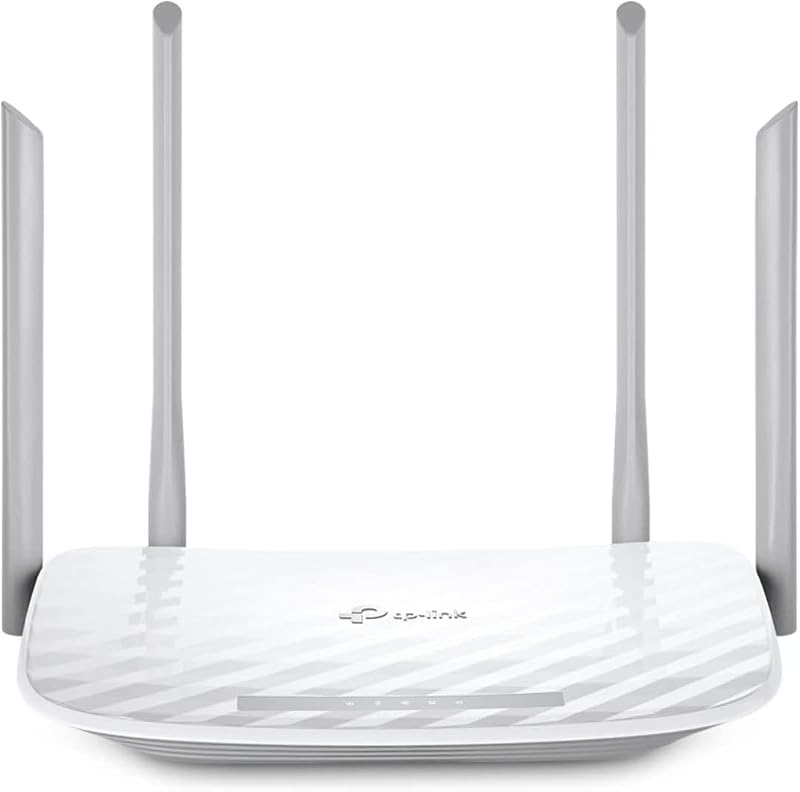
Desktop WiFi Bridge works better for users looking for a flexible indoor desktop access point or client range extender with dual-band AC1200 speeds, MU-MIMO beamforming, and four external antennas for general indoor coverage.
4 x 10 100 Mbps is a practical choice for shoppers who simply need an entry-level indoor dual-band Wi-Fi router with parental controls, guest networking, and four fast Ethernet ports to manage home routing rather than linking separate structures.
FAQ
Does the Ubiquiti NanoStation 5AC Loco broadcast regular Wi-Fi in the second building?
No, the NanoStation units act as a dedicated point-to-point wireless bridge, effectively creating an invisible Ethernet cable between two points. To get Wi-Fi inside your second building, you connect an Ethernet cable from the receiving unit into a standard Wi-Fi router or access point.
What is the difference between maximum throughput and real-world speed on this bridge?
According to the airmax nanostation 5ac loco specs, the hardware supports theoretical transfer rates up to 450 Mbps. However, the listing notes that real-world throughput typically measures 150+ Mbps, which accounts for environmental conditions, distance, and atmospheric overhead.
Do the two NanoStation units require line of sight?
Yes, 5GHz directional wireless bridges perform best with an unobstructed line of sight between the two antennas. Obstacles such as thick trees, metal buildings, or terrain will degrade the signal and lower throughput.
What comes inside this pre-configured bundle?
The bundle includes two paired Ubiquiti NanoStation 5AC Loco units, two PoE power injectors with matching power cords, two mounting straps, an installation guide, and an information sheet with the pre-set network settings.
Can I use this bridge to connect outdoor security cameras?
Yes, the listing specifically identifies security cameras as compatible devices. The bridge provides stable upstream bandwidth of up to 450 Mbps, making it well-suited for transmitting high-definition video feeds from remote locations back to your main network.


